

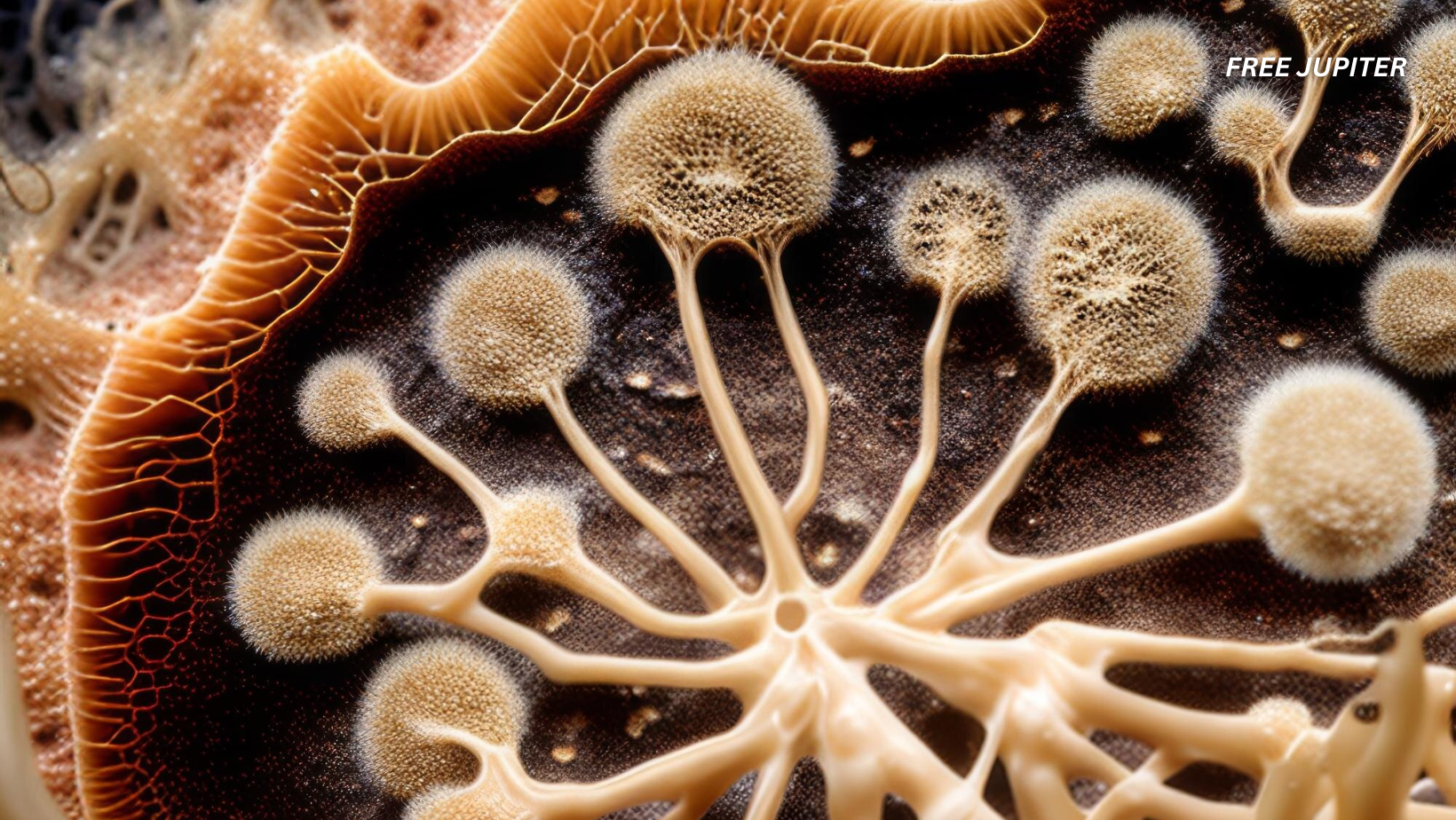
Beneath forests, grasslands, wetlands, and even the soil in your backyard lies a vast living network that helps support life across the planet. Most people never see it, yet scientists have discovered that these underground fungal systems are so enormous that, if stretched into a single line, they would span about 110 quadrillion kilometers.
To put that into perspective, the distance would be enough to travel from Earth to the Sun nearly 750 million times.
The remarkable finding comes from a major scientific study that created the first global map of a special type of underground fungus known as arbuscular mycorrhizal fungi. These organisms have been partnering with plants for roughly 475 million years, forming one of the oldest and most important relationships in nature.
Nature’s Underground Partnership
Arbuscular mycorrhizal fungi live beneath the soil as tiny threadlike structures called hyphae. Although they are microscopic, together they form vast interconnected networks that spread through the ground.
Their relationship with plants is built on cooperation. Plants produce carbon rich sugars through photosynthesis and share some of that energy with the fungi. In return, the fungi help plants absorb water and essential nutrients from the soil.
This exchange benefits both sides. Plants gain access to resources that would otherwise be difficult to reach, while fungi receive the energy they need to survive.
Scientists estimate that more than 70 percent of plant species rely on these fungal partnerships. Without them, many ecosystems would struggle to function as they do today.
Beyond supporting plant growth, these fungi also play an important role in climate regulation. By helping move carbon into the soil, they contribute to one of the planet’s largest natural carbon storage systems.
Read more: Scientists Discover the Deepest and Most Extensive Whale Graveyard Ever Found
Mapping an Invisible World
Despite their importance, surprisingly little has been known about where these fungi are most abundant or how dense their networks are across different ecosystems.
To address this knowledge gap, researchers associated with the Society for the Protection of Underground Networks, known as SPUN, launched an ambitious effort to chart these hidden systems. The organization was established in 2021 by scientists seeking to better understand and protect underground fungal life.
For the study, researchers combined machine learning technology with data gathered from more than 16,000 soil samples collected around the world. By analyzing this enormous dataset, they produced the first comprehensive global map of arbuscular mycorrhizal fungal networks.
What they found exceeded expectations.
The researchers calculated that the total length of these underground fungal threads reaches approximately 110 quadrillion kilometers. The number is so large that it almost feels impossible to imagine.
According to lead author Dr. Justin Stewart, a single teaspoon of healthy soil may contain up to 10 meters of fungal network. What appears to be an ordinary handful of dirt can actually contain a densely packed web of life.
The Cost of Disturbing Underground Networks
The study also revealed troubling signs that these vital fungal systems are under pressure.
Researchers found that agricultural lands typically contain much lower densities of fungal networks than natural ecosystems. On average, croplands showed network densities that were nearly 47 percent lower than those found in wild landscapes.
Modern farming practices can unintentionally damage fungal communities. One major factor is tilling, the process of turning and breaking up soil before planting crops. While useful for agriculture, tilling can physically tear apart fungal networks that have taken years to develop.
Heavy use of fertilizers and fungicides may also interfere with the delicate relationship between plants and fungi. When plants receive nutrients directly from fertilizers, they may rely less on their fungal partners, weakening the connection that naturally exists between them.
Scientists warn that the consequences extend far beyond the fungi themselves.
Why These Underground Networks Matter
Healthy fungal systems perform many tasks that help ecosystems remain productive and stable.
They assist in transporting nutrients through the soil, support plant growth, and contribute to carbon storage. Their networks also help prevent excess chemicals from entering rivers, lakes, and other waterways.
When fungal communities decline, soils become less effective at holding carbon and distributing nutrients. At the same time, more nitrogen, phosphorus, and other substances can escape into nearby water systems.
The result can affect everything from water quality to ecosystem health.
Researchers hope that understanding where fungal networks are thriving and where they are struggling will help governments and conservation groups make better environmental decisions. The data gathered through this project is expected to contribute to future discussions about land management and ecosystem protection.
Read more: FDA Approves Cancer Treatment That Uses Sound Waves Instead of Surgery or Chemotherapy
Grasslands Emerge as Underground Hotspots
One of the study’s most interesting discoveries involved the locations where fungal networks are most concentrated.
Grasslands were found to contain some of the densest underground fungal systems on Earth.
Areas such as the Everglades in Florida, the Sudd in South Sudan, and prairie and steppe landscapes across the world all showed exceptionally high concentrations of fungal threads.
These ecosystems may not receive as much public attention as tropical rainforests, yet they appear to be incredibly important reservoirs of underground biodiversity.
Unfortunately, many grassland regions face increasing pressure from development, agriculture, and environmental degradation. Scientists note that some of the most valuable underground ecosystems remain among the least protected.
Working With Fungi Instead of Against Them
Researchers believe agriculture could benefit significantly from a stronger partnership with soil fungi.
Modern crop production often depends heavily on synthetic fertilizers to maximize yields. However, healthier fungal communities could naturally help crops access more nutrients, potentially reducing the need for large fertilizer inputs.
At the same time, fungal networks can transport carbon deeper into the soil, improving long term carbon storage. This creates potential benefits not only for farming but also for climate resilience.
Many scientists now argue that conservation efforts should focus not only on visible plants and animals but also on the complex communities living underground.
The growing movement to restore fungal ecosystems reflects a broader understanding that healthy landscapes depend on what happens beneath the surface just as much as what grows above it.
Read more: Scientists Found a Planet With No Land, Only Oceans, And They’re Deeper Than Anything Found on Earth
A Hidden World Worth Protecting
For centuries, people have admired forests, grasslands, and wetlands without realizing that another ecosystem exists beneath their feet. The new global map reveals that underground fungal networks form one of the largest living systems on Earth.
These ancient organisms have spent hundreds of millions of years helping plants grow, supporting biodiversity, storing carbon, and maintaining healthy soils. Yet much of their world remains unexplored.
As scientists continue uncovering the scale and significance of these hidden fungal highways, one message becomes increasingly clear: protecting life above ground may depend on safeguarding the remarkable networks that lie below it.
Featured image: Magnific
Friendly Note: FreeJupiter.com shares general information for curious minds. Please fact-check all claims and double-check health info with a qualified professional. Read our health-related content disclaimer here. 🌱