
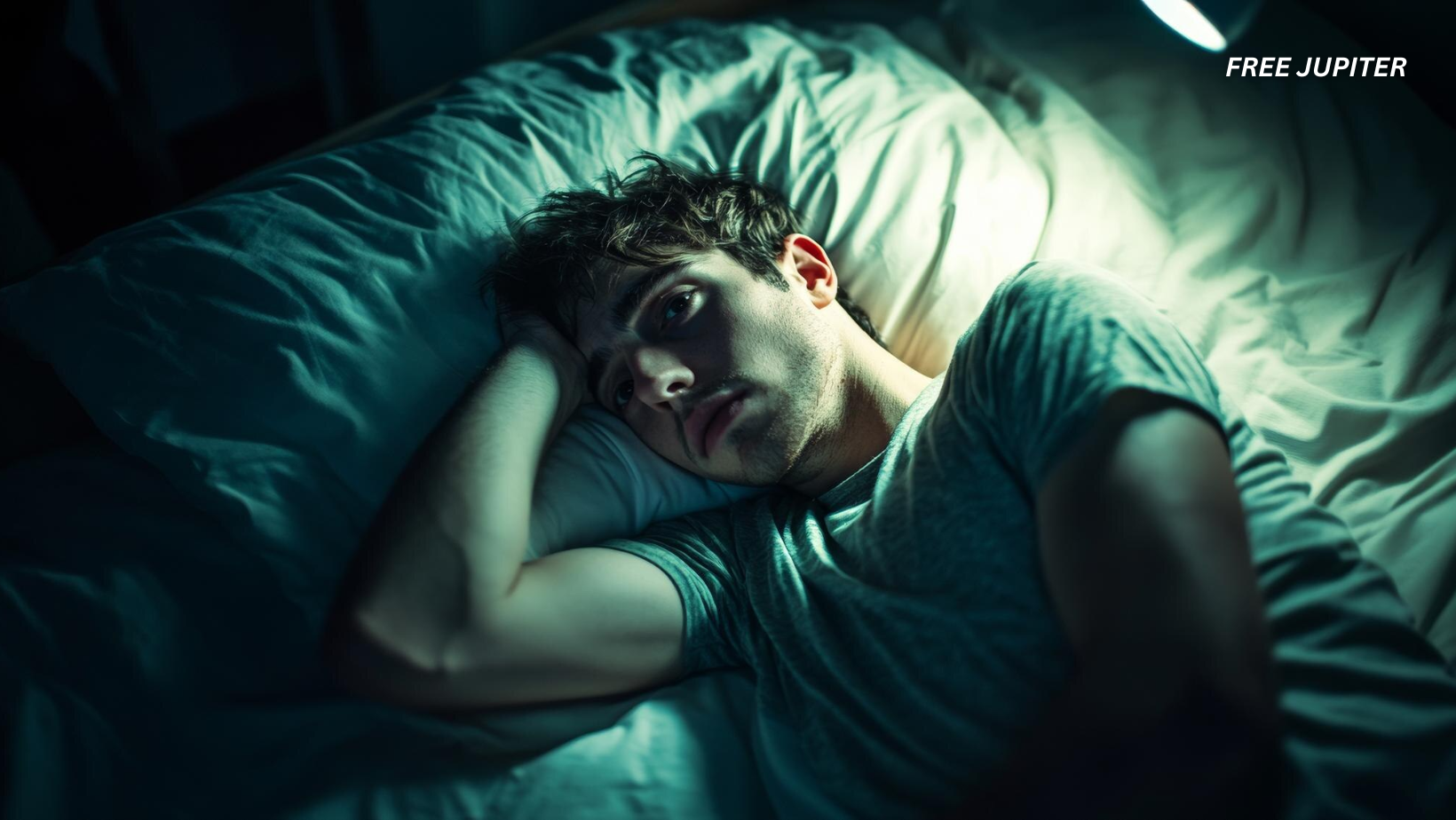
You are finally comfortable for once. The blanket feels perfect, the room is cool enough, and your brain is beginning to drift into that fuzzy half asleep state where thoughts stop making sense. Then it happens.
Your entire body suddenly jerks.
Maybe your leg kicks hard enough to shake the bed. Maybe your arms twitch as if you are trying to catch yourself from falling. Some people even wake up gasping, convinced they just slipped off a staircase or tumbled from a cliff in a dream.
For a few confusing seconds, your heart races and your body feels startled awake. Then comes the familiar question many people ask afterward.
What on earth was that?
That strange sensation is called a hypnic jerk, also known as a sleep start, and despite how dramatic it feels, it is actually one of the most common sleep experiences humans have.
The Strange Moment Between Awake and Asleep
Falling asleep seems simple, but your brain and body go through an incredibly complicated process every single night.
As you begin drifting off, your breathing slows down. Your muscles relax. Your body temperature slightly drops. Brain activity starts changing as you move from wakefulness into the earliest stage of sleep.
A hypnic jerk tends to happen during this transition period.
It is basically a sudden involuntary muscle contraction that interrupts the process of falling asleep. It can affect one part of the body or your entire body all at once.
Some people barely notice it. Others feel like they were launched back into consciousness.
The oddest part is that hypnic jerks are often paired with vivid sensations or dreamlike images. Many people report feeling as though they are falling, tripping, stumbling, or suddenly losing balance. Others hear a loud noise in their head or see a flash of light right before waking up.
It can feel bizarre, but sleep researchers say it is usually harmless.
Why Your Brain Thinks You Are Falling
Scientists still do not know the exact reason hypnic jerks happen, but several theories have gained attention over the years.
One popular explanation involves how quickly the body relaxes during the first stages of sleep.
As your muscles loosen, your brain may briefly misinterpret the sensation as a physical fall. Since the nervous system is designed to protect you from danger, it reacts instantly by triggering your muscles to contract. In simple terms, your brain thinks you are falling and tries to save you before you hit the ground.
That sudden contraction is the jerk you feel.
It sounds ridiculous, but your brain is essentially overreacting to your own relaxation.
Another theory suggests hypnic jerks may be linked to ancient survival instincts. Early humans likely slept in places where falling asleep too deeply in unsafe environments could be dangerous. A sudden muscle twitch may have acted as a kind of neurological alarm system that checked whether the body was secure before fully entering sleep.
Modern humans obviously are not sleeping in trees or on cliff edges anymore, but the brain still carries many ancient behaviors that no longer make much sense in everyday life.
Why Hypnic Jerks Feel So Real
One reason hypnic jerks can feel unsettling is because the brain exists in a strange in between state during sleep onset.
You are not fully conscious, but you are not fully asleep either.
During this stage, your thoughts begin blending with dream imagery. That is why a small muscle twitch can suddenly become an elaborate sensation of falling through the air or missing a step on invisible stairs.
The brain is basically trying to interpret random physical sensations while partially dreaming.
That mix of dreamlike imagery and physical movement can create experiences that feel surprisingly vivid. Some people even wake up convinced something actually happened in the room around them.
Others describe feeling an electric pulse shoot through their body or hearing a sharp snapping sound in their head.
Thankfully, these experiences are usually considered normal unless they happen constantly or severely disrupt sleep.
Read more: Experts Say This Is the Best Time to Take Magnesium for Better Sleep
Stress Makes Everything Worse
If hypnic jerks seem to happen more often during stressful periods of life, that is probably not a coincidence.
Stress keeps the nervous system alert. Even when you are exhausted, your brain may still remain mentally active, making it harder to transition smoothly into sleep.
Think of it like trying to park a car while still pressing the gas pedal.
An overstimulated brain struggles to settle down properly, which may increase the likelihood of sudden muscle contractions during sleep onset.
People dealing with anxiety often report more frequent sleep starts, especially during emotionally overwhelming periods. Racing thoughts, work pressure, financial stress, or emotional tension can all affect how the brain behaves at night.
Ironically, worrying about hypnic jerks themselves can make them happen more often.
Some people become anxious about falling asleep because they fear that sudden jolt. This creates a frustrating cycle where anxiety interferes with relaxation, which then increases the chances of another sleep start.
The human brain truly loves creating unnecessary drama at bedtime.
Read more: If You Skip These 11 Things Before Bedtime, You Will Sleep 98% Better Than Anyone Else
Caffeine and Late Night Habits Can Trigger Sleep Starts
Your evening habits matter more than most people realize.
Caffeine is one of the biggest triggers associated with hypnic jerks. Coffee, energy drinks, soda, and even certain teas stimulate the nervous system and keep the brain more alert than it should be before sleep.
Even if caffeine does not stop you from falling asleep entirely, it can still interfere with how smoothly your body transitions into rest.
Alcohol may also play a role. While drinking can initially make people feel sleepy, it often disrupts deeper stages of sleep later in the night. This can create fragmented sleep patterns and increase nighttime disturbances.
Then there is the modern bedtime ritual almost everyone is guilty of.
Endless scrolling.
Looking at bright screens before bed keeps the brain mentally engaged and exposes the eyes to blue light, which may interfere with natural sleep signals. Doomscrolling stressful news or emotionally charged social media posts right before sleeping also keeps the nervous system activated when it should be winding down.
Your brain cannot fully relax if it still thinks it is participating in internet arguments at midnight.
Being Overtired Can Actually Cause More Sleep Problems
One of the strangest things about sleep is that being extremely tired does not always guarantee peaceful rest.
Sleep deprivation actually increases the chances of hypnic jerks for many people.
When the body is exhausted, the brain may rush more aggressively into sleep. That rapid transition can make the nervous system slightly unstable during the process, increasing the likelihood of sudden muscle spasms.
It is similar to a computer trying to shut down too quickly while too many programs are still running.
This is why people pulling all nighters, working long hours, or dealing with chronic exhaustion often notice stronger or more frequent sleep starts.
Most People Experience Hypnic Jerks
Despite how strange they feel, hypnic jerks are incredibly common.
Sleep experts estimate that around 70 percent of people experience them at least occasionally. Some people remember them clearly while others sleep through them without much awareness.
In many cases, they happen only once in a while and do not require any medical treatment.
However, if the jerks become extremely frequent, painful, or begin seriously affecting sleep quality, doctors sometimes recommend checking for underlying sleep disorders or other neurological conditions. Still, ordinary hypnic jerks by themselves are generally considered harmless.
They are simply one of the many odd little glitches that happen while the brain transitions between consciousness and sleep.
How to Reduce Hypnic Jerks Naturally
There is no magical way to eliminate hypnic jerks forever, but healthy sleep habits may reduce how often they happen.
Keeping a regular sleep schedule is one of the best things you can do. Going to bed and waking up around the same time each day helps stabilize your body’s internal clock.
Reducing caffeine intake later in the day may also help calm the nervous system before bedtime.
Creating a calmer nighttime routine can make a difference too. Reading a book, stretching lightly, meditating, or listening to relaxing music may help the brain transition more smoothly into sleep.
Most importantly, try not to panic if a hypnic jerk happens.
Your body is not malfunctioning. Your brain is not breaking. You are simply experiencing one of the stranger side effects of being human.
Your Sleeping Brain Is Surprisingly Dramatic
Sleep feels peaceful from the outside, but inside the brain, an enormous amount of activity is taking place every night.
Signals shift constantly. Muscles relax. Hormones change. Consciousness slowly fades into dreams.
Every now and then, the system gets slightly confused.
That sudden jolt right before sleep is simply your nervous system reacting to the strange transition between being awake and unconscious. It may feel alarming in the moment, but for most people, it is completely normal.
Still, it does make bedtime a little more interesting than anyone asked for.
Featured image: Magnific
Friendly Note: FreeJupiter.com shares general information for curious minds. Please fact-check all claims and double-check health info with a qualified professional. 🌱