
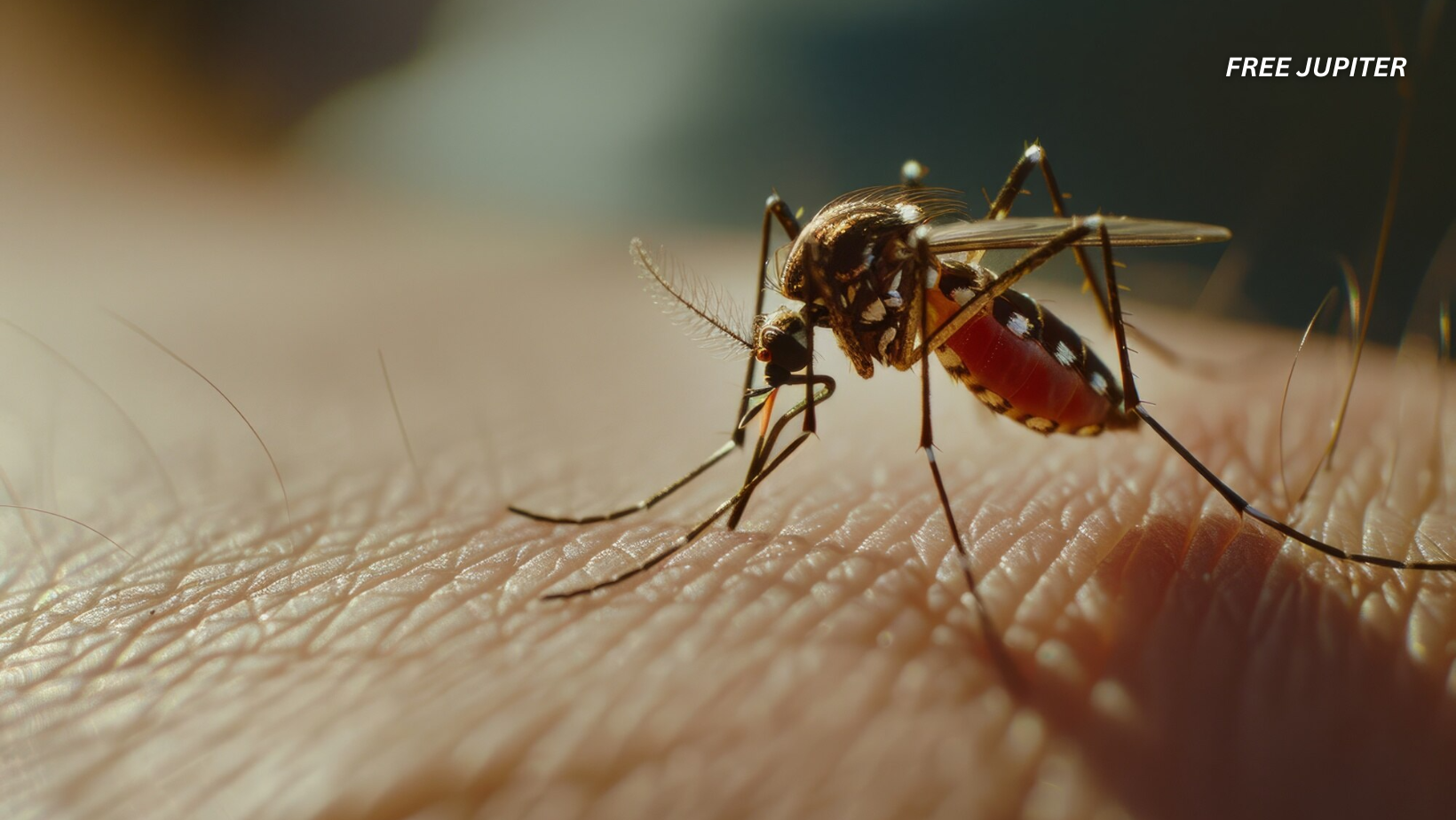
Almost everyone has experienced it. A group of people sits outside enjoying the evening, yet one person ends up covered in itchy mosquito bites while the others remain mostly untouched. For years, this strange imbalance has sparked endless theories. Some people blame sweet blood, while others think mosquitoes simply have favorites. Scientists now say the real explanation is far more complex and surprisingly fascinating.
Researchers from Georgia Institute of Technology and Massachusetts Institute of Technology recently carried out an in depth study to understand exactly how mosquitoes locate humans. Their work focused on Aedes aegypti, one of the most dangerous mosquito species in the world because it can spread diseases such as Zika, dengue fever, chikungunya, and yellow fever.
Published in Science Advances, the study combined advanced imaging technology, infrared tracking systems, and movement analysis to observe mosquitoes with extraordinary detail. Scientists monitored millions of insect flight movements to better understand how mosquitoes make decisions while searching for human hosts.
The results revealed that mosquitoes behave less like random pests and more like highly specialized hunters.
Read more: If You Kill One Dragonfly, You Are Responsible For Over 100 Mosquito Bites
Mosquitoes Use a Combination of Senses
One major discovery from the study is that mosquitoes do not rely on a single clue to find people. Instead, they combine multiple sensory signals at the same time.
Their search process works almost like a layered navigation system. Carbon dioxide helps them detect that a living creature is nearby. Visual contrast helps them identify shapes worth investigating. Heat and body odor then guide them toward exposed skin.
This combination makes mosquitoes remarkably efficient at finding humans, even in dark or crowded environments.
Scientists say mosquitoes can detect carbon dioxide from several feet away. Once they sense it in the air, they become more alert and begin scanning their surroundings for visual targets. That is where color and movement become important.
Why Dark Clothing Makes You Easier to Spot
The experiments showed that mosquitoes strongly preferred dark colored objects over lighter ones. Black, navy blue, and deep red surfaces attracted more insects than white or pale colors.
Researchers believe dark colors create stronger visual contrast against the environment, making them easier for mosquitoes to identify. Since mosquitoes fly relatively close to the ground and often search during low light conditions, strong contrast may help them lock onto a target faster.
This may explain why people wearing dark shirts or dark workout clothing often report more mosquito bites during outdoor activities.
Light colored clothing does not make someone invisible to mosquitoes, but it may slightly reduce visual attraction. Experts say this is especially useful during warmer months when mosquito activity increases.
Your Breath Acts Like a Beacon
Carbon dioxide played one of the biggest roles in the experiments. Humans naturally exhale this gas every few seconds, and mosquitoes have evolved to treat it as a signal that food is nearby.
Once carbon dioxide was introduced into the testing environment, mosquito activity immediately increased. The insects became more active, more focused, and more likely to approach nearby objects.
This reaction explains why mosquitoes seem especially aggressive after exercise or physical activity. Heavy breathing releases more carbon dioxide, which can attract insects from greater distances.
Pregnant women may also attract more mosquitoes because pregnancy slightly increases carbon dioxide output and body temperature. Studies from previous research have shown that mosquitoes are often more drawn to people who emit higher levels of heat and carbon dioxide.
Read more: This Scientist Treated Her Own Cancer Using Viruses She Created In The Lab
Heat and Body Odor Also Matter
Mosquitoes are not only attracted to breath and color. Human skin releases hundreds of chemical compounds through sweat and natural oils. These odors vary from person to person depending on genetics, diet, skin bacteria, and overall body chemistry.
Some people naturally produce scent combinations that mosquitoes find more appealing.
Body heat is another important factor. Mosquitoes use heat sensing abilities to locate warm blood vessels beneath the skin. This is one reason they frequently bite areas like ankles, arms, necks, and shoulders where blood flow is closer to the surface.
Researchers observed that mosquitoes concentrated heavily around the heads and shoulders of volunteers during the experiments. Since humans exhale carbon dioxide from the nose and mouth, the upper body becomes one of the strongest sources of attraction.
Infrared cameras captured mosquitoes circling these regions before landing, almost as if they were carefully evaluating the best place to bite.
Mosquitoes Are Not Working Together
At first glance, mosquito swarms may look coordinated, almost like the insects are communicating with one another. However, the study found no evidence that mosquitoes actively follow each other toward humans.
Instead, every mosquito independently responds to the same environmental signals. When many mosquitoes gather in one location, it happens because they are all reacting to the same combination of carbon dioxide, body heat, movement, and visual contrast.
This finding changes how scientists understand mosquito behavior. Rather than acting as a coordinated group, mosquitoes are essentially individual hunters arriving at the same destination for the same reasons.
Why Some People Get Bitten More Than Others
Researchers say mosquito attraction likely depends on several overlapping factors. Genetics may influence body odor composition, while lifestyle habits can also affect how appealing someone becomes to insects.
Alcohol consumption, exercise, sweating, perfume, and even skin care products may slightly alter mosquito attraction. Some studies suggest blood type could also play a role, although evidence remains mixed.
Environmental conditions matter as well. Mosquitoes thrive in warm, humid areas and are usually most active around dawn and dusk. Standing water, wet soil, and clogged drains create ideal breeding grounds where mosquito populations can rapidly increase.
This means a person’s surroundings may be just as important as their body chemistry.
Smarter Mosquito Traps Could Help Fight Disease
Scientists believe the study could eventually lead to more advanced mosquito control systems. By understanding exactly how mosquitoes identify humans, researchers can design traps that imitate those same signals.
Future mosquito traps may combine heat, dark colors, artificial body odor, controlled lighting, and carbon dioxide release to lure insects more effectively. These tools could help reduce mosquito populations in cities and tropical regions where mosquito borne illnesses remain a serious public health issue.
Better mosquito traps may also reduce the need for widespread pesticide use, which can harm beneficial insects and create environmental concerns.
Read more: Amsterdam Is Adding Tiny Staircases So Stray Cats Can Escape Its Canals
The Tiny Insect With a Powerful Impact
Mosquitoes are often viewed as little more than annoying summer pests, but they are considered one of the deadliest animals on Earth because of the diseases they spread worldwide every year.
Understanding how mosquitoes find humans is more than just a scientific curiosity. It could help researchers develop safer communities, stronger disease prevention strategies, and smarter methods for limiting outbreaks.
The next time mosquitoes seem unusually interested in you, there is likely a scientific explanation behind it. From the color of your clothing to the air you exhale, these insects are constantly analyzing their environment in search of the perfect target.
Featured image: Magnific
Friendly Note: FreeJupiter.com shares general information for curious minds. Please fact-check all claims and double-check health info with a qualified professional. 🌱