

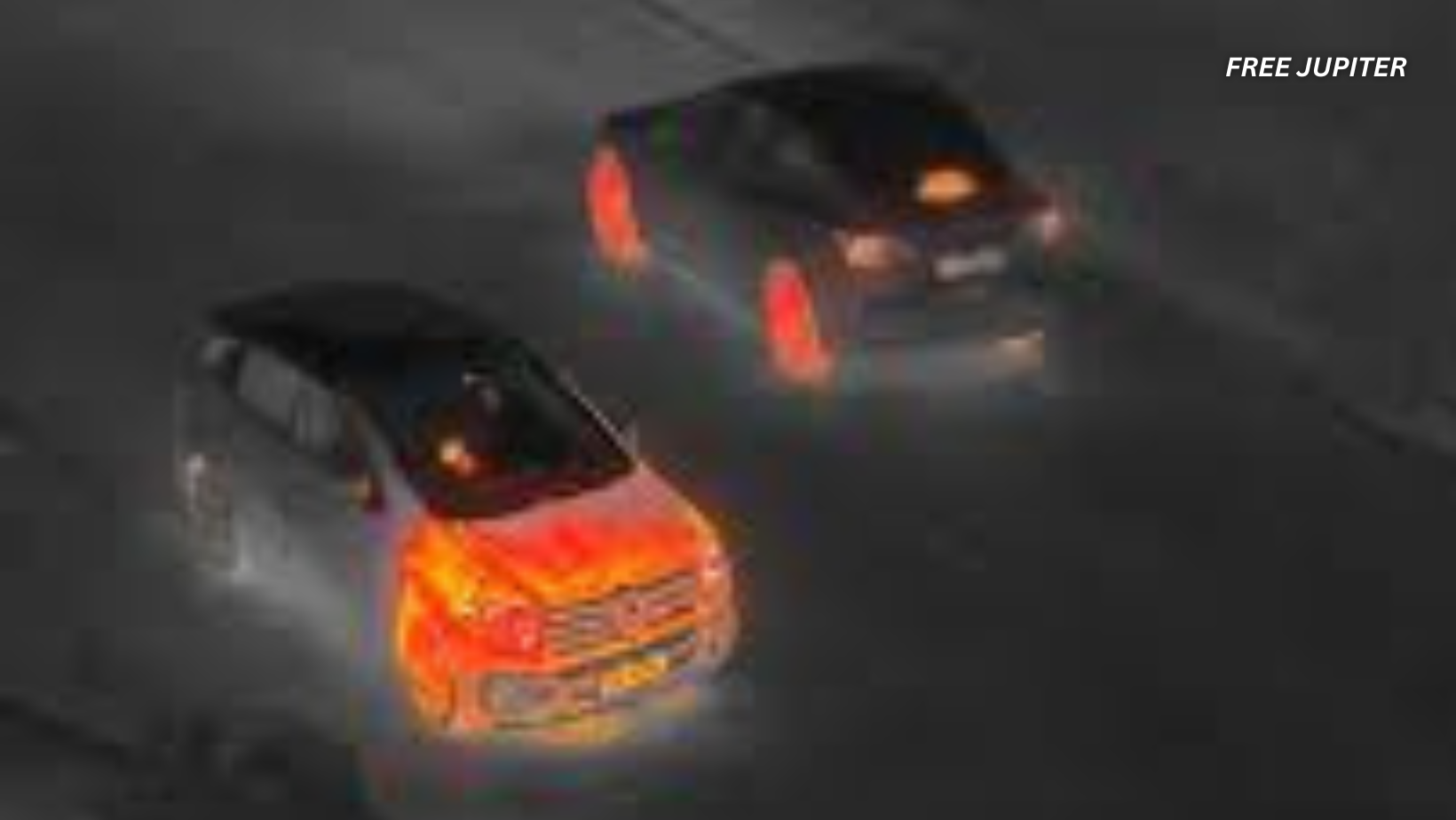
At first glance, most cars look familiar. Their shapes are predictable, their surfaces smooth, and their presence on the road almost routine. Yet when a thermal camera enters the scene, everything changes. Instead of color and design, what becomes visible is heat. And heat has a way of telling stories that are usually hidden from view.
A thermal camera does not rely on light the way human eyes do. It detects infrared radiation, which is simply the heat that objects give off. Warmer areas appear brighter, while cooler areas fade into darker tones. When applied to vehicles, this technology reveals how energy moves through a machine, where it is used, and where it is lost.
In this unusual view, gasoline cars and electric cars no longer look alike. Their differences become obvious, almost dramatic, even to someone with no technical background.
The Heat Signature of Gasoline Cars
A gasoline powered car appears vivid and intense under thermal imaging. The front section, where the engine is located, glows brightly. This is where fuel is burned to create motion. Inside the engine, small bursts of combustion happen repeatedly, producing the force needed to move the vehicle forward.
These bursts also generate a large amount of heat. The engine becomes one of the hottest parts of the car, and this warmth spreads outward. The front grill often lights up as heat escapes, while the hood carries a steady warmth that reflects the work happening beneath it.
The underside of the car tells another part of the story. The exhaust system shines with even greater intensity. After fuel is burned, hot gases travel through pipes and exit the vehicle. These gases carry heat with them, making the exhaust one of the most noticeable features in a thermal image.
Even after the engine is turned off, the heat does not disappear right away. The car continues to release warmth for some time, slowly cooling as the energy fades into the surrounding air.
Read more: The Way You Drive Says More About You Than You Think, According to a Therapist
Why Gasoline Engines Produce So Much Heat
The reason behind this strong heat signature lies in how gasoline engines work. They rely on combustion, which is essentially controlled burning. While this process is effective in producing power, it is not very efficient in terms of energy use.
Only a portion of the fuel’s energy is converted into motion. A large share is lost as heat. This heat spreads through the engine, travels along the exhaust system, and eventually escapes into the environment.
Friction also plays a role. Moving parts inside the engine rub against each other, creating additional heat. Even with lubrication and cooling systems, some energy is always lost in this way.
Thermal imaging captures all of this in a single frame. It turns invisible energy loss into something that can be seen and understood instantly.
Electric Cars and Their Cooler Profile
Electric vehicles tell a very different story when viewed through the same lens. Instead of bright, concentrated heat, they appear more balanced and subdued. There is no large engine at the front producing intense warmth. The absence of combustion changes the entire thermal picture.
Most of the vehicle remains relatively cool. The body panels do not glow in the same way, and there is no bright exhaust trail beneath the car. Instead, heat is spread out in smaller, less intense areas.
The wheels often show some warmth, mainly due to friction between the tires and the road. Braking can also generate heat, especially during frequent stops. In some cases, the electric motor and battery system produce mild warmth, but it remains controlled and limited.
Where the Heat Comes From in Electric Vehicles
Even though electric cars are cooler overall, they are not completely free of heat. Energy is still being used, and some of it naturally turns into warmth.
The battery is one of the key areas to watch. It stores and releases energy as the car operates. During this process, a small amount of heat is produced. To keep everything stable, electric vehicles use cooling systems that regulate temperature and prevent overheating.
The electric motor also generates some heat as it converts electrical energy into motion. However, this process is far more efficient than combustion. Less energy is wasted, which means less heat is created in the first place.
This results in a softer thermal image, one that lacks the dramatic hot spots seen in gasoline vehicles.
Read more: South Korean Woman Sets Unbelievable Record By Passing Driving Test After 960 Attempts
What Thermal Imaging Says About Efficiency
Thermal imaging offers a simple way to understand efficiency. A vehicle that produces a lot of heat is losing a significant portion of its energy. That energy is not being used to move the car forward. Instead, it is released into the environment.
A cooler vehicle, on the other hand, is making better use of its energy. More of the power goes into motion, and less is lost as heat.
Electric vehicles tend to fall into this second category. Their systems are designed to convert energy more directly into movement. This is why their thermal signature appears calmer and more controlled.
Gasoline cars, while still effective and widely used, show a different pattern. Their brighter thermal image reflects a system that relies on burning fuel and releasing excess heat as a byproduct.
How Driving Conditions Change the Thermal View
The way a car is driven can also influence what appears in thermal imaging. A gasoline car that has just started may show less heat at first, but as the engine warms up, the brightness increases. Long drives, high speeds, and heavy loads can all intensify the heat signature.
Electric cars also respond to driving conditions, though in a more subtle way. Rapid acceleration or frequent braking can create small increases in heat, especially around the wheels and motor. Still, the overall profile remains much cooler compared to a gasoline vehicle.
Weather can play a role as well. On a hot day, the difference between the car and its surroundings may appear less dramatic. On a cool night, the contrast becomes much more visible, making the thermal patterns stand out clearly.
A Shift in How We See Transportation
There is something almost poetic about the contrast between these two types of vehicles. A gasoline car appears energetic and intense, glowing with the heat of constant combustion. An electric car looks composed and balanced, with a quieter presence in the thermal world.
These images reflect more than just temperature. They hint at a broader shift in how transportation is evolving. The move toward electric vehicles is not only about reducing emissions or adopting new technology. It is also about using energy in a more thoughtful and efficient way.
Thermal imaging makes this shift visible. It removes the complexity of technical explanations and replaces it with something immediate and easy to understand.
Read more: Blinded by the Light? 90% of Drivers Say LED Headlights Are Just Too Much
The Bigger Picture Behind the Heat
In the end, the difference between gasoline and electric cars is not just about what powers them. It is about how that power is used. One system burns fuel and releases a large amount of heat into the environment. The other relies on electricity and manages energy with greater precision.
By turning invisible heat into something we can see, thermal cameras offer a fresh perspective on everyday vehicles. They reveal patterns that are often overlooked and highlight the hidden costs of energy loss.
For anyone curious about how modern cars work, this view provides clarity. It shows that beneath the surface, every vehicle carries a unique thermal signature. And in that signature, a deeper story about efficiency, innovation, and the future of mobility begins to unfold.