

In the vast and often unforgiving wilderness of northern Saskatchewan, survival depends on more than courage. It relies on preparation, awareness, and sometimes a bit of luck. For one man, however, luck ran thin when a routine journey turned into a fight to stay alive. What followed was an extraordinary chain of events that would leave entire communities without power and raise questions about what people are capable of when faced with isolation and fear.
A Journey Into Remote Territory
Northern Saskatchewan is known for its breathtaking landscapes. Endless stretches of forest blend into open tundra, and waterways cut through the terrain like veins. It is a place where nature feels immense and untouched. Yet this beauty comes with risk. The region is sparsely populated, and help is often far away.
The man at the center of this story had set out by boat, likely familiar with the area but perhaps underestimating how quickly conditions could change. Travel in such remote environments requires careful planning. Weather patterns can shift without warning, and even experienced travelers can find themselves caught off guard.
When the Weather Turned
At some point during his journey, a powerful storm rolled in. The sky darkened, winds picked up, and the water became unpredictable. Boats that feel stable in calm conditions can quickly become vulnerable when waves begin to rise.
Unable to continue safely, the man was forced to stop. What may have started as a temporary delay soon became something far more serious. With no clear way to navigate through the storm and no safe path back, he found himself stranded.
As time passed, the situation grew more concerning. Exposure to the elements, limited supplies, and the mental strain of isolation began to take their toll. The wilderness, while quiet and expansive, can also feel overwhelming when there is no clear way out.
Read more: Psychology Explains Why Some People Feel Like They Just Don’t Fit In No Matter What They Do
Isolation and the Weight of Silence
One of the most difficult aspects of being stranded in a remote area is the lack of communication. In many parts of northern Canada, mobile signals are unreliable or nonexistent. Without a satellite device or emergency beacon, reaching out for help becomes nearly impossible.
For days, the man remained alone. No passing aircraft, no nearby travelers, and no easy way to signal for help. In such conditions, time can feel distorted. Hours stretch into long periods of uncertainty, and the mind begins to search for solutions, even risky ones.
It is in these moments that survival instincts take over. Decisions are no longer about convenience or comfort. They are about staying alive.
A Plan Born From Desperation
Faced with dwindling options, the man came up with a plan that would dramatically alter the situation. He noticed a series of power poles nearby, part of the infrastructure that delivers electricity to remote communities.
He reasoned that if he could interrupt the power supply, it would not go unnoticed. A sudden outage affecting multiple areas would likely trigger an investigation. Utility crews would need to locate the problem and restore service as quickly as possible.
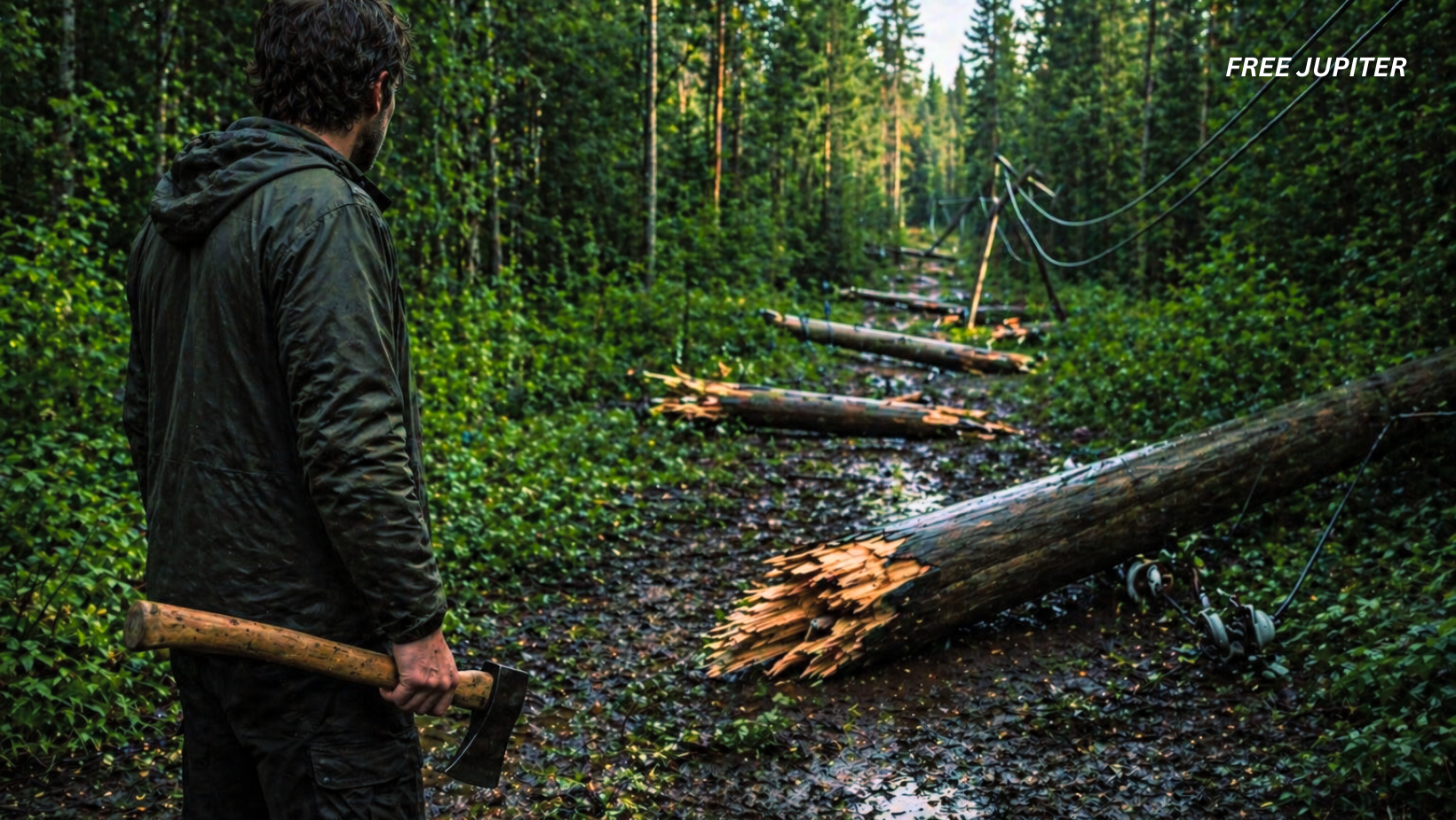
Armed with an axe, he began cutting down the poles. It was not a quick or easy task. Power poles are built to withstand harsh conditions, and bringing them down requires effort and determination. Still, driven by urgency, he managed to fell four of them.
With each pole that fell, the likelihood of being discovered increased. The gamble was clear. Cause enough disruption, and someone will come looking.
Rescue From Above
As anticipated, the utility provider SaskPower responded to the disruption. Repair crews were dispatched to locate the damage and begin restoration work. Given the remote terrain, aerial support was used to survey the area.
It was during this response that the stranded man was finally spotted. His plan had worked. By forcing attention toward his location, he had created the opportunity to be seen and rescued.
For him, the outcome meant survival. After days of isolation and uncertainty, help had arrived.
Mixed Reactions From Affected Communities
While the rescue brought relief, the broader impact of the incident could not be ignored. Residents of the affected communities experienced significant inconvenience and disruption. Being without power for over a day affected daily life in ways that are difficult to overlook.
Some community members expressed frustration, particularly given the scale of the outage. Others, however, showed understanding. Being stranded in such conditions is a situation few people can truly imagine, and desperation can lead to decisions that might seem extreme from the outside.
The incident became a topic of discussion, highlighting both the resilience of the human spirit and the ripple effects of individual actions.
Read more: Experts Say This Is the Best Time to Take Magnesium for Better Sleep
Authorities Respond With Caution
Despite the damage caused, authorities chose not to pursue charges against the man. Officials recognized that he had been in a highly distressed state and acting out of a genuine need to survive.
This decision reflects an understanding that context matters. While the act itself led to widespread disruption, it was not driven by malice or intent to harm others. Instead, it was a last resort in a situation where options were limited.
Lessons From The Wilderness
This story carries important lessons for anyone who ventures into remote environments. Preparation is not optional. It is essential.
Travelers are encouraged to carry survival kits that include food, water, first aid supplies, and tools for shelter. Communication devices such as satellite phones or personal locator beacons can make a critical difference. These tools allow individuals to send distress signals without relying on existing infrastructure.
Traditional methods of signaling for help should not be overlooked either. Building a signal fire, creating visible markings on the ground, or using reflective materials can attract attention without causing large scale disruption.
The goal is to ensure that help can be reached without placing others at risk.
Read more: If You Spent Most Of Your Childhood Outdoors, These 10 Traits May Describe You Perfectly
A Story That Lingers
The account of this stranded traveler is both remarkable and thought provoking. It reveals how quickly circumstances can change and how far someone might go when faced with uncertainty and fear.
In the end, the man survived. That outcome stands at the center of the story. Yet the path he took to reach safety left a lasting impression on the communities affected and those who heard about it.
The wilderness remains a place of wonder, but it also demands respect. With the right preparation, many risks can be reduced. Without it, even a simple journey can turn into a test of endurance and decision making.
This unusual rescue serves as a reminder that survival often comes down to choices. Some are careful and planned. Others are made in moments of urgency. Both can shape the outcome in ways that are difficult to predict.
Featured image: GPT Recreation.
Friendly Note: FreeJupiter.com shares general information for curious minds. Please fact-check all claims and double-check health info with a qualified professional. 🌱