

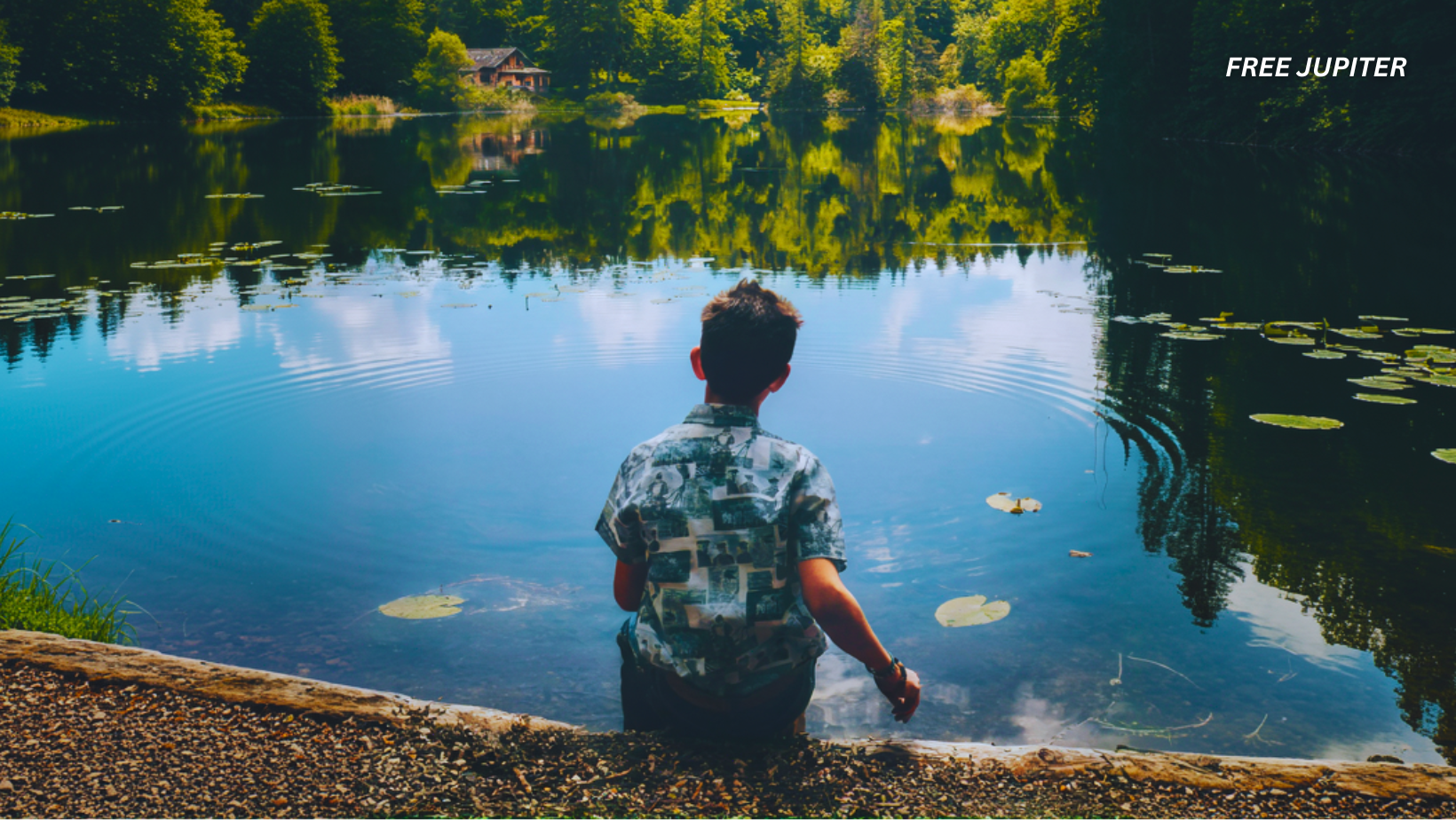
Childhood does not always announce its importance while it is happening. At the time, it often feels like a series of ordinary days stitched together by small routines and bursts of imagination. For many people, those memories include long stretches spent outdoors. There may have been scraped knees, improvised games, and a sense that time moved differently under the open sky.
What once felt like simple play is now being examined more closely. Over the past several years, research in psychology and human development has begun to highlight how powerful those outdoor hours can be. The influence reaches far beyond physical health. It touches emotional balance, thinking patterns, social behavior, and even the way a person responds to uncertainty.
The effects are subtle, yet they tend to last. What is built in those early years often becomes part of how a person moves through adulthood, shaping reactions, habits, and perspectives in ways that are not always obvious.
Below are ten traits commonly linked to growing up with regular exposure to outdoor environments, explained in a way that is easy to follow while still grounded in real insight.
1. A steadier way of handling emotions
Outdoor play introduces a child to a wide range of feelings. There is excitement when exploring something new, frustration when things do not go as planned, and satisfaction when a challenge is finally overcome.
These emotional shifts happen naturally and often without adult intervention. Because of this, children begin to develop their own ways of coping. They learn how to calm themselves, how to try again, and how to move forward after disappointment.
Read more: Experts Say Adults Who Grew Up as Emotional Caretakers In Childhood Are Triggered by These 10 Things
As adults, this early practice often turns into emotional stability. Instead of reacting impulsively, they are more likely to pause, process, and respond with greater control. Stressful situations feel manageable because they are not entirely unfamiliar.
2. Lower levels of everyday anxiety
Nature has a calming effect that goes beyond what is immediately felt. Being surrounded by greenery, open space, and natural light helps regulate the body’s stress response.
Long term studies suggest that children who grow up with access to these environments are less likely to experience chronic anxiety later in life. This is not simply about relaxation. It appears to influence how the brain develops its response to stress.
Over time, this creates a baseline sense of ease. While challenges still arise, they are less likely to feel overwhelming. The mind becomes more adaptable, and recovery from stress tends to happen more quickly.
3. A healthy relationship with risk
Outdoor environments are rarely controlled. Surfaces are uneven, heights vary, and outcomes are not always predictable.
Through these experiences, children begin to understand risk in a practical way. They learn how to measure their abilities against the situation in front of them. They discover when to proceed, when to adjust, and when to stop.
This creates a balanced approach to risk. As adults, they are neither reckless nor overly cautious. They are more comfortable making decisions in uncertain situations because they have practiced evaluating risk from an early age.
4. Stronger focus and attention span
Modern life often demands constant attention, yet it rarely provides the kind of environment that allows attention to recover.
Nature offers a different experience. It engages the mind without overwhelming it. A child might watch leaves move in the wind or follow the path of an insect without effort. This type of attention is gentle and restorative.
Children who spend time in these environments often develop a stronger ability to concentrate. As they grow older, they are better able to stay focused on tasks without feeling mentally drained. Their attention feels more flexible and less forced.
5. A deep sense of self reliance
Outdoor play often unfolds without detailed instructions. Children create their own goals, solve their own problems, and adapt their plans as needed.
This builds a sense of independence that is grounded in experience. It is not simply a belief that they can handle things. It is something they have already done many times.
As adults, this translates into confidence. They are more willing to take initiative and less dependent on constant guidance. Challenges are approached with a mindset of problem solving rather than avoidance.
6. A stronger connection to the body
Physical movement is a natural part of outdoor play. Running, climbing, balancing, and exploring all contribute to a deeper awareness of the body.
This awareness includes coordination, strength, and an intuitive understanding of physical limits. It becomes easier to sense when to push forward and when to rest.
In adulthood, this often leads to a more active lifestyle. Movement feels familiar rather than forced. Exercise is less about obligation and more about continuing a pattern that began early in life.
Read more: Psychologists Say People Who Feel “Behind” In Life Often Share These 9 Childhood Wounds
7. Greater creativity and imagination
Outdoor spaces do not come with predefined rules. A simple object can take on many roles depending on the situation. A stick might become a tool, a prop, or part of a story.
This kind of open ended play encourages flexible thinking. Children learn to create possibilities rather than follow instructions.
As adults, this ability often appears as creativity. It becomes easier to approach problems from different angles and to generate new ideas. This kind of thinking is valuable not only in artistic pursuits but also in everyday decision making.
8. Stronger social and communication skills
When children interact outdoors, they often do so without constant supervision. They create their own social structures, decide how games are played, and resolve disagreements as they arise.
This requires communication, negotiation, and empathy. They learn how to read others, how to express themselves, and how to find common ground.
These skills tend to carry into adulthood. Relationships feel more natural, and conflicts are handled with greater ease. There is a stronger understanding that disagreements are part of interaction, not something to be feared.
9. A natural sense of presence
Outdoor environments invite attention. There is always something to notice, whether it is the movement of light, the texture of the ground, or the sound of distant activity.
Children who grow up in these settings often develop a habit of being aware of their surroundings. They become comfortable with simply being where they are.
In adulthood, this can lead to a greater sense of presence. It becomes easier to focus on the moment instead of being lost in constant thought. This quality is often associated with mindfulness, yet for some, it develops naturally through early experiences.
10. Greater resilience in uncertain situations
Outdoor play is rarely predictable. Weather changes, plans shift, and unexpected challenges appear.
Children learn to adapt because they have to. They adjust their approach, try new solutions, and continue despite setbacks.
This builds resilience. As adults, they are better equipped to handle uncertainty. Instead of resisting change, they are more likely to adapt and move forward. Setbacks are seen as part of the process rather than a final outcome.
Read more:12 Signs You Grew Up Too Fast and Missed Out on Childhood
What this means in everyday life
An outdoor childhood may not stand out in the way academic achievements or structured activities do. It does not come with clear markers of success. There are no grades for creativity, no certificates for resilience, and no awards for learning how to navigate uncertainty.
Yet its impact can be far reaching.
The traits developed through outdoor experiences tend to influence how a person thinks, feels, and interacts with the world. They shape responses to stress, approaches to problem solving, and the ability to connect with others.
For those who experienced this kind of upbringing, these qualities may already feel natural. They are part of the foundation that supports daily life.
For those who did not, there is still value in reconnecting with outdoor environments. Time spent in nature, even later in life, can help restore focus, reduce stress, and encourage a different pace of thinking.
In the end, the simplicity of being outside holds more depth than it first appears. What seems like ordinary time can leave a lasting imprint, shaping not only childhood memories but also the person someone becomes over the years.
Featured image: Freepik.
Friendly Note: FreeJupiter.com shares general information for curious minds. Please fact-check all claims and double-check health info with a qualified professional. 🌱