
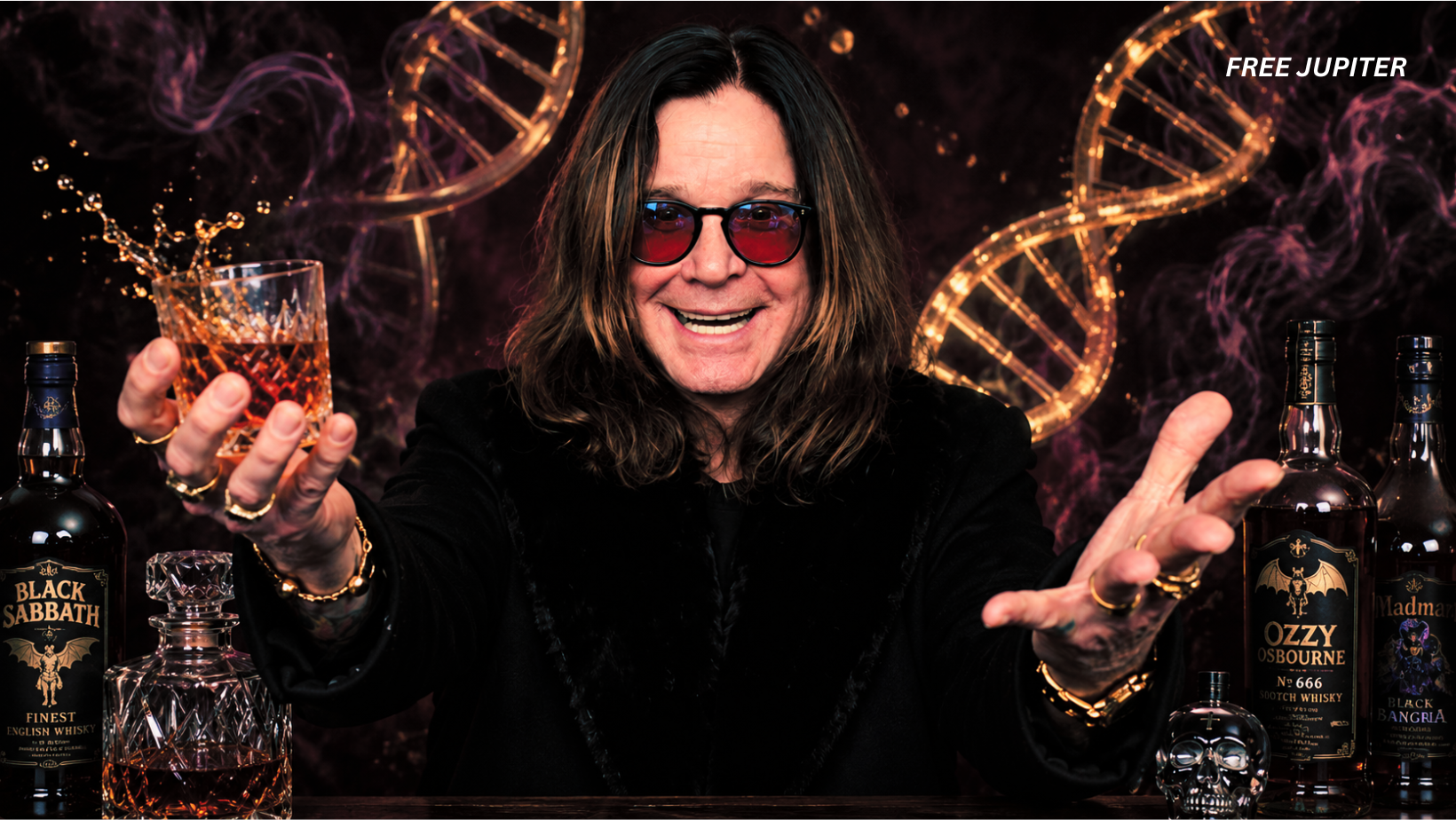
For decades, Ozzy Osbourne has been seen as a living contradiction. His name became linked to excess, loud music, and stories that often sounded too extreme to be real. Yet despite everything, he remained standing, performing, and evolving in the public eye. Many wondered how his body endured such a long stretch of intense living. The answer, it turns out, may be partly hidden in his DNA.
When scientists were given the chance to study his genetic code, they were not simply looking at a celebrity out of curiosity. They were exploring a deeper question about human biology. Why do some people react differently to alcohol, drugs, stress, and even everyday substances? Ozzy’s case offered a rare opportunity to examine those differences in detail.
When Rock and Genetics Cross Paths
In 2010, Ozzy Osbourne stepped into a new kind of spotlight. He became one of the first public figures to have his entire genome sequenced, a process carried out by Knome Inc.. At the time, this kind of analysis was still emerging, often limited to research labs and specialized institutions.
Sequencing a genome means reading the complete set of instructions that make up a person’s biological identity. These instructions are written in DNA, a long chain of chemical letters that guide how the body grows, functions, and responds to its environment. While most humans share a large portion of their DNA, small variations can lead to noticeable differences in health, behavior, and physical response.
What made Ozzy’s results especially intriguing was the sheer number of unusual variations found in his genetic code. Researchers identified hundreds of thousands of differences compared to standard reference genomes. Some of these had never been recorded before, which made the findings both fascinating and difficult to fully interpret.
Even so, a few key discoveries stood out clearly and began to tell a story about how his body works.
Read more: DNA Analysis of Beethoven’s Hair Show Toxic Levels Of Lead Present 200 Years Later
The Alcohol Connection: Fast Processing, Higher Risk
One of the most talked about findings centered on a gene known as the ADH4 gene. This gene plays a role in breaking down alcohol once it enters the body. Enzymes produced by this gene help convert alcohol into other substances that the body can eliminate.
In Ozzy’s case, scientists discovered a rare variant of this gene. This version appears to allow alcohol to be processed more quickly than usual. On the surface, this might sound like an advantage. A faster breakdown could mean less alcohol lingering in the bloodstream at any given time.
However, biology tends to avoid simple answers.
The same genetic trait may also increase the likelihood of dependence. When alcohol is processed quickly, a person might not feel its effects for as long, which can lead to consuming more to achieve the same sensation. Over time, this pattern can contribute to a higher risk of addiction.
This dual effect highlights an important idea. A biological trait that seems helpful in one way can create challenges in another. In Ozzy’s case, his body’s efficiency in handling alcohol may have been paired with a brain that was more vulnerable to craving it.
The Brain’s Reward System and Addiction Signals
Beyond alcohol metabolism, researchers looked closely at how his brain processes reward and pleasure. Much of this activity is linked to dopamine, a chemical messenger that influences how we feel motivation, enjoyment, and reinforcement.
Variations were found in genes related to dopamine pathways and opioid receptors. These systems are deeply connected to how people experience reward. When functioning differently, they can shape how strongly a person responds to certain stimuli, including substances that alter mood.
In simpler terms, his brain may have been wired to feel certain experiences more intensely. This does not automatically lead to addiction, but it can increase the appeal of substances that amplify those feelings.
Another layer of complexity was found in genes such as the COMT gene. This gene influences how the brain breaks down neurotransmitters, including dopamine. Variations here are often linked to differences in how people handle stress, focus, and emotional responses.
Researchers sometimes describe this pattern using the idea of a “warrior or worrier” tendency. Some individuals are more driven toward action and risk taking, while others are more sensitive to stress and cautious in their decisions. Ozzy’s genetic profile suggested a mix of both traits, creating a unique balance between intensity and vulnerability.
This combination may help explain why his life has often appeared both fearless and unpredictable.
A Surprising Twist: Sensitivity to Caffeine
After uncovering genetic traits linked to alcohol and addiction, scientists expected to find similar resilience across other substances. Instead, they discovered something unexpected.
His DNA suggests that he processes caffeine very slowly. This means that even a small amount of coffee can remain active in his system for a longer time than usual. As a result, he may experience stronger or longer lasting effects from caffeine compared to most people.
It is an almost humorous contrast. A person known for surviving years of heavy substance use might find a regular cup of coffee more overwhelming than expected. This detail serves as a reminder that genetics does not follow a single pattern. Strength in one area does not guarantee strength in another.
Read more: Scientists Sequenced The ‘Last Neanderthal’s’ DNA—And It Alters Our Origin Story
The Bigger Picture: Genes, Choices, and Environment
The findings from Ozzy Osbourne’s genome were later presented at TEDMED 2010, where they contributed to ongoing discussions about how genetics influences human behavior.
One of the key lessons from this research is that genes do not act alone. While they can shape tendencies and responses, they do not determine a person’s destiny. Environment, personal choices, social influences, and life experiences all interact with biology in complex ways.
For example, a person with a genetic predisposition toward addiction may never develop a problem if their environment supports healthy habits. On the other hand, someone without that predisposition could still struggle under certain conditions.
In Ozzy’s case, his genetics may have made certain paths more likely, but they did not force those outcomes. His life reflects a mix of biological factors and personal experiences, each influencing the other over time.
Why This Research Matters Today
Studies like this go beyond curiosity about a single celebrity. They contribute to a growing field that aims to understand how individual differences in DNA affect health and behavior. This knowledge can help scientists develop more personalized approaches to medicine and treatment.
For instance, understanding how someone metabolizes alcohol or medication could lead to better guidance on safe consumption or dosage. Insights into brain chemistry could improve treatments for addiction, anxiety, and other conditions linked to neurotransmitter activity.
Ozzy Osbourne’s genome became an early example of how personal DNA analysis can reveal meaningful patterns. While not every detail has immediate practical use, each discovery adds to a larger body of knowledge that continues to evolve.
A Life Seen Through a Scientific Lens
The public image of Ozzy Osbourne has often been shaped by stories of chaos, resilience, and unpredictability. When viewed through the lens of genetics, that image gains depth and context.
His DNA does not reduce his life to a set of instructions, nor does it excuse the challenges he faced. Instead, it offers a framework for understanding how his body and brain might respond differently from others.
His ability to process alcohol quickly, combined with a higher risk of dependence, creates a complex relationship with substance use. His brain’s reward system may amplify certain experiences, making them more compelling. At the same time, something as ordinary as caffeine can affect him in ways that seem out of proportion to his past.
These contrasts make his genetic profile both fascinating and relatable. They reflect the broader truth that every individual carries a unique biological blueprint.
Read more: One Gram of DNA Can Store Around 215 Petabytes. More Data Than All of YouTube!
The Human Story Behind the Science
At its core, this story is not just about genes. It is about how science can shed light on human experience. By studying DNA, researchers are not trying to reduce people to data points. They are trying to understand the patterns that shape our lives.
Ozzy Osbourne’s genome offers a glimpse into that process. It shows how biology, behavior, and environment come together to create a life story that is both personal and universal.
Some people are drawn to risk. Others are more cautious. Some handle substances with ease, while others feel their effects more strongly. These differences are not random. They are part of a complex system that science is only beginning to understand.
In the end, his story reminds us that beneath the headlines and the myths, there is a deeper layer of truth. It is written not in music or media, but in the quiet language of DNA.
Featured image: Freepik.
Friendly Note: FreeJupiter.com shares general information for curious minds. Please fact-check all claims and double-check health info with a qualified professional. 🌱