
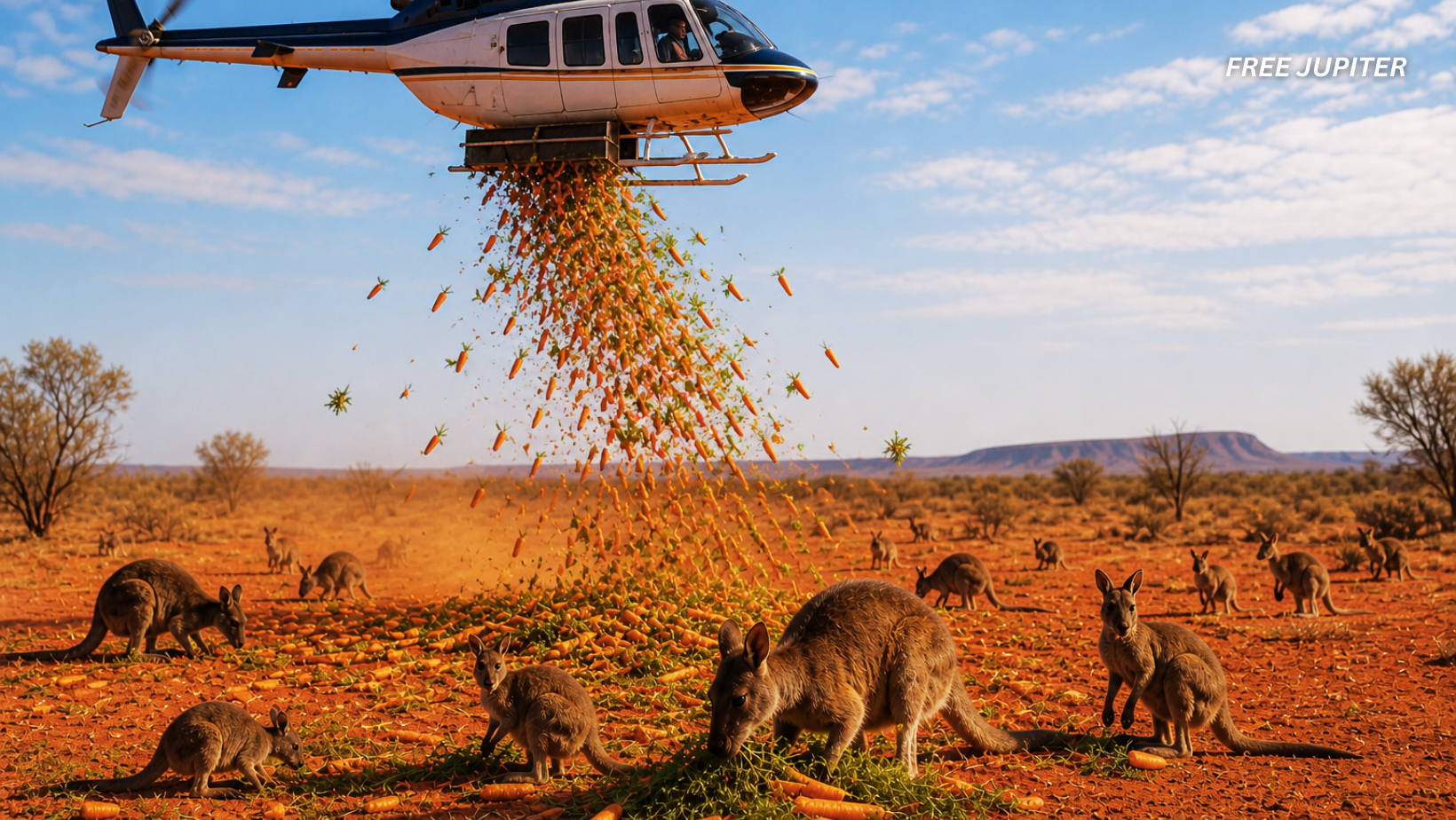
Australia has taken an unusual yet deeply practical step to help wildlife struggling after catastrophic bushfires. In landscapes where flames erased entire ecosystems, survival did not end when the fire stopped. For many animals, the real battle began afterward. Food disappeared, water sources dried up, and familiar shelter turned into ash. In response, authorities turned to the skies, dropping fresh vegetables into isolated habitats to give stranded animals a chance to live.
A Creative Response to an Urgent Crisis
This effort, widely known as Operation Rock Wallaby, was designed to protect the brush tailed rock wallaby, a small marsupial known for its ability to move across steep cliffs and rocky terrain. These environments offer protection from predators, yet they also present a serious challenge for rescuers. Vehicles cannot easily access these areas, and even experienced wildlife teams face limits on how far they can go on foot.
Helicopters solved that problem. From above, crews released thousands of kilograms of carrots and sweet potatoes into carefully selected locations. The vegetables were chosen not only because they are easy to spot but also because they provide essential nutrients that can help sustain animals weakened by stress and hunger. The drops were planned based on tracking data, field observations, and knowledge of wallaby movement patterns, ensuring the food reached places where it was most needed.
At first glance, the idea of dropping vegetables from the sky might seem almost surreal. Yet it reflects a thoughtful and targeted response to a crisis that demanded quick action. After wildfires, the landscape may still appear green in patches, but much of the edible plant life is gone. For herbivores, this creates a hidden emergency. Without intervention, many would not survive long enough to see their habitat recover.
Read more: The Chilling Story Behind A Man Sitting In A Lawn Chair Before Disaster Hit
The True Scale of the Damage
The destruction caused by Australia’s bushfires has been described as one of the most severe wildlife disasters in recent history. Scientists and conservationists have estimated that more than a billion animals may have died across the country. In New South Wales, where fires burned across vast stretches of land, the loss reached into the hundreds of millions.
These numbers represent more than statistics. Entire populations of small mammals, birds, reptiles, and insects were affected. Some species lost significant portions of their habitat in a matter of days. Others faced long term challenges as their ecosystems struggled to rebuild.
While public discussions often centered on government response and climate concerns, conservation workers focused on immediate survival. Teams from national parks, wildlife groups, and local communities worked together to assess damage, rescue injured animals, and provide emergency food and water. The airdrops became one part of a much larger effort to stabilize fragile ecosystems.
Buying Time for Nature to Recover
Recovery after a wildfire does not happen overnight. Soil that has been exposed to intense heat can lose nutrients, making it harder for plants to grow back. Rainfall patterns also play a role, as new vegetation depends on moisture returning to the land. In some areas, it can take months before even the first signs of regrowth appear.
During this period, animals remain vulnerable. Without food, they may be forced to travel farther than usual, increasing their risk of injury or predation. By providing a temporary food supply, the vegetable drops act as a bridge between destruction and renewal. They give species like the brush tailed rock wallaby a chance to remain in their natural habitat instead of being pushed into unfamiliar and dangerous territory.
This approach also supports long term ecological balance. Wallabies contribute to their environment by dispersing seeds and influencing plant growth. Keeping their populations stable helps ensure that when vegetation returns, the ecosystem can rebuild in a more natural and balanced way.
Read more: People Who Replay Conversations In Their Head Over And Over Usually Share These 10 Traits
Other Wildlife Rescue Efforts Across Australia
The carrot airdrops were not the only creative solution that emerged during the crisis. Across the country, similar efforts unfolded as communities and conservationists adapted to rapidly changing conditions.
In some regions, volunteers set up feeding stations for animals such as kangaroos and wombats. These stations provided grains, hay, and fresh water, offering relief in areas where natural resources had been wiped out. Wildlife carers also rescued injured koalas, many of which suffered burns or dehydration. Rehabilitation centers worked around the clock to treat these animals, with some eventually released back into the wild once conditions improved.
Another notable effort involved installing temporary water stations in fire affected zones. Large containers were placed in strategic locations to help animals that could not travel far in search of water. In drought affected areas, these stations became essential lifelines.
There were also stories of local residents stepping in to help. Farmers opened their properties to displaced wildlife, while others reported sightings of animals in distress, helping rescue teams respond more quickly. In urban areas, people left out water bowls and safe food options for smaller creatures that had wandered into neighborhoods.
Even technology played a role. Drones were used in some regions to survey damage and locate surviving animals in hard to reach areas. This allowed rescue teams to act more efficiently and prioritize locations where intervention could have the greatest impact.
Lessons From the Crisis
The events surrounding the bushfires have sparked deeper conversations about how to protect wildlife in a changing climate. Extreme weather events are becoming more frequent in many parts of the world, raising questions about how ecosystems can adapt.
Efforts like Operation Rock Wallaby show that timely and creative interventions can make a meaningful difference. They also highlight the importance of preparation, research, and collaboration. By understanding animal behavior and habitat needs, conservationists can respond more effectively when disasters occur.
At the same time, these actions serve as reminders of how interconnected natural systems are. When one part of an ecosystem is damaged, the effects can ripple outward in unexpected ways. Supporting even a single species can help stabilize a much larger network of life.
Read more: An Absolutely Massive Yellowstone Caldera Shows Signs of Uplift for the First Time in Years
A Surprising but Meaningful Solution
The image of vegetables falling from the sky may seem unusual, yet it captures the urgency and ingenuity behind the response. It is a vivid example of how people can adapt when faced with environmental challenges that push beyond conventional solutions.
Australia’s experience offers a story that is both sobering and hopeful. The scale of the loss cannot be ignored, yet the efforts to protect surviving wildlife reveal a strong commitment to recovery. Each carrot dropped from a helicopter represents more than food. It symbolizes a chance, however small, to preserve life in the aftermath of disaster.
As the land slowly heals and vegetation begins to return, the success of these efforts will become more visible. For now, the focus remains on giving wildlife the support it needs to endure. In that sense, the skies over Australia have become an unexpected source of nourishment, carrying not just vegetables, but a measure of resilience for the natural world.
Featured image: Freepik.
Friendly Note: FreeJupiter.com shares general information for curious minds. Please fact-check all claims and double-check health info with a qualified professional. 🌱