
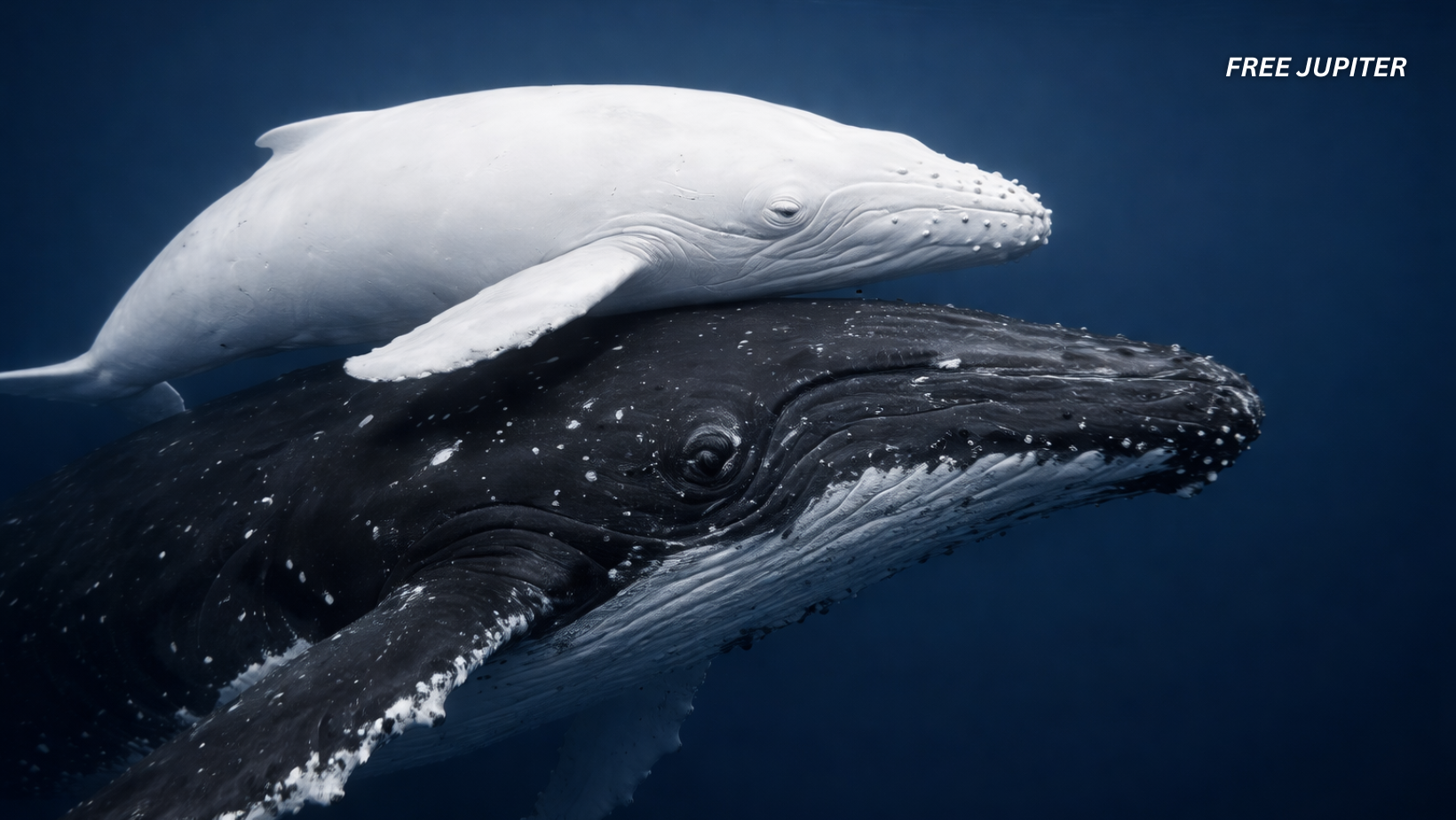
A moment that many wildlife lovers might only dream about has now been captured on camera. In the warm, clear waters of Vava’u in Tonga, Australian photographer Jono Allen photographed an extremely rare white humpback whale calf. The young whale, named Mãhina, has a condition that causes a lack of pigmentation, giving her pale coloring that makes her stand out against the deep blue ocean.
This sighting was so extraordinary that it earned Allen the top prize in the World Nature Photographer of the Year competition. It was also the first time a white humpback whale calf had ever been documented in Tonga.
Why This White Whale Is So Rare
Humpback whales are known for their dark gray or black bodies, sometimes marked with lighter patches. A completely white calf, however, is exceptionally uncommon. Experts estimate that only one in about 40,000 humpback whale births results in a calf with such a dramatic lack of pigment.
This pale appearance is usually linked to a genetic condition that affects the production of melanin, the substance responsible for coloring skin and hair in many animals. In whales, melanin determines the typical dark tones of their skin. When melanin is absent or greatly reduced, the whale appears white or very light in color.
Because of how rare this trait is, many marine biologists and underwater photographers may spend their entire careers without ever seeing one.
Related article: Blue Whale Songs Have Dropped 40%—Scientists Fear It’s a Warning Sign
A First for Tonga
The waters around Vava’u are famous for humpback whale encounters. Each year, humpbacks migrate to the warm South Pacific to breed and give birth. Visitors often travel to Tonga specifically for the chance to swim near these gentle giants under carefully regulated conditions.
Even in a place known for whale sightings, Mãhina’s appearance was unprecedented. According to reports, no white humpback whale had previously been seen or photographed in Tongan waters. That alone would have made the encounter remarkable. The fact that it was captured so clearly on camera elevated it to something historic.
The Photographer Behind the Image
Jono Allen is no stranger to the ocean. He has spent years documenting marine life and working closely with humpback whales. Still, he describes this meeting as unlike anything he had experienced before.
He has shared that seeing the calf glide and roll through the water in the early morning light felt almost unreal. The ocean was calm, the visibility was excellent, and the conditions aligned in a way photographers often hope for but rarely receive.
He described the calf as playful and curious, moving with the relaxed confidence typical of young humpbacks. For Allen, the experience was not only about capturing a photograph. It was about being fully present in a fleeting, once in a lifetime moment.
Learning to Pause Underwater
Interestingly, Allen admitted that excitement almost got in the way. When something so rare appears in front of your lens, adrenaline can take over. He realized that in his rush to document the encounter, he was missing the deeper experience.
So he made a surprising choice. He lowered his camera and took a few steady breaths. He allowed himself to calm down and reconnect with the environment around him.
Only after regaining that sense of balance did he begin to gently interact again, moving slowly and respectfully through the water. This approach helped create a peaceful exchange between human and whale. The calf responded with playful rolls just beneath the surface, offering the kind of image that feels both intimate and vast at the same time.
Related article: Killer Whales Are Getting Smarter—And Their Behavior Is Becoming More Alarming
A Symbol of Conservation Success
Beyond its beauty, the photograph carries deeper meaning. Humpback whales were once hunted heavily during the peak of commercial whaling in the twentieth century. Populations dropped drastically, pushing the species close to collapse in some regions.
International protections and conservation efforts gradually allowed humpback numbers to recover. Today, many populations are considered stable or increasing, although ongoing protection remains essential.
Mãhina’s presence is often described as a living symbol of that recovery. The sight of a rare white calf thriving in protected waters highlights what can happen when conservation policies are enforced and ecosystems are respected.
In that sense, the image is more than a striking wildlife portrait. It represents resilience and renewal. It reminds viewers that endangered species can rebound when given the chance.
Why the Image Stands Out
Winning the World Nature Photographer of the Year is no small achievement. The competition attracts thousands of entries from photographers around the globe. Judges look for technical skill, emotional impact, originality, and storytelling power.
Allen’s photograph combines all of these elements. The contrast between the calf’s pale body and the surrounding ocean creates immediate visual drama. The composition feels balanced yet spontaneous, as if the viewer has been invited into a private underwater ballet.
The early morning light filtering through the water adds depth and softness. Instead of appearing stark, the calf seems luminous. The overall effect is both powerful and serene.
A Reminder of the Ocean’s Surprises
The ocean still holds countless mysteries. Even with satellites, drones, and advanced tracking technology, many marine events unfold unseen. The appearance of Mãhina is a reminder that nature continues to surprise us.
For wildlife photographers, moments like this justify years of patience. For conservationists, they reinforce the importance of protecting habitats. For everyday viewers, they offer a glimpse into a world that exists just beneath the waves.
Why This Story Resonates
In an era where environmental headlines often focus on loss, decline, and crisis, stories of recovery feel refreshing. A rare white humpback whale calf swimming freely in the Pacific suggests that positive change is possible.
The photograph’s success in an international competition amplifies that message. It brings global attention to Tonga’s marine environment and to the broader story of humpback whale recovery.
It also highlights the role of ethical wildlife photography. By respecting the animal’s space and responding calmly rather than intrusively, Allen was able to document something extraordinary without disrupting it.
Related article: Humpback Whales Keep Saving Animals From Orcas—And No One Knows Why
The Lasting Impact of a Single Frame
Some photographs capture a scene. Others capture a turning point. This image does both.
It preserves the first recorded sighting of a white humpback whale calf in Tonga. It celebrates a species that has rebounded from intense exploitation. And it showcases how patience and presence can transform a rare encounter into a timeless work of art.
For many viewers, the image of Mãhina gliding through sunlit water will remain unforgettable. It is a reminder that even in a vast ocean, moments of wonder still rise to the surface.
And sometimes, they are pale as moonlight.
Featured image: GPT Recreation of an Albino Humpback Whale Calf and its Mother.
Friendly Note: FreeJupiter.com shares general information for curious minds. Please fact-check all claims and double-check health info with a qualified professional. 🌱