

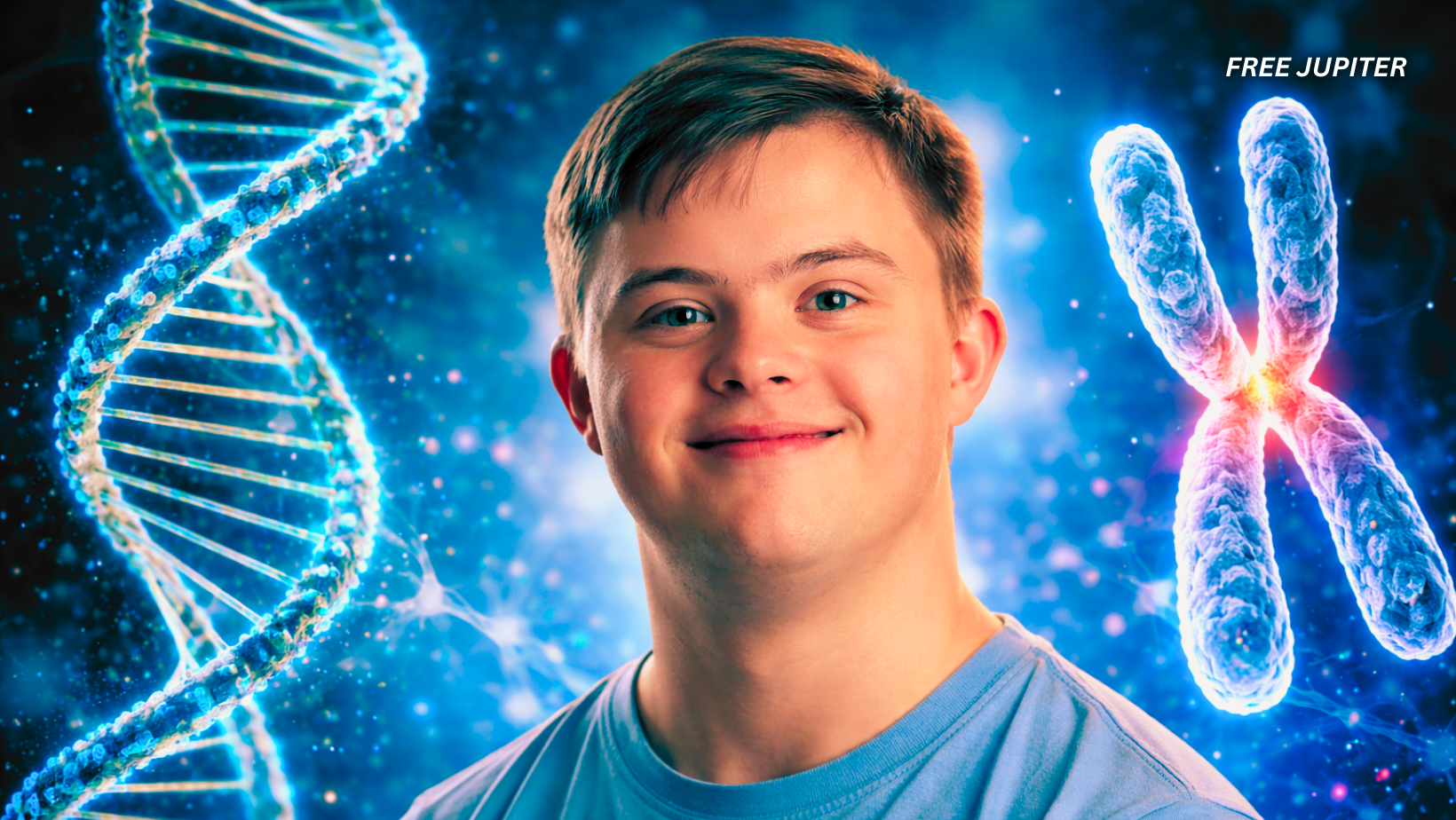
A striking development in modern genetics has begun to reshape how scientists think about Down syndrome. In a controlled laboratory setting, researchers have demonstrated that it is possible to remove the extra chromosome responsible for the condition using the gene editing tool CRISPR. The work remains in its early stages, yet it introduces a bold idea that once belonged to the realm of theory. Rather than managing the effects of a genetic condition, science may one day be able to address its source at the chromosomal level.
Understanding the Genetic Foundation
At the heart of Down syndrome lies a genetic variation known as Trisomy 21. In most people, cells contain two copies of each chromosome, including chromosome 21. In individuals with this condition, there are three copies instead. This additional genetic material influences development in ways that can affect learning, physical growth, and overall health.
The presence of an extra chromosome alters how certain genes are expressed. It can influence brain development, muscle tone, and even increase the likelihood of specific medical conditions such as heart defects. For many years, scientific efforts have focused on supporting individuals through medical care, education, and therapy. These approaches have greatly improved quality of life, yet they do not change the underlying genetic structure.
That is why the idea of directly modifying chromosomes carries such weight. It moves beyond treating outcomes and begins to examine the blueprint itself.
How CRISPR Makes This Possible
The technology behind this breakthrough, known as CRISPR, has rapidly transformed the field of genetics. Often compared to a precise editing tool, CRISPR allows scientists to locate and modify specific sections of DNA. It works by using a guide molecule that directs an enzyme to a targeted genetic sequence, where it can cut and alter the DNA.
Read more:Study Finds Men Twice as Likely to Die from ‘Broken Heart Syndrome’ as Women
In many earlier applications, CRISPR has been used to correct small mutations within genes. Removing an entire chromosome, however, represents a far more complex challenge. Chromosomes are large structures containing thousands of genes, each playing a role in the body’s function.
The research team, led by Ryotaro Hashizume, approached this challenge by designing a strategy that selectively targets the extra copy of chromosome 21. Through careful experimentation, they were able to disrupt and eliminate the surplus chromosome in a portion of human cells grown in the laboratory.
The outcome was notable. In more than thirty percent of the treated cells, the extra chromosome was successfully removed. Even more compelling, these cells began to behave more like typical cells, suggesting that normal cellular activity could be restored once the chromosome count was corrected.
Why Removing a Whole Chromosome Is Significant
This achievement marks a turning point in genetic research. Editing a single gene is already a delicate task, yet removing an entire chromosome introduces a new level of precision and complexity. It requires not only accuracy but also a deep understanding of how cells respond to such a major change.
By demonstrating that this can be done, scientists have expanded the boundaries of what gene editing might accomplish. It suggests that other chromosomal conditions could one day be explored using similar approaches.
At the same time, the results highlight how much remains unknown. Cells in a laboratory environment behave differently from those in a living human body. The success seen in controlled conditions does not automatically translate into safe or effective treatments for people.
The Human Side of the Discovery
Scientific progress often carries emotional and ethical dimensions, and this research is no exception. Down syndrome is not only a medical condition but also part of the identity of millions of people around the world. Many individuals with the condition lead meaningful, fulfilling lives, supported by families and communities that value their unique perspectives.
The idea of altering or removing the genetic basis of such a condition raises important questions. Some may view it as an opportunity to reduce medical challenges, while others may see it as a step that risks overlooking the value of human diversity.
These conversations are essential. Advances in genetics do not exist in isolation. They intersect with culture, philosophy, and personal belief. Any future application of this technology will need to consider not only what is possible, but also what is appropriate.
Challenges That Still Lie Ahead
While the laboratory results are promising, several obstacles must be addressed before this approach could be considered for real world use. One of the most significant challenges involves delivery. Scientists must find safe and reliable ways to introduce gene editing tools into the human body and ensure they reach the correct cells.
There is also the question of precision. Even with advanced technology, unintended changes can occur. These off target effects could have serious consequences, making safety a top priority in ongoing research.
Another factor is timing. Genetic conditions like Down syndrome are present from the earliest stages of development. Determining when and how an intervention might take place adds another layer of complexity.
Long term effects must also be studied. Removing a chromosome may restore certain cellular functions, but scientists need to understand how these changes behave over time and across different tissues in the body.
Read more: 8 Behaviors That Reveal You Might Be Dealing With Imposter Syndrome
A New Direction for Precision Medicine
This breakthrough fits into a broader movement within healthcare known as precision medicine. The goal is to tailor treatments based on an individual’s unique biological makeup, often at the genetic level. Instead of applying a one size fits all approach, precision medicine seeks to address the specific causes of a condition.
By targeting the root of trisomy 21, this research aligns with that vision. It represents a shift toward interventions that are both more direct and potentially more effective.
It also reflects how rapidly scientific tools are evolving. Not long ago, editing DNA with such precision seemed out of reach. Today, researchers are exploring ways to reshape entire chromosomes. Each discovery builds on the last, creating a chain of progress that continues to expand.
The Role of Continued Research
Scientific breakthroughs rarely lead to immediate solutions. They serve as stepping stones that guide future work. In this case, the successful removal of an extra chromosome provides a foundation for further investigation.
Researchers will need to refine their techniques, test their methods in more complex systems, and collaborate across disciplines. Medical professionals, ethicists, and patient communities will all play a role in shaping how this knowledge is used.
Public understanding is equally important. As genetic technologies become more visible, clear and accessible information will help people engage with these developments in meaningful ways.
Read more: Feeling Constantly Attacked by Your Inner Critic? Ask These 6 Questions To Calm It Down
Looking Toward the Future
The idea of correcting a chromosomal condition at its source is both exciting and challenging. It invites a new way of thinking about medicine, one that blends biology, technology, and ethics into a single conversation.
For now, the work remains within the laboratory, a proof of concept that demonstrates what might be possible. It does not offer immediate treatments, nor does it provide simple answers. What it does offer is a glimpse into a future where genetic conditions could be approached with a level of precision that was once unimaginable.
As research continues, the story will evolve. Each new discovery will bring additional clarity, along with new questions. What remains certain is that the field of genetics is moving forward, guided by curiosity, caution, and a desire to better understand the building blocks of life.
In that sense, this breakthrough is more than a scientific achievement. It is part of a larger narrative about how humanity explores its own biology, seeking not only to treat illness but to understand the intricate systems that make each individual unique.
Featured image: GPT Original Creation.
Friendly Note: FreeJupiter.com shares general information for curious minds. Please fact-check all claims and double-check health info with a qualified professional. 🌱