
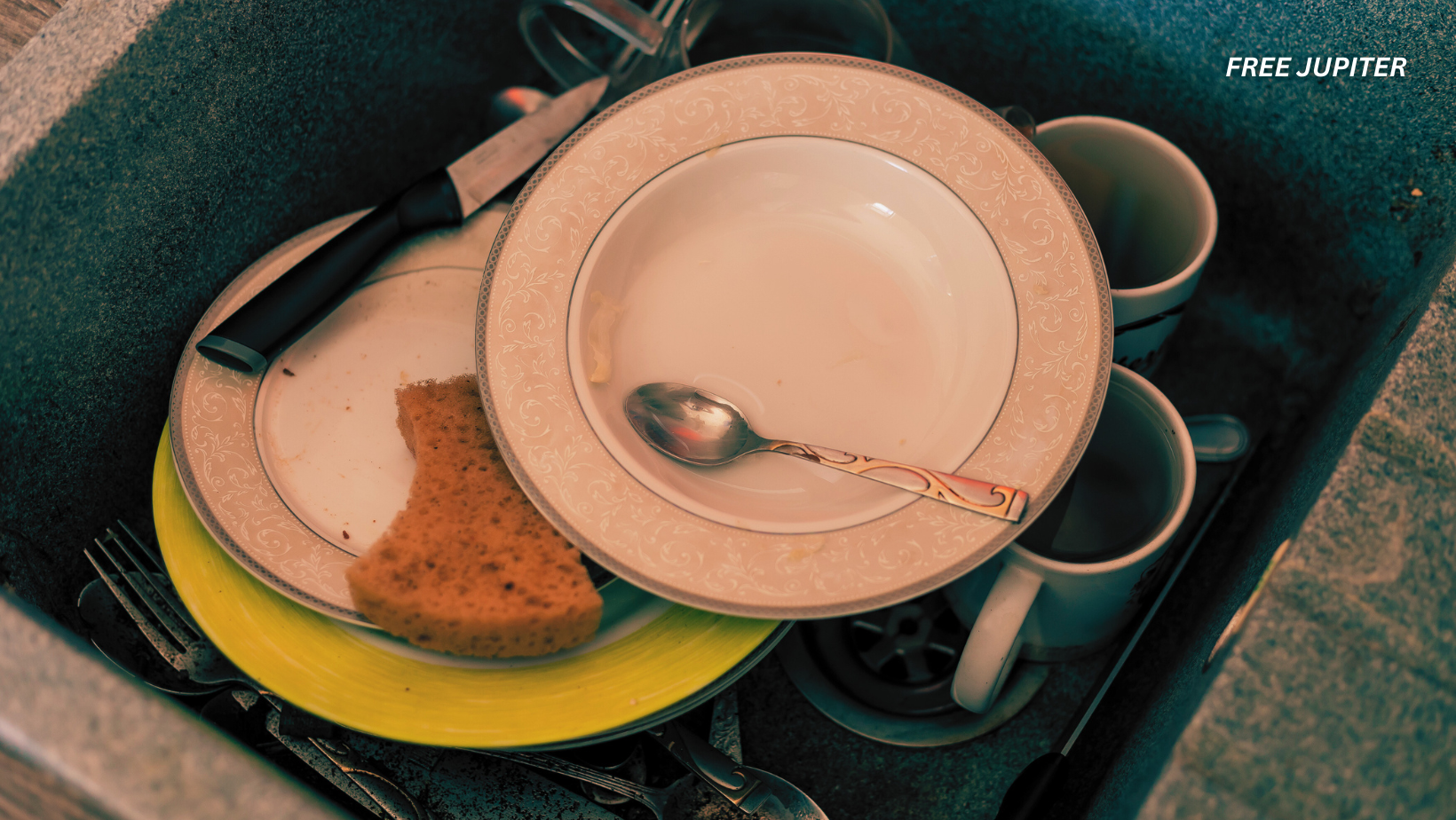
Few household debates are as timeless as the small arguments that circle around everyday habits. The toothpaste cap gets left off. The toilet paper roll faces the “wrong” direction. And then there is the sink. Some people wash every plate the moment it touches the basin. Others let dishes stack up, telling themselves they will deal with it later.
If you tend to fall into the second group, it may be tempting to label yourself as lazy or disorganized. But according to psychologist Dr. Crystal Saidi, Psy.D., a licensed clinician with Thriveworks, daily habits often reveal much more than surface level neatness. They can reflect stress levels, emotional energy, and what is happening beneath the surface.
Dirty dishes are not simply about cleanliness. They can act as a small signal of your current mental load. Instead of shaming the habit, it may be more helpful to see it as information. Below are eight common traits and patterns that people who regularly let dishes pile up may share, along with a reminder that context always matters.
Related article: Psychology Says That The Simple Act Of Cleaning Up After Yourself At A Restaurant Reveals Your True Character
1. Mental Overload
One of the most common reasons dishes linger in the sink is simple mental overload.
Imagine your brain as a browser with too many tabs open. Work deadlines. Family responsibilities. Financial concerns. Text messages you still need to answer. When your mind is juggling all of that, even a straightforward task like rinsing a plate can feel surprisingly heavy.
Dr. Saidi explains that when the nervous system is stretched thin, small chores can start to feel disproportionately large. It is not that the task itself is difficult. It is that your internal capacity is already maxed out. The dishes become one more thing on a list that already feels endless.
If this sounds familiar, the pile in the sink may be less about motivation and more about bandwidth.
2. Decision Fatigue
Throughout the day, you make hundreds of choices. What to wear. Which email to answer first. What to cook. How to respond to a difficult conversation.
By evening, your ability to make even tiny decisions can feel drained. Psychologists call this decision fatigue. When your mental energy for choosing and acting is depleted, tasks that require even a small amount of planning can stall.
Doing the dishes might seem simple, but it still involves steps. Scrape or soak. Hand wash or load the dishwasher. Start now or after dinner. When you are already worn down, your brain may resist adding one more decision to the pile.
In seasons of intense responsibility, such as caring for a sick family member or managing a high pressure job, this fatigue can grow stronger. The sink becomes a visible reminder of how much you have already given that day.
3. Avoidance as a Coping Strategy
Sometimes the dishes are not just dishes. They carry emotional weight.
You may glance at the sink and think, I should have done this earlier. That thought can spark guilt or frustration. Instead of motivating action, those feelings can lead to avoidance.
Avoidance is a common stress response. When something triggers discomfort, the nervous system may steer you away from it. In this case, leaving the kitchen and turning on the television can feel easier than facing the task.
Ironically, the longer the dishes sit, the more guilt can build. The cycle feeds itself. Recognizing this pattern is often the first step toward breaking it.
4. Perfectionism
It may sound surprising, but perfectionism can play a role in unfinished chores.
For some people, the internal standard is not simply clean enough. It is perfectly clean, done all at once, in the right order. If there is not enough time or energy to do the job thoroughly, the brain may send a subtle message: do not start at all.
This all or nothing thinking can freeze action. The sink fills up while you wait for the ideal moment to tackle everything in one go. Unfortunately, that perfect window rarely appears.
Perfectionism often hides behind procrastination. If you suspect this trait in yourself, experimenting with partial progress can help. Even washing a few plates shifts the narrative from nothing is done to something is moving.
Related article: Experts Say Adults Who Grew Up as Emotional Caretakers In Childhood Are Triggered by These 10 Things
5. Emotional Exhaustion From Caregiving
Caregiving can be deeply meaningful, but it is also draining.
If you spend your day caring for children, clients, patients, or aging parents, you may arrive home emotionally empty. Your attention has been outward focused for hours. By the time you face your own kitchen, your internal tank may be near empty.
Dr. Saidi notes that when emotional resources are depleted, household tasks can feel overwhelming. It is not a character flaw. It is a sign that you have been giving a lot of yourself.
In these cases, dishes piling up may signal a need for rest or shared responsibility rather than a need for self criticism.
6. Low Mood or Depression
Letting chores slide can sometimes point to something deeper, including depression.
Depression is not always dramatic or obvious. It can show up as heaviness, low motivation, and reduced energy. Tasks that once felt routine may now feel insurmountable.
When energy is low, the brain prioritizes basic survival. Cooking, cleaning, and organizing may fall lower on the list. If the pile of dishes is accompanied by persistent sadness, sleep changes, or loss of interest in activities you once enjoyed, it may be worth speaking with a mental health professional.
The sink alone does not diagnose anything. However, patterns in daily functioning can offer helpful clues.
7. Putting Everyone Else First
Some people are highly attuned to others’ needs. They respond quickly to requests, handle last minute work tasks, and make sure everyone else is comfortable.
In that process, their own environment can slip down the priority list. After spending the day meeting external expectations, there may be little energy left to care for personal space.
Dr. Saidi points out that when your needs consistently land at the bottom of the list, even small acts of self care can be postponed. A clean kitchen might seem less urgent than answering one more email or helping one more person.
Over time, this pattern can lead to resentment or burnout. The dishes become a quiet symbol of how often you place yourself last.
8. Different Standards and Life Seasons
Not everyone sees a pile of dishes the same way. Personal standards around cleanliness vary widely. What feels chaotic to one person may feel normal to another.
Life seasons also matter. A new job, a move, a major project, or a personal transition can temporarily shift your priorities. During intense periods, energy may be directed toward more urgent concerns.
Dr. Saidi emphasizes that context is key. A short term change in routine does not define your personality. The question is whether the habit reflects a passing phase or a chronic pattern that causes stress.
When It Is Completely Reasonable to Let Dishes Sit
It is important to note that there are situations where letting dishes pile up is entirely understandable.
Illness is one example. When your body is fighting infection or managing chronic pain, conserving energy becomes essential. Cleaning plates may simply not be realistic.
Major life transitions such as postpartum recovery, grief, or trauma can also affect daily functioning. During these periods, the nervous system is adjusting to significant emotional shifts. Temporary dips in household management are common.
Mobility challenges can make physical tasks genuinely difficult. For people with chronic conditions, standing at a sink for extended periods may be exhausting or painful. In these cases, seeking support or using adaptive tools is not a weakness. It is practical.
What Your Sink Might Be Telling You
If you notice dishes stacking up regularly and it bothers you, consider approaching the issue with curiosity instead of judgment.
Ask yourself a few gentle questions. Am I overwhelmed right now. Am I stretched thin from caring for others. Do I expect myself to do everything perfectly. Could I use help or a different system.
Sometimes small changes can make a big difference. Dividing chores more evenly within a household. Setting a short timer to wash a few items at a time. Listening to a favorite podcast while cleaning. These adjustments can shift the experience from burden to manageable routine.
In other cases, the pile may signal a need for deeper support. Therapy, workload adjustments, or honest conversations at home can address the root cause rather than just the symptom.
Related article: If You Grew Up Walking on Eggshells, These 10 Behaviors Will Instantly Feel Relatable
A Final Thought on Personality and Dirty Dishes
It is easy to reduce habits to labels. Neat. Messy. Disciplined. Lazy. But human behavior is rarely that simple.
A sink full of dishes does not define your worth. It may reflect stress, exhaustion, perfectionism, or simply a busy week. It might even reflect a relaxed attitude toward clutter that genuinely does not bother you.
Daily routines often act as mirrors. They show us where our energy is flowing and where it may be running low. Instead of turning the sight of stacked plates into a verdict about your character, consider it a small piece of data about your current season of life.
In the end, the goal is not a spotless sink at all costs. It is understanding yourself with honesty and compassion.
Featured image: Freepik.
Friendly Note: FreeJupiter.com shares general information for curious minds. Please fact-check all claims and double-check health info with a qualified professional. 🌱