

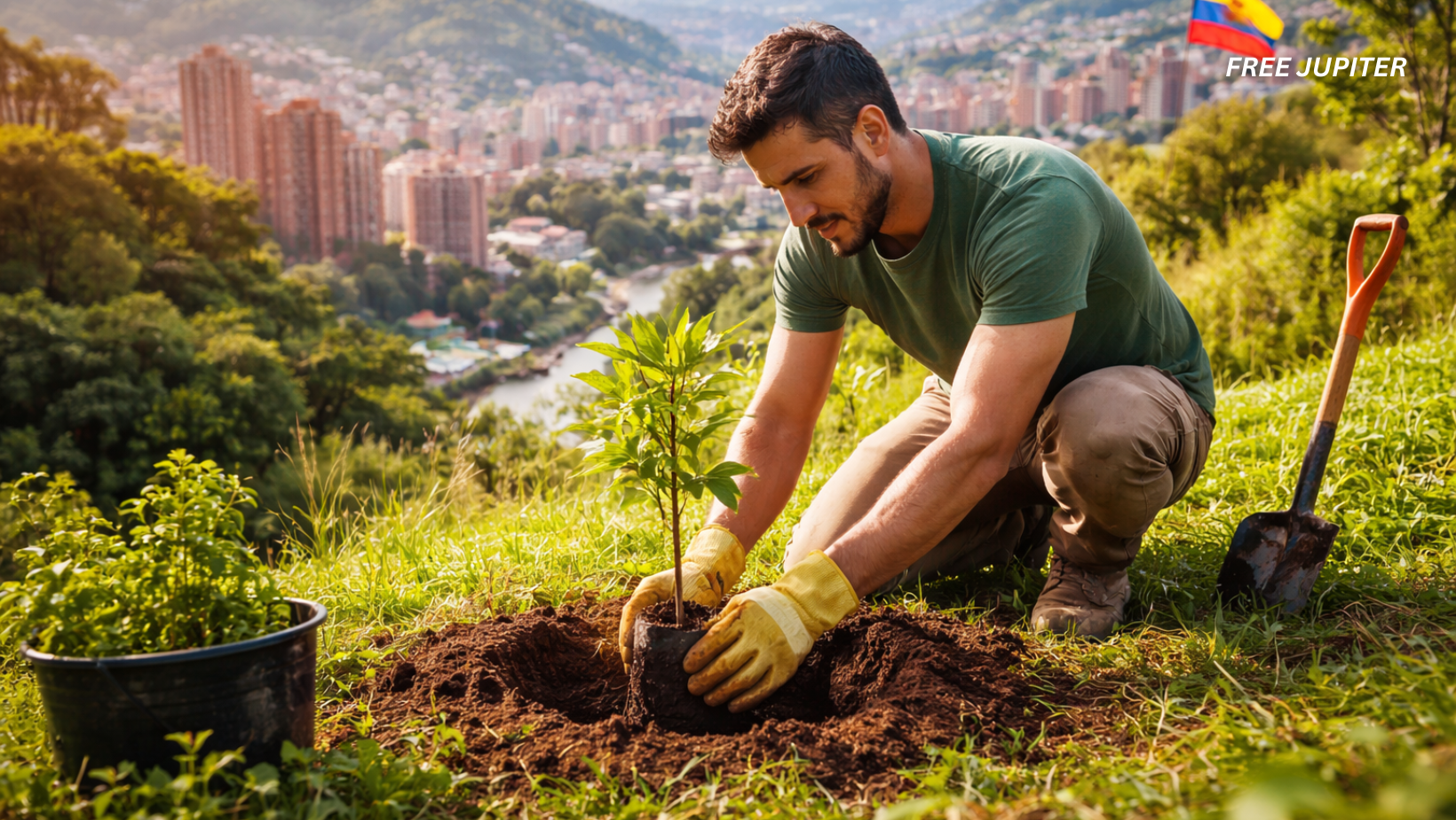
Imagine a city that once felt hotter than the hills around it. Imagine walking down a street baking under the sun, with concrete and pavement holding heat long after dusk. Now imagine that same place filled with shady corridors of trees and flowering plants, where the air feels noticeably fresher and more comfortable.
That transformation has been happening in Medellín, Colombia—a large city tucked into the Andes mountains that has taken a natural approach to cooling itself. Through one of the most ambitious urban greening efforts in the world, Medellín has managed to lower its average temperature by about 2°C simply by growing millions of trees and plants throughout its streets and public spaces.
The Birth of the Green Corridors
Back in 2016 the city government launched an initiative called “Green Corridors” (Corredores Verdes in Spanish). The idea was simple but bold: replace heat‑trapping concrete and asphalt with living, breathing vegetation that could cool the air, improve the local environment, and reconnect people with nature in a bustling urban context.
Over the years this project has planted roughly 880,000 trees along with 2.5 million shrubs, grasses, and other plants across the city. These plants form about 30 green corridors—continuous stretches of greenery woven into central roads, riversides, sidewalks, and parks.
These corridors now stretch for about 20 kilometres, creating shaded paths for walking and cycling that are much more pleasant in hot weather than bare streets.
Related article: Humans Were Built for Nature—Not the Stress of Modern Life
How Green Space Cools a City
You might wonder how plants can make a real difference in a big city’s temperature. The science is straightforward: leaves release water vapor in a cooling process called evapotranspiration. When water changes from liquid to vapor, it needs energy. That energy is drawn from the heat in the surrounding air, which lowers the temperature around the plants.
Trees also provide shade, which blocks direct sunlight from warming the ground and surfaces. Instead of concrete heating up like a frying pan, shaded areas stay cooler and more comfortable.
In Medellín’s green corridors, these effects combine to reduce local temperatures by up to 4.5°C in the corridors themselves, and by about 2°C across the city’s urban area.
More Than Just Cooler Air
Lowering temperatures was just the first—and perhaps most visible—benefit of Medellín’s Green Corridors. The effects of planting millions of trees and shrubs reach far beyond simple cooling, touching public health, wildlife, air quality, and even social well-being.
1. Cleaner, Healthier Air
Urban areas are notorious for air pollution, and Medellín was no exception. Traffic, industry, and densely packed buildings produce tiny particles that make breathing more difficult and increase the risk of respiratory diseases. The new greenery acts as a natural filter. Leaves and branches trap dust, pollutants, and particulate matter, which significantly improves air quality. Residents report fewer days of smog, and studies suggest that increased urban vegetation correlates with lower rates of asthma and other lung conditions.
2. Boosting Urban Biodiversity
Concrete jungles are challenging environments for wildlife. By introducing green corridors, Medellín created pockets of habitat for birds, butterflies, insects, and small mammals that had all but disappeared from the city. This return of wildlife not only enriches the city’s ecosystems but also provides natural pest control. Birds feed on insects, bees help pollinate plants, and the presence of diverse species contributes to a healthier, more resilient urban environment.
3. Physical and Mental Health Benefits
Access to greenery has a profound impact on human well-being. Studies show that people who live near trees and parks experience lower stress levels, reduced anxiety, and even better cardiovascular health. The corridors give residents pleasant places to walk, cycle, or simply relax outdoors. Shade from the trees encourages outdoor activity, which promotes both physical health and social interaction. Families and friends can gather in cooler, safer spaces, creating a sense of community that concrete alone cannot provide.
4. Stormwater Management and Soil Health
Beyond air and biodiversity, the plants also improve how the city handles rain. Trees and shrubs help absorb rainwater, reducing runoff that can flood streets or overwhelm drainage systems. Their roots prevent soil erosion, and the organic material they produce enriches the soil, supporting more plant life in a virtuous cycle. In this way, the corridors help Medellín prepare for heavy rainfall while simultaneously cooling the city.
5. Social and Economic Benefits
The initiative has also provided economic and social opportunities. Local residents are trained and employed to plant and maintain the green corridors. This creates green jobs, gives communities a sense of ownership, and encourages environmental stewardship. Public spaces that are cleaner, cooler, and more inviting can even boost local businesses by attracting more foot traffic.
6. Climate Resilience
Finally, the corridors play a crucial role in preparing the city for climate change. Urban heat waves are becoming more frequent worldwide, and cities that rely solely on concrete and air conditioning are vulnerable. By using trees and plants as a natural buffer, Medellín is building long-term resilience against rising temperatures while also reducing reliance on energy-intensive cooling systems.
In short, Medellín’s Green Corridors demonstrate that urban greening is not just about aesthetics or comfort—it is a multi-layered solution that improves environmental health, supports biodiversity, enhances human well-being, strengthens local economies, and builds resilience against climate change. By planting millions of trees and shrubs, the city has created a living system where humans and nature thrive together.
Related article:Mexico, Guatemala, and Belize Team Up to Create a Vast Nature Reserve To Preserve the Mayan Jungle
Model For Other Cities
Because of these achievements, Medellín won the 2019 Ashden Award for Cooling by Nature, a global recognition for nature‑based solutions to climate and urban challenges.
International groups including urban planners, environmental agencies, and sustainability advocates now look to Medellín as a leading example of how cities can use nature to adapt to rising temperatures instead of relying only on machines like air conditioners.
Urban greening efforts like these are gaining traction worldwide because heat stress and climate change are growing problems. Many studies suggest that expanding vegetation in cities can help people cope with warmer weather while also improving air quality and public health.
Lessons Learned and Future Outlook
Medellín’s experience offers clear lessons for other cities:
- Strategic planting matters: About 30 corridors were spread across major roads, waterways, and public spaces so that heat reduction and shade benefits reach as many people as possible.
- Long‑term maintenance is still needed: Greening isn’t a one‑time effort. Regular care of plantings ensures the benefits last.
- Community involvement helps: Training and employing local residents creates stewardship and pride in these shared spaces.
- Nature‑based solutions are cost‑effective: Compared with the expense and energy use of mechanical cooling, trees and plants offer a renewable, long‑lasting alternative.
Related Research and Wider Context
Although Medellín’s success is clear, not all greening projects work the same everywhere. A recent scientific study for humid cities found that vegetation cooling can vary depending on local humidity and plant types, and in some very humid conditions plants might change how heat feels rather than reduce it. This doesn’t undermine Medellín’s work, but it reminds planners that one size doesn’t fit all when cities build nature into urban design.
Other research has shown that cities with more green space generally experience lower daytime and nighttime heat compared to those dominated by buildings and pavement. But the amount of cooling depends on how green space is distributed, how much vegetation covers the land, and how accessible those areas are to residents.
Related article: Nature’s First Laser Gun? Researchers Discover Peacock Feathers Emit Laser-Like Beams
Nature as a Partner in Urban Life
Medellín’s story shows that nature isn’t a luxury; it can be an essential partner in making cities healthier, cooler, and more pleasant places to live. Trees and plants can soften the impact of extreme heat, make the air easier to breathe, and bring wildlife back into places once dominated by machines and concrete.
In a warming world, projects like the Green Corridors are reminders that sometimes the simplest solutions—seed, soil, and patience—can create the biggest changes.
Featured image: GPT Creation.
Friendly Note: FreeJupiter.com shares general information for curious minds. Please fact-check all claims and double-check health info with a qualified professional. 🌱