
For generations, much of Illinois’ native prairie had been replaced by farmland. Fields that once swayed with tall grasses were turned into rows of corn and soybeans, and the wildlife that depended on those prairies slowly faded into the background.
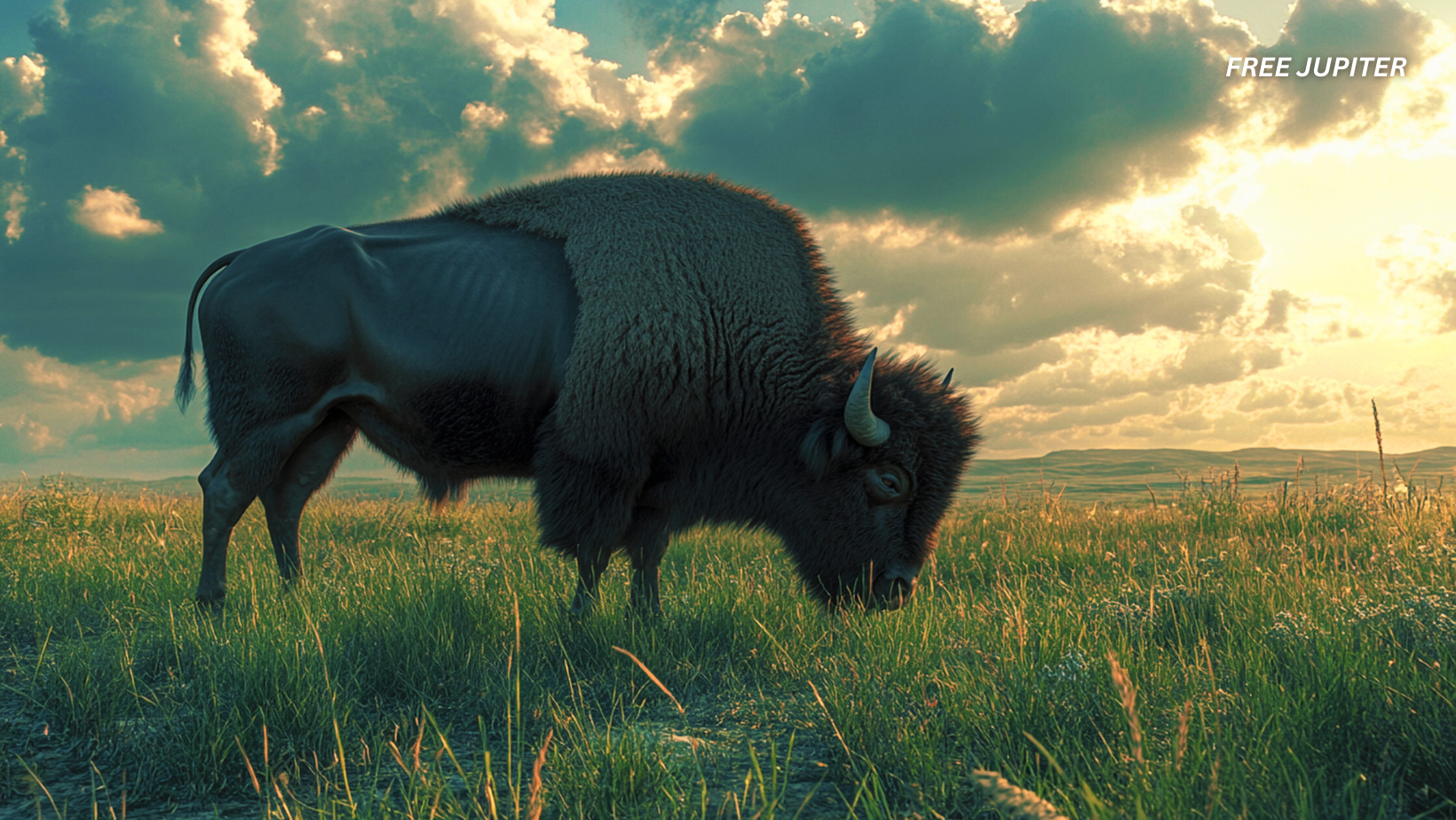
But in recent years, something remarkable has unfolded. The return of the American bison, an animal once nearly erased from the landscape, has sparked a quiet but powerful transformation. What began as a conservation effort has turned into a living story of renewal, one that now includes more than a hundred species of birds finding their way back home.
A Landscape With a Memory
Before large scale farming reshaped Illinois, vast stretches of tallgrass prairie covered the region. These ecosystems were not empty fields. They were alive with movement, from insects to grazing mammals to flocks of birds that relied on the land’s natural rhythms. Families who lived in rural Illinois decades ago often recall stories passed down from grandparents who described skies filled with birds and land that seemed to hum with life.
Over time, those memories became harder to connect with reality. By the late twentieth century, less than one percent of the original tallgrass prairie remained. Conservationists, scientists, and local communities began to ask whether it was possible to bring even a part of that ecosystem back.
Read more: Scientist Claims That Patterns Are Alive and We May Just Be Living Patterns
The Return of an Old Neighbor
The answer began to take shape with the reintroduction of bison at places like Midewin National Tallgrass Prairie and Nachusa Grasslands. These were not just symbolic gestures meant to honor history. Bison were brought back because of the unique role they once played in shaping the prairie itself.
Unlike cattle, which tend to graze evenly across a field, bison move in a more unpredictable way. They graze one patch heavily, leave another untouched, and return later when the vegetation has grown back. This creates a natural pattern across the land, a mix of short grasses, tall grasses, and open spaces.
For people unfamiliar with ecology, it may seem like a small detail. But this variation is exactly what many bird species need in order to survive.
How Bison Redesign the Prairie
Think of the prairie as a neighborhood with different types of homes. Some birds prefer shorter grasses where they can easily spot insects. Others need taller grasses to hide their nests from predators. Some rely on open ground for feeding, while others depend on denser patches for protection.
Bison, without any plan or instruction, create all of these conditions simply by living their natural lives. Their grazing patterns produce a kind of patchwork landscape that no machine or human management system has been able to replicate with the same balance.
Researchers from the University of Illinois have observed that this diversity in plant height and density directly supports a wider range of bird species. The land begins to feel less uniform and more alive, offering opportunities for different forms of life to return.
Birds That Found Their Way Back
As the prairie changed, birds began to notice.
Species such as the Henslow’s sparrow, known for its soft and almost hidden song, started appearing in areas where tall grasses were left undisturbed. The bobolink, a migratory bird that travels thousands of miles each year, returned to nest in the restored fields. Even the greater prairie chicken, a species that has struggled to survive due to habitat loss, found new ground where it could perform its distinctive mating displays.
For local families living near these restoration sites, the changes have been visible and deeply personal. Some have shared stories of bringing their children to the prairie and hearing bird calls that had not been heard in decades. Grandparents who once spoke of these birds as part of their youth are now able to point them out again, creating a bridge between past and present.
Read more: Nature’s First Laser Gun? Researchers Discover Peacock Feathers Emit Laser-Like Beams
A Small but Meaningful Detail
One of the more unexpected connections between bison and birds is found in something as simple as fur. During the colder months, bison grow thick coats to survive harsh winters. When spring arrives, they shed this wool, leaving soft fibers scattered across the ground.
Birds take advantage of this natural resource. They gather the shed wool and use it to line their nests, creating warm and insulated spaces for their eggs. It is a small detail, easy to overlook, but it highlights how deeply connected these species are.
The presence of bison does not just shape the land. It supports life in ways that extend to the next generation of birds.
Why Bison Matter More Than Ever
The story of bison in Illinois is not just about one animal returning to its former home. It is about recognizing the role that certain species play in maintaining the health of entire ecosystems. These animals are often referred to as keystone species because their presence supports a wide range of other life forms.
Without bison, the prairie becomes more uniform, and many bird species struggle to find suitable habitats. With them, the land regains its natural variation, allowing life to flourish in multiple forms.
This lesson extends beyond Illinois. Around the world, conservationists are beginning to understand that restoring ecosystems often means reintroducing the species that once shaped them.
A Prairie That Feels Alive Again
Today, areas like Midewin and Nachusa are no longer just restored landscapes. They are living systems that continue to evolve. More than one hundred bird species have been recorded in these regions, a number that continues to grow as the prairie matures.
Visitors often describe a sense of movement and sound that feels different from traditional farmland. Grasses shift in the wind, insects buzz, and birds call from various heights across the landscape. It is a reminder that ecosystems are not static. They are dynamic, constantly changing, and deeply interconnected.
Read more: Mexico, Guatemala, and Belize Team Up to Create a Vast Nature Reserve To Preserve the Mayan Jungle
Looking Toward the Future
The success of these prairie restoration efforts offers a hopeful perspective. It shows that even land that has been heavily altered can begin to recover when given the right conditions. It also highlights the importance of patience. Nature does not rebuild itself overnight, but with time and careful stewardship, it can return in ways that exceed expectations.
For the people of Illinois, the return of bison has become more than a conservation project. It is a symbol of renewal, a reminder that the past can inform the future, and that the land still holds the potential to support life in abundance.
In the end, the story is not just about bison or birds. It is about a relationship between humans and the natural world, one that is being rediscovered step by step. As the prairie continues to grow and change, so too does our understanding of what it means to truly restore a landscape.
And perhaps most importantly, it shows that sometimes, the best way to heal the environment is not to control it, but to let nature do what it has always known how to do.
Featured image: Freepik.
Friendly Note: FreeJupiter.com shares general information for curious minds. Please fact-check all claims and double-check health info with a qualified professional. 🌱