
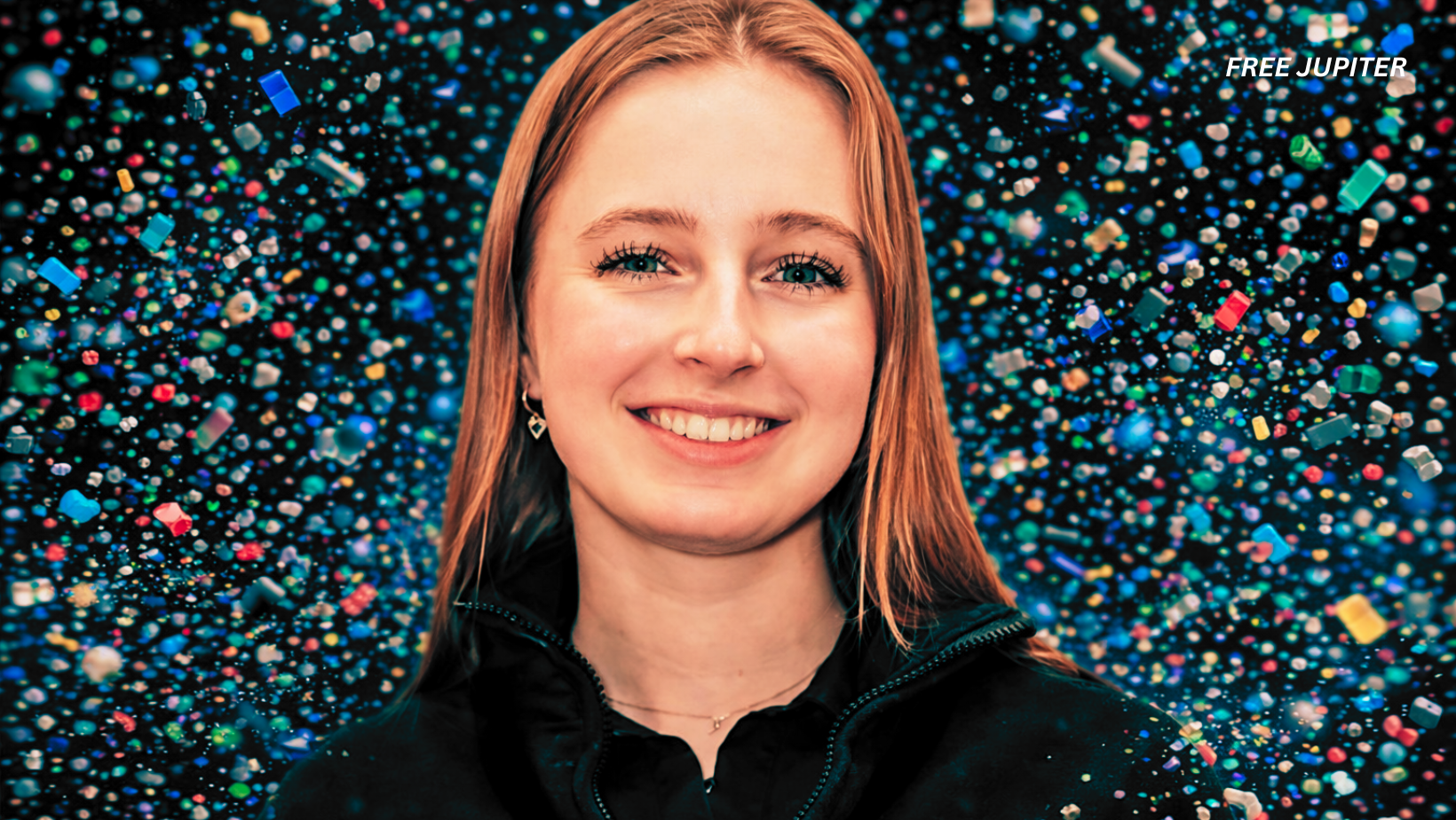
At an age when most students are focused on exams and college plans, an 18 year old high school senior named Mia Heller found herself thinking about something far more unsettling. Tiny fragments of plastic, known as microplastics, were making their way into everyday drinking water. The more she learned, the harder it became to ignore. Instead of waiting for large institutions to step in, she decided to explore whether a practical solution could be built at home.
Mia, a student at Kettle Run High School, did not begin with a laboratory or a team of engineers. Her starting point was much more familiar. It was her own household. Like many families, hers relied on a water filtration system that used membranes to trap contaminants. While effective to a degree, these filters came with a set of challenges that became increasingly difficult to overlook. They required frequent maintenance, produced waste, and often came with a high price tag. Over time, frustration began to build.
Rather than accepting these limitations, Mia became curious about whether there might be a different way to approach the problem. What if water could be cleaned without relying on filters that clog, wear out, and need constant replacement? What if the process could be both efficient and reusable?
A Garage Turned Into a Workshop
With those questions in mind, Mia transformed her garage into a space for experimentation. The setting was far from glamorous, yet it offered something essential. Freedom to test ideas without restriction. Over the course of several months, she experimented with different materials and methods, learning through trial and error.
Her goal was not just to create another filter. She wanted something simpler, something that could reduce waste while still performing at a high level. It was an ambitious idea, especially for someone still in high school, but it was also grounded in a clear understanding of a real world problem.
As her experiments progressed, one concept began to stand out. Instead of trapping microplastics in a physical barrier, she wondered if it might be possible to pull them out of the water using a different force altogether.
Read more: Microplastics Are Now In Our Clouds — And They’re Actively Altering Our Weather
The Role of a Magnetic Liquid
The key to Mia’s design lies in a substance called ferrofluid. This is a liquid that reacts strongly to magnets. At first glance, it looks like an ordinary dark fluid, but it behaves in a fascinating way when exposed to magnetic fields.
Mia realized that this material could be used to bind with tiny plastic particles suspended in water. Microplastics come in a wide range of sizes, from extremely small particles measured in nanometers to larger fragments visible to the naked eye. Capturing all of them using traditional filters can be difficult, especially when the smallest pieces slip through.
In her system, the ferrofluid is introduced into the water, where it attaches itself to these plastic particles. Once the binding occurs, a magnet is applied. Because the ferrofluid responds to magnetic force, it carries the attached microplastics with it, effectively pulling them out of the water.
What remains is cleaner water, while the ferrofluid and the trapped plastics can be separated and the liquid reused. This reusable aspect became one of the most promising features of her invention, as it reduces the need for constant replacement materials.
A Compact Yet Powerful Design
Despite the advanced concept behind it, Mia’s prototype is surprisingly practical in size. It is roughly comparable to a standard home appliance, making it suitable for everyday use. She envisioned it as an under sink system that could fit into a typical household without requiring major changes to existing plumbing.
Performance was a critical measure of success. According to her testing, the system was able to remove about 95.5 percent of microplastics from water. This level of effectiveness places it in the same range as some of the more advanced filtration technologies currently available, yet it achieves this with less waste and potentially lower costs.
For many households, accessibility is just as important as performance. High end filtration systems often remain out of reach due to their expense and upkeep requirements. Mia’s approach aims to address both concerns by offering a solution that is not only effective but also more practical for everyday use.
Why Microplastics Matter
The growing concern around microplastics is not without reason. These tiny fragments originate from a wide range of sources, including broken down plastic waste, synthetic clothing fibers, and industrial materials. Over time, they find their way into rivers, oceans, and eventually drinking water supplies.
Because of their small size, microplastics are difficult to remove completely using conventional methods. Even more concerning is the fact that they have been detected in various parts of the human body, raising questions about potential long term health effects.
While research is still ongoing, the presence of microplastics in drinking water has prompted scientists and health experts to look for better ways to reduce exposure. This is where innovations like Mia’s system become particularly valuable. They represent a shift toward more accessible solutions that individuals can use in their own homes.
Read more: Doctors Say They’ve Found a Way to Remove Microplastics From the Human Body
From School Project to Global Stage
Mia’s work did not go unnoticed. Her invention earned her a place as a finalist in the 2025 Regeneron International Science and Engineering Fair, one of the most prestigious competitions for young scientists. This recognition brought attention to both her creativity and the importance of the problem she set out to address.
Participating in such an event also provided her with the opportunity to share her ideas with experts and peers from around the world. It was a chance to refine her design, gather feedback, and explore how her concept might be developed further.
A New Way of Thinking About Filtration
What makes Mia’s invention particularly interesting is not just the result, but the way it challenges traditional thinking. Most filtration systems rely on barriers that trap contaminants. Over time, these barriers become clogged and need to be replaced, creating additional waste.
Her approach shifts the focus from trapping to extracting. By using magnetic force to remove contaminants, the system avoids many of the drawbacks associated with conventional filters. It opens the door to new possibilities in water treatment, where efficiency and sustainability can go hand in hand.
The Power of Curiosity and Persistence
At its core, this story is about curiosity. It began with a simple question about the safety of drinking water and grew into a full scale project that pushed the boundaries of what a student could achieve.
Mia’s journey also highlights the importance of persistence. Developing a working prototype required time, experimentation, and a willingness to learn from setbacks. Each challenge became part of the process, leading to a solution that is both innovative and practical.
Read more: This Natural Plant Extract Can Remove Up to 90% of Microplastics From Water
A Glimpse Into the Future
As concerns about environmental health continue to grow, solutions like this offer a glimpse into what the future might look like. They suggest that meaningful change does not always have to come from large institutions. Sometimes, it begins in unexpected places, driven by individuals who are willing to think differently.
Mia Heller’s invention stands as a reminder that complex problems can inspire creative solutions, even from the most unlikely sources. With further development and support, her idea has the potential to make clean water more accessible while addressing one of the less visible challenges of modern life.
In a world filled with plastic, finding ways to reduce its impact has become increasingly important. This simple yet effective system shows that innovation does not always require complexity. Sometimes, it only requires a fresh perspective and the determination to see an idea through.
Featured image: GPT Recreation.
Friendly Note: FreeJupiter.com shares general information for curious minds. Please fact-check all claims and double-check health info with a qualified professional. 🌱