
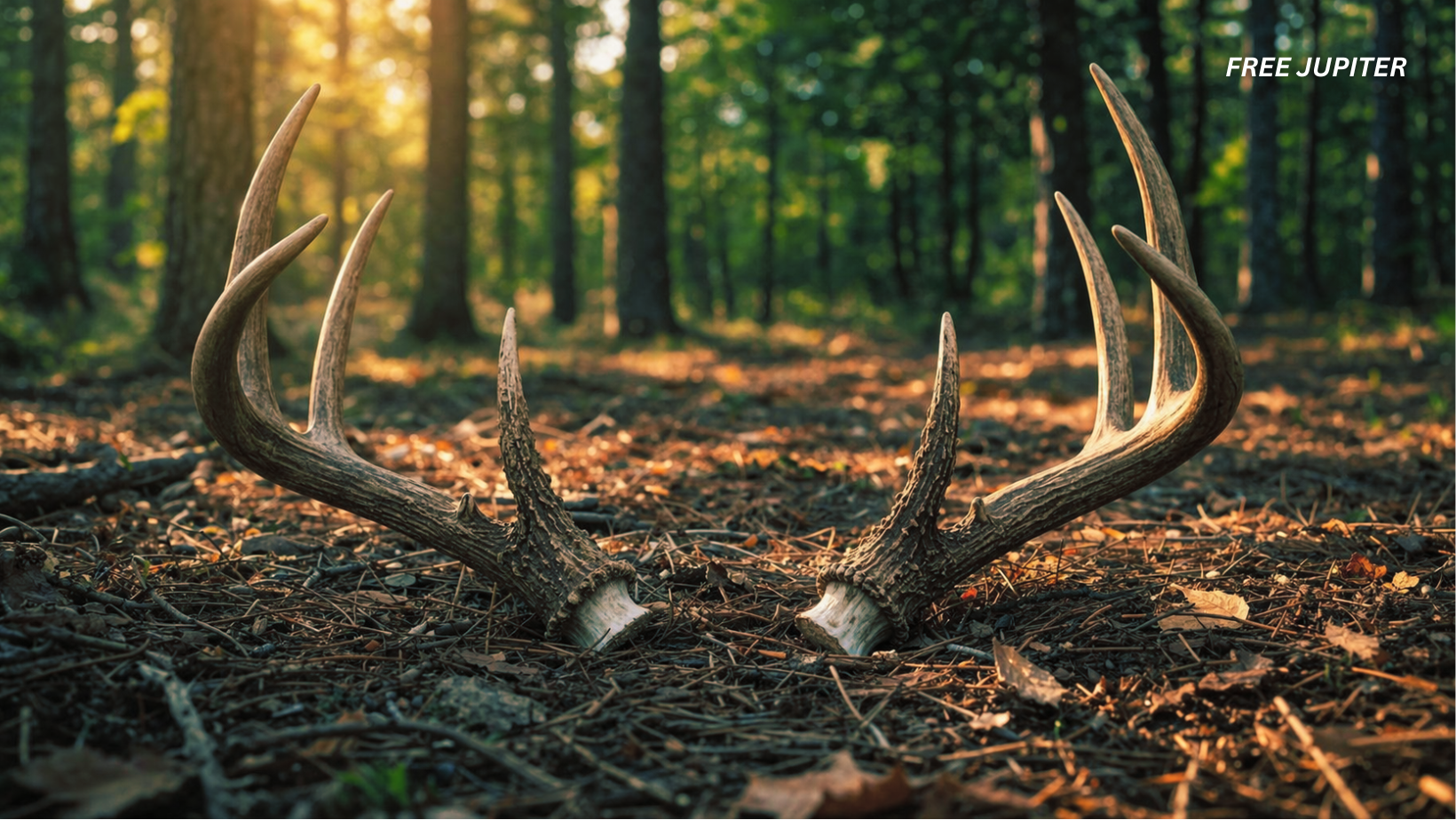
There is something deeply captivating about seeing a deer standing tall in an open field, its antlers rising like a crown shaped by time and instinct. Across cultures, antlers have long symbolized strength, renewal, and quiet authority in the natural world. For many who spend time outdoors, discovering a shed antler resting on the forest floor can feel like uncovering a hidden treasure left behind by nature itself.
Yet what appears to be a simple, discarded object is anything but meaningless. That antler carries with it a story shaped by biology, survival, and an entire ecosystem working in balance. To understand why it is often best to leave it where it lies, it helps to first understand what antlers truly are and the remarkable role they play in a deer’s life.
Antlers and Horns: A Common Misunderstanding
One of the most frequent misconceptions is that antlers and horns are the same. While they may look similar from a distance, they are fundamentally different in both structure and purpose.
Horns, such as those found on goats or cattle, are permanent. They grow continuously and are made of keratin, the same material that forms human hair and nails, wrapped around a living bone core. Antlers, by contrast, are made entirely of bone and are shed and regrown every single year.
This distinction makes antlers one of the most unique biological features among mammals. They are not static. Instead, they are part of a repeating cycle of growth, use, and release.
In regions like North America, animals such as white tailed deer, elk, and moose grow antlers. Caribou, also known as reindeer, are particularly unusual because both males and females develop them. In most other species, however, antlers are primarily associated with males and are closely tied to reproduction and competition.
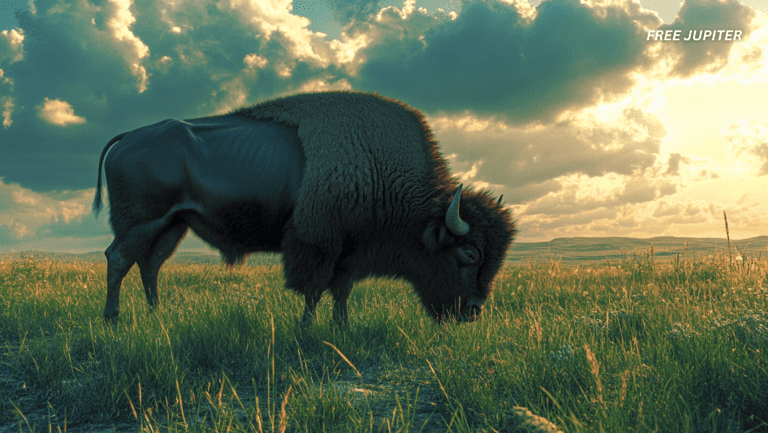
Read more: Bison Were Reintroduced to Former Illinois Farmland, and the Entire Ecosystem Came Back to Life
The Annual Cycle of Growth and Shedding
Each year, deer go through a process known as casting, which refers to the natural shedding of their antlers. This typically occurs after the mating season, often between late winter and early spring.
To understand why this happens, it helps to look at the deer’s life cycle. During the warmer months, increasing daylight triggers hormonal changes in male deer. Testosterone levels rise, signaling the body to begin growing a new set of antlers.
At first, these antlers are soft and covered in a layer of skin known as velvet. This velvet is rich in blood vessels and nerves, delivering the nutrients needed to support rapid bone growth. During this stage, antlers are sensitive and easily damaged.
As the antlers reach full size, the velvet begins to dry out. The deer then rubs its antlers against trees, shrubs, and the ground to remove this layer. What remains is the hard, polished bone structure that becomes a powerful tool during mating season.
Built for Competition and Attraction
Antlers are not simply decorative. They are essential for survival in the context of reproduction. During the mating season, often referred to as the rut, male deer compete for the attention of females.
These encounters can be intense. Males may clash antlers in physical battles, pushing and twisting against one another in tests of strength and endurance. The size, symmetry, and condition of a deer’s antlers often signal its overall health and genetic quality.
Older males with larger antlers are generally more successful in these competitions. This is why antlers are often seen as a visual indicator of maturity and fitness within deer populations.
The Fastest Growing Tissue in Mammals
What makes antlers especially fascinating is the speed at which they grow. Among mammals, they are considered the fastest growing tissue. In large species like moose, a full set of antlers can develop in just a few months.
This rapid growth comes at a cost. Building antlers requires a significant amount of energy, as well as nutrients like calcium, phosphorus, and protein. In some cases, several hundred grams of bone can be formed in a single day.
To support this process, deer must consume enough food to meet these demands. This is easier during spring and summer, when vegetation is abundant. However, once winter arrives and food becomes scarce, maintaining such large structures is no longer practical.
Read more: UK Has Officially Declared That Animals Are Sentient Beings Who Can Feel Pain, Fear, and Love
Why Shedding Is Essential for Survival
After the mating season ends, testosterone levels begin to drop. This hormonal shift weakens the connection between the antlers and the skull. Eventually, the antlers detach and fall off.
This process is not random. It serves several important purposes.
First, shedding antlers helps conserve energy. Winter is a challenging time for deer, as food is limited and temperatures can be harsh. Carrying heavy antlers would only increase the energy needed for movement and survival.
Second, antlers are made of dead bone once fully formed. This means they cannot repair themselves if damaged. By shedding them each year, deer have the opportunity to grow a new, often larger and stronger set the following season.
This annual reset allows deer to improve their chances in future mating seasons, giving them a biological advantage over time.
What Happens to Antlers After They Fall
When an antler drops to the ground, its role in nature does not end. In fact, it becomes part of a different cycle, one that supports other forms of life.
Many animals, particularly rodents like mice and squirrels, rely on shed antlers as a source of essential minerals. Calcium and phosphorus are not always easy to find in the wild, especially during certain seasons. By gnawing on antlers, these animals gain nutrients that support bone growth and overall health.
Insects and microorganisms also play a role in breaking down antlers over time. Gradually, the bone returns to the soil, contributing to the natural recycling of nutrients within the ecosystem.
In this way, a single antler becomes part of a much larger system, supporting life long after it has been shed.
The Rise of Antler Collecting and Its Impact
In recent years, shed antlers have become increasingly popular for commercial use. They are often turned into dog chews, decorative items, and even furniture.
This growing demand has led to a rise in antler collecting, sometimes referred to as shed hunting. While it can be a recreational activity, it has also raised concerns among wildlife experts.
In some cases, people enter habitats during sensitive times of the year, unintentionally disturbing animals. Deer that are forced to move or flee may use up valuable energy reserves, which can affect their ability to survive until spring.
Illegal collection has also become more common in certain areas, driven by the commercial value of antlers. This has prompted stricter enforcement and greater awareness efforts by conservation groups.
Read more: AI Is Learning to Decode Animal Speech — Could Humans Eventually Talk With Them?
A Small Choice with a Bigger Meaning
Coming across a shed antler can feel like a special moment, a quiet discovery that connects you to the natural world. But choosing to leave it behind can carry even greater meaning.
That antler represents months of rapid growth, intense competition, and eventual release. It is part of a cycle that supports not just deer, but an entire community of living organisms.
By leaving it where it lies, you allow that cycle to continue. You become part of a larger story, one that values balance, respect, and the quiet complexity of life in the wild.
In the end, the most meaningful way to appreciate nature is not always to take something from it, but to understand it, respect it, and leave it as it is.
Featured image: GPT Recreation.
Friendly Note: FreeJupiter.com shares general information for curious minds. Please fact-check all claims and double-check health info with a qualified professional. 🌱