

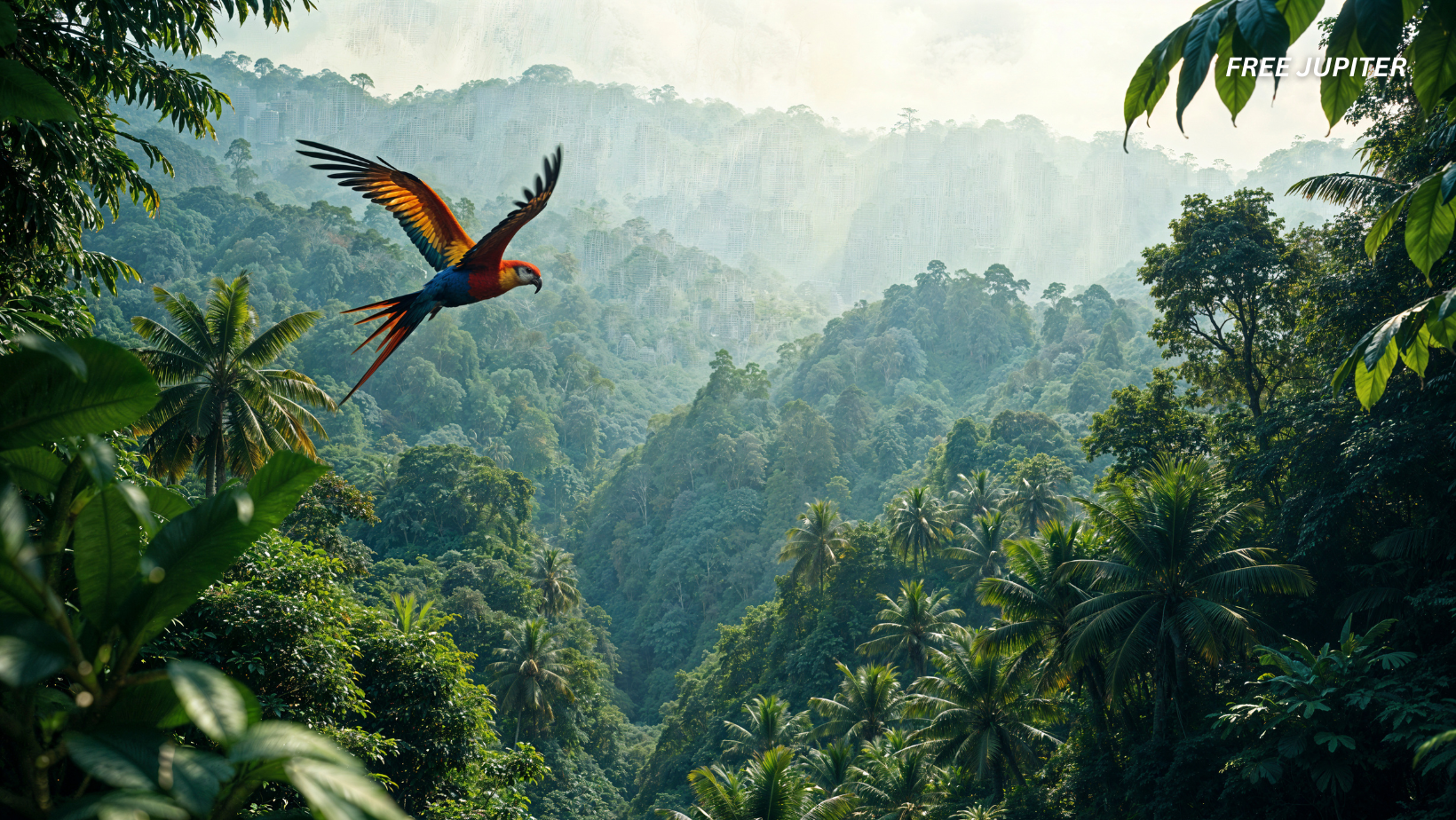
The Amazon rainforest has long been described as one of Earth’s most stable and resilient ecosystems. It is often called the lungs of the planet because of its ability to absorb massive amounts of carbon dioxide while producing oxygen and supporting extraordinary biodiversity. But new research suggests this familiar image may soon change.
According to an international team of scientists, the Amazon is gradually shifting into a new climate condition known as a hypertropical state. This is not just a hotter version of what exists today. It is something entirely different, with conditions so extreme that researchers say there is no modern comparison. In fact, the last time Earth experienced anything like this was millions of years ago.
This discovery raises serious concerns about the future of the Amazon and its role in regulating the global climate.
What Does Hypertropical Mean
The word tropical usually brings to mind warm temperatures, frequent rain, and lush vegetation. The Amazon has thrived under these conditions for thousands of years. A hypertropical climate, however, goes beyond that familiar balance.
In a hypertropical state, heat and drought combine in ways that push forests past their natural limits. Droughts last longer, temperatures rise higher, and dry periods occur more often. Even seasons that are normally wet become unusually hot and dry.
Geographer Jeff Chambers from the University of California Berkeley explains that these hot droughts represent a climate that sits outside what scientists currently define as tropical. In simple terms, the forest is being pushed into unfamiliar territory.
Related article:NASA’s Parker Probe Captures The Sun’s Secret Magnetic Forces On Video For The First Time Ever
Decades of Data Reveal a Troubling Pattern
This conclusion did not come from short term observations. The research is based on more than thirty years of field measurements collected across the Amazon. Scientists tracked how trees grow, how their leaves perform photosynthesis, how soil moisture changes, and how forests respond during periods of intense heat and drought.
By studying these patterns over time, the researchers were able to see how extreme weather events are already stressing the forest. These moments offer a preview of what may become normal within the next century.
Using this data, the team built climate models that extend into the future. The results suggest that by the year 2100, hot droughts will not only happen more often but may occur throughout the entire year. Even the traditional rainy season could bring conditions that resemble today’s dry extremes.
Why Trees Struggle in Hot Droughts
Trees depend on a delicate balance of water, temperature, and sunlight. When droughts intensify and soil moisture drops, trees face two major threats.
The first is known as hydraulic failure. Trees transport water from their roots to their leaves through narrow internal channels. When the soil becomes too dry, air bubbles can form inside these channels, blocking the flow of water. Once this happens, the tree can no longer stay hydrated and may die.
The second threat is carbon starvation. To conserve water during droughts, trees close tiny pores on their leaves. While this helps reduce water loss, it also limits the intake of carbon dioxide. Without enough carbon dioxide, photosynthesis slows down. Over time, the tree cannot produce enough energy to survive.
Field measurements show that both of these processes are already occurring during today’s most extreme Amazon droughts. If the forest becomes hypertropical, these conditions would happen far more often.
Rising Tree Death Rates Could Reshape the Forest
One of the most striking findings from the study is the projected increase in tree mortality. If hypertropical conditions become widespread, tree death rates could rise by as much as fifty five percent.
Not all trees are affected equally. Fast growing trees with lighter wood are more vulnerable to drought stress. These species tend to dominate secondary forests, which are areas that have regrown after logging or clearing.
Denser wood trees grow more slowly but are better equipped to survive harsh conditions. As droughts intensify, the balance of species in the Amazon could shift. Forests may lose diversity, and landscapes that once recovered quickly from disturbance could struggle to regenerate.
Related article:Scientists Have Successfully Stripped the Sugar Shield That Protects Cancer Cells From The Immune System
Evidence From Recent Extreme Droughts
The researchers examined two Amazon sites that were heavily impacted by severe droughts in 2015 and 2023. Both droughts were linked to unusually warm El Niño events, which temporarily alter global weather patterns.
Despite occurring years apart, the droughts revealed something unexpected. The threshold at which trees began to fail was nearly identical in both locations and both years. This suggests that large areas of the Amazon may be approaching a shared tipping point.
Once that threshold is crossed, even small increases in heat or dryness could lead to widespread tree loss.
A Shift From Carbon Sink to Carbon Source
One of the Amazon’s most important roles is its ability to absorb carbon dioxide from the atmosphere. This helps slow the pace of climate change. However, as more trees die, that role could reverse.
Dead and decaying trees release carbon back into the air. If hypertropical conditions spread, parts of the Amazon could shift from being a carbon sink to becoming a carbon source. This would accelerate global warming and create a feedback loop that makes future droughts even more severe.
While the Amazon is expected to experience the largest changes, similar conditions could eventually appear in tropical regions of Africa and Asia as well.
Related article: Microplastics Are Now In Our Clouds — And They’re Actively Altering Our Weather
What Happens Next Depends on Human Choices
The researchers emphasize that this future is not inevitable. How quickly the Amazon moves toward a hypertropical state depends largely on global decisions about greenhouse gas emissions.
If emissions continue to rise without restraint, the shift could happen sooner and more dramatically. Reducing emissions, protecting forests, and supporting climate stability could slow the process and help preserve the Amazon’s resilience.
As Chambers notes, the outcome depends on what humanity chooses to do next. The Amazon’s future is tied directly to the actions taken far beyond its borders.
This research, published in the journal Nature, serves as a powerful reminder that Earth’s largest rainforest is not immune to change. It is responding to the climate we are creating, and the signals it sends are becoming increasingly difficult to ignore.
Featured image: Freepik.
Friendly Note: FreeJupiter.com shares general information for curious minds. Please fact-check all claims and double-check health info with a qualified professional. 🌱