
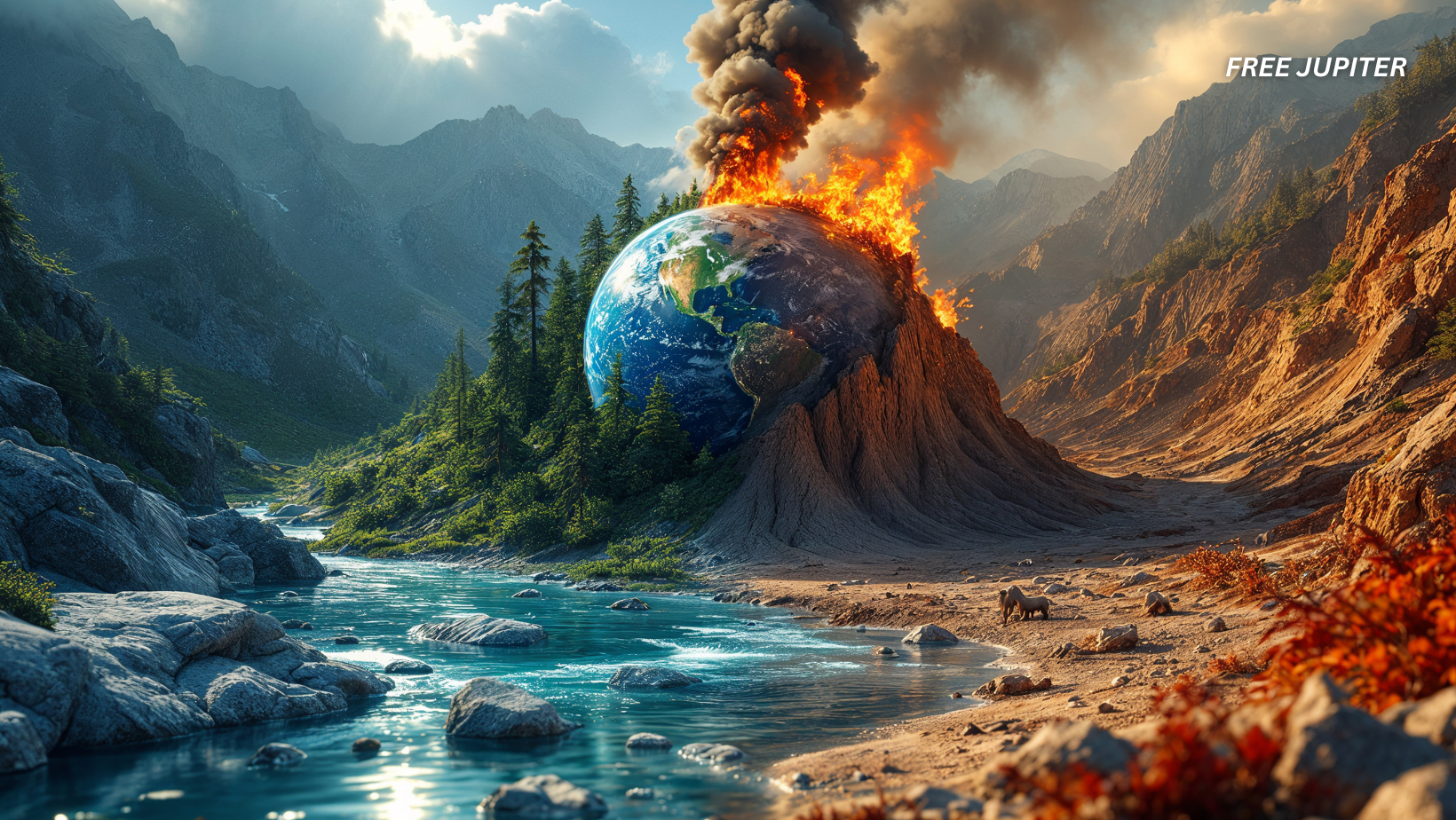
It sometimes feels like the planet is clearing its throat, trying to get our attention in louder and more dramatic ways. Scientists around the world have been tracking environmental changes that, when placed side by side, paint a picture that is both sobering and strangely surreal. Even without a scientific background, it’s easy to notice that something feels “off”—from out-of-season weather to coastlines slowly shifting.
What follows are 14 major red flags researchers say show that Earth is under strain, and why these shifts matter not just for ecosystems, but for everyday life.
1. Wildfires Becoming Relentless
There used to be a time when wildfire season actually stayed within a season. Now, fires ignite almost any month of the year. Longer droughts and rising temperatures create the perfect conditions for flames to spread fast and burn hotter than ever before.
Beyond the dramatic images of towering smoke clouds, the consequences linger for years. Each fire sends enormous amounts of carbon dioxide into the atmosphere, magnifying global warming. Families face repeated evacuations, neighborhoods rebuild over and over, and smoke-filled air becomes a recurring health hazard. It’s a harsh reminder that our landscapes are changing faster than they can recover.
Read more:Humans Were Built for Nature—Not the Stress of Modern Life
2. Weather That Makes No Sense Anymore
Choosing clothes used to be straightforward. Lately, it feels like guessing the outcome of a chaotic lottery. One week brings record heat, the next brings frost, and storms appear where they never used to.
This unpredictability isn’t just inconvenient—it disrupts farming, transportation, and even entire economies. Crops fail when temperatures suddenly swing, insurance costs skyrocket after unexpected disasters, and communities find themselves adapting to hazards they never imagined facing. When the atmosphere behaves this erratically, it’s a clear sign our climate’s internal rhythms are faltering.
3. Glaciers Shrinking as You Read This
High up in mountain ranges and across polar regions, ancient slabs of ice are retreating rapidly. These glaciers store freshwater, reflect heat, shape weather, and act as major indicators of global climate health. Their disappearance signals trouble far beyond the mountains.
As they melt, sea levels creep upward, threatening coastal cities with erosion and flooding. Warmer oceans stir up stronger storms, and communities depending on glacial melt for drinking water and irrigation are pushed toward uncertainty. It’s not a distant warning—it’s a live update from Earth’s thermostat.
4. Oceans Turning More Acidic
The oceans quietly absorb much of the carbon we release, but there’s a limit. As carbon dioxide dissolves into seawater, it changes the water’s chemistry, making it harder for coral, shellfish, and many tiny marine organisms to survive.
The consequences ripple outward: coral reefs weaken, fish populations shift or shrink, and coastal communities lose both food sources and livelihoods. A more acidic ocean also captures less carbon, allowing more to remain in the atmosphere. Essentially, the ocean is trying to help but is becoming overwhelmed.\
5. Pollinators Quietly Vanishing
Bees might be small, but their importance is enormous. They help plants reproduce, which keeps food systems and natural ecosystems running smoothly. Yet bee colonies and other pollinating species are declining due to habitat destruction, pesticides, and climate shifts.
Without pollinators, fruit trees, vegetables, and countless flowering plants struggle to survive. Entire food chains weaken. The absence of that familiar buzzing in gardens isn’t just a summer concern—it’s an environmental alarm bell.
6. Animal Migrations Going Off-Schedule
Birds arriving months too early, whales shifting migration routes, butterflies failing to appear—these are signs that nature’s calendar is glitching. Animals rely on specific seasonal cues to travel, breed, and feed, but rising temperatures and changing landscapes are throwing these cues out of alignment.
This disrupts entire biological cycles. Birds may arrive before insects hatch, mammals may miss peak food availability, and predators may lose access to their usual prey. When migration patterns unravel, whole ecosystems wobble with them.
Read more: Mexico, Guatemala, and Belize Team Up to Create a Vast Nature Reserve To Preserve the Mayan Jungle
7. Hurricanes Growing Fiercer and More Frequent
Coastal communities around the world have noticed that storms feel angrier than they used to. Warmer oceans produce stronger hurricanes, typhoons, and cyclones—with higher wind speeds, heavier rainfall, and storm surges that reach farther inland.
Each major storm leaves behind emotional and financial devastation, often hitting regions still recovering from previous ones. Rising damage costs and repeated rebuilding efforts show how unprepared many places are for the new normal.
8. Coral Reefs Turning Ghostly White
Coral bleaching is one of the most heartbreaking visual signs of a warming planet. When ocean temperatures rise, corals expel the algae that give them color and nutrients, leaving them pale and fragile.
Since reefs support a huge portion of marine life, their collapse affects everything from local fishing economies to global biodiversity. Bleached reefs are not just a tragic aesthetic—they are signals that the ocean’s balance is shifting drastically.
9. Forests Disappearing at Alarming Rates
Forests are often described as the planet’s lungs, yet they’re being cleared at staggering speeds to make room for farmland, mining, and expanding cities. As trees vanish, we lose carbon storage, wildlife habitat, and countless plant species—many of which have medicinal potential.
Deforestation also contributes to more dangerous wildlife encounters and increases the risk of diseases jumping from animals to humans. Every lost forest reduces Earth’s ability to regulate its climate and protect itself.
10. Plastic Turning the Planet into a Dumping Ground
Plastic is everywhere—from beaches to the deepest ocean trenches. Most of it doesn’t break down for centuries, meaning every bottle, wrapper, or straw tossed aside becomes part of a growing global waste crisis.
Marine animals ingest plastic, mistaking it for food. Microplastics drift into drinking water, seafood, and even the air we breathe. What seems like a convenience in daily life has become a lingering environmental problem that demands serious attention.
11. Species Disappearing Faster Than Ever
Many species are vanishing quietly, without much public attention. Scientists estimate that extinctions are happening far faster than natural rates due to habitat loss, climate change, pollution, and overexploitation.
When a species disappears, it’s not just a loss of beauty or diversity. Entire ecosystems can unravel, affecting food webs, soil health, water quality, and even the climate. Preserving biodiversity isn’t just ecological—it’s essential for human survival too.
12. Rising Seas Creeping into Coastal Cities
Sea levels inch upward year after year, partly due to melting ice and partly because water expands as it warms. This slow but relentless rise threatens coastal communities with more frequent flooding, saltwater-contaminated drinking water, and disappearing shorelines.
Some cities are already investing in sea walls, elevated buildings, and complex drainage systems. Others face the possibility of relocating entire neighborhoods. The map of the future coastline may look very different from today’s.
13. Toxic Algal Blooms Closing Beaches
When warm water mixes with excess pollution and nutrient runoff, algae can multiply so quickly that entire bays turn green or red. Some blooms produce toxins that poison fish, harm marine mammals, and make beaches unsafe for swimming.
These events devastate local fisheries, damage tourism industries, and create “dead zones” with too little oxygen for most life. They reveal how sensitive waterways are to warming temperatures and human activity.
Read more: Nature’s First Laser Gun? Researchers Discover Peacock Feathers Emit Laser-Like Beams
14. Permafrost Thawing and Releasing Long-Frozen Secrets
In the far north, vast stretches of frozen ground known as permafrost are beginning to thaw. This isn’t just a geological curiosity—permafrost holds enormous stores of methane and carbon dioxide. When it melts, those gases escape into the atmosphere, speeding up global warming.
Thawing permafrost also destabilizes buildings, pipelines, and roads built on what used to be solid ground. In some places, ancient plant material, fossils, and even long-dormant microbes are resurfacing, adding a strange and eerie dimension to climate change.
Featured image: Freepik.
Friendly Note: FreeJupiter.com shares general information for curious minds. Please fact-check all claims and double-check health info with a qualified professional. 🌱