

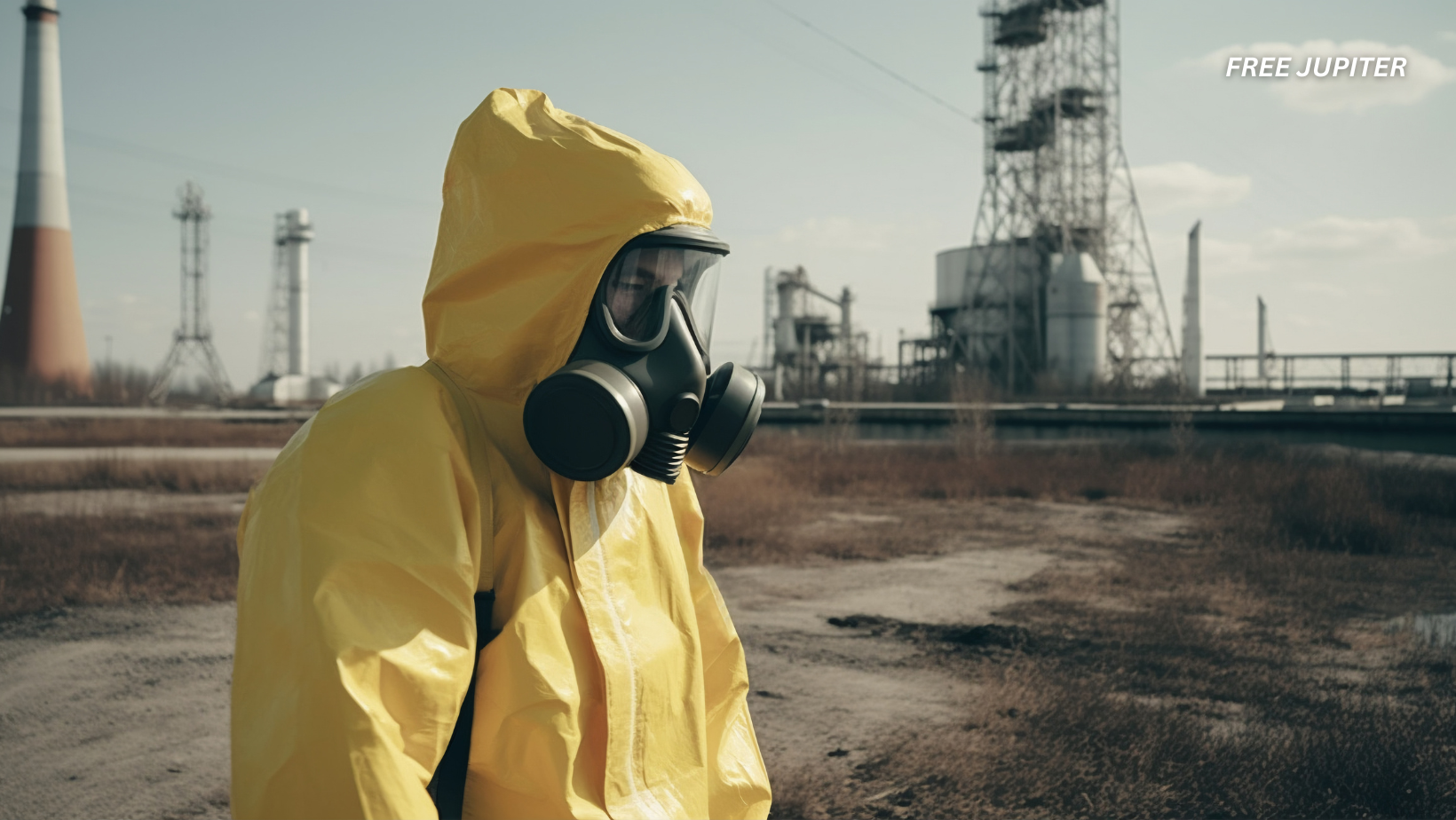
When people hear the word Chernobyl, they usually picture silence. Empty classrooms gathering dust, forests reclaiming abandoned neighborhoods, and a feeling that time simply stopped after the nuclear disaster of 1986. The area still holds pockets of radiation strong enough to be harmful to humans, which is why it remains largely off-limits. But nature, stubborn and inventive as always, did not get the memo.
Over the decades, plants have sprouted through cracked concrete, animals have wandered through deserted roads, and microorganisms have crept into corners untouched since the explosion. Among these survivors, one organism stands out for having an especially strange relationship with Chernobyl’s radioactive environment: a velvety black fungus that seems to like radiation.
Read more: Psychologists Reveal 9 Activities Associated with High Cognitive Ability
This organism, Cladosporium sphaerospermum, has captivated scientists because of one peculiar possibility—its dark pigment, melanin, may allow it to interact with radiation in a way that resembles how plants interact with sunlight. This concept has been dubbed radiosynthesis, a potential biological process that sounds like science fiction but is rooted in genuine scientific observations.
Yet here’s the fascinating part: even though the fungus clearly behaves differently around radiation, no one has proven exactly what it’s doing. Every experiment uncovers something new, but the complete explanation remains elusive.
Life’s Unexpected Return to a Nuclear Wasteland
In the late 1990s, a team led by Ukrainian microbiologist Nelli Zhdanova ventured into the Chernobyl Exclusion Zone. Their mission was simple: find out whether anything was managing to survive in the highly contaminated buildings surrounding the destroyed nuclear reactor.
What they found was astonishing.
Instead of barren structures, the team discovered thriving microbial communities, including a diverse group of fungi. The researchers identified 37 different species, many of them unusually dark or fully black—rich in melanin.
Melanin, familiar to us as the pigment responsible for the color of our skin and hair, seemed to be unusually abundant in Chernobyl’s fungi. These organisms weren’t just enduring radiation—they were growing through it, as if the environment wasn’t just survivable but surprisingly suitable.
Among all the fungi collected, one species dominated the samples: Cladosporium sphaerospermum. Oddly enough, this fungus also showed some of the highest levels of radioactive absorption, as though it were soaking up the radiation around it.
Read more: A Psychologist Explains How to Recover From Burnout Without Quitting Your Life
Ionizing Radiation: Dangerous to Most, But Not to This Fungus
To understand why this is surprising, it helps to know what ionizing radiation actually does. In simple terms, ionizing radiation contains enough energy to knock electrons off atoms. This triggers a chain reaction inside living cells:
- molecules break apart
- DNA gets damaged
- chemical reactions inside cells are disrupted
In humans and many animals, this leads to cell death, health complications, or increased cancer risk. That’s why protective suits, lead shielding, and strict safety protocols are required in radioactive environments.
But when scientists studied C. sphaerospermum, they discovered the opposite of what they expected. Instead of weakening or dying under radiation, the fungus did something bizarre: it grew better.
This surprising behavior first came to light when radiopharmacologist Ekaterina Dadachova and immunologist Arturo Casadevall conducted controlled experiments in which they exposed the fungus to ionizing radiation. While most organisms would struggle to survive, the melanin-rich fungus flourished. In some conditions, its growth rate increased significantly.
Even more puzzling, melanin itself seemed to change under radiation, almost as if adapting in real time. This observation opened the door to an intriguing idea: perhaps melanin was doing more than protecting the fungus—perhaps it was helping the fungus use radiation.
The Big Leap: Could the Fungus Be Harvesting Radiation for Energy?
In 2008, Dadachova and Casadevall published a paper proposing that the fungus might be performing a process somewhat similar to photosynthesis—only instead of using sunlight, it could be using ionizing radiation.
Here’s the basic idea:
- In plants, chlorophyll absorbs sunlight and converts it into chemical energy.
- In this fungus, melanin might absorb radiation and alter its electronic structure.
- This altered melanin could then help the fungus generate biochemical energy.
If this is true, it would mean the fungus isn’t merely tolerating radiation—it may be feeding off it.
To be clear, scientists haven’t proven this. But the theory is compelling because it explains several unusual behaviors:
- Radiation seems to “activate” melanin.
- Melanin-rich fungi grow faster when irradiated.
- Radiation exposure appears to change melanin’s ability to transfer electrons.
All of these effects hint at some kind of energy-harnessing mechanism.
Still, the exact steps of radiosynthesis remain a mystery. Unlike photosynthesis, which has been studied and mapped down to the molecule, we do not yet have a complete blueprint of what melanin is doing under strong radiation.
Read more: Just Two Cigarettes a Day May Raise Heart Failure Risk by 50%, New Research Finds
Testing the Fungus in Space
If there was any environment capable of pushing the limits of biology, it would be outer space. So in 2022, researchers strapped C. sphaerospermum to the exterior of the International Space Station. Without Earth’s atmosphere as protection, the fungus faced extreme cosmic radiation—far more intense than anything at Chernobyl.
Instead of withering, the fungus acted like a mini radiation shield.
Sensors placed beneath the fungus recorded lower radiation levels compared to sensors beneath a fungus-free control dish. This meant the melanin was blocking a measurable amount of radiation.
Though the experiment wasn’t designed to confirm radiosynthesis, it reinforced the idea that melanin-rich fungi behave strangely under radiation—strangely, but consistently.
Because space missions require lightweight but effective radiation shielding, this discovery sparked discussions about whether melanin-rich fungi could one day be used to help protect astronauts. Imagine spacecraft walls partially grown from living fungal materials that absorb radiation—an idea that sounds wild, yet increasingly plausible.
The Limits of What We Know
Despite the exciting observations, here’s what scientists still haven’t proven:
- That the fungus uses radiation to make new organic molecules
(like plants produce sugars from sunlight) - That radiation boosts its metabolic energy
(no evidence shows it “eats” radiation in a literal sense) - That a clear energy-producing pathway exists
Researchers have tried to measure these effects directly, but so far, nothing has confirmed a full energy-harvesting cycle.
In other words, the fungus behaves as if radiation helps it—but we don’t yet know how or why.
Other Fungi Also React to Radiation—But Not the Same Way
Interestingly, this fungus isn’t entirely alone in its unusual behavior. A few other melanin-rich fungi show radiation-related changes:
- Wangiella dermatitidis grows faster under ionizing radiation.
- Cladosporium cladosporioides produces more melanin when exposed to gamma or UV radiation, but its growth doesn’t increase.
This inconsistency creates more questions:
If radiosynthesis is real, why do some fungi grow faster but others do not?
If melanin helps absorb radiation, why isn’t the benefit universal?
It’s possible that C. sphaerospermum has evolved something unique—an adaptation that allowed it to thrive in Chernobyl’s intense environment. Or it might simply be using melanin as a protective tool without gaining any extra energy from radiation.
Both explanations are plausible. Neither is proven.
Read more: Study Finds This Popular Sweetener Damages the Brain’s Protective Barrier
What We Can Say for Sure
Even without the full explanation, one thing is clear:
This small, dark fungus has managed to survive—and possibly thrive—in one of the most hazardous places on Earth.
It doesn’t fear radiation; it interacts with it in ways that still confuse scientists. It grows where humans cannot safely walk. It adapts where most life would perish. And it continues to remind researchers that nature often holds tricks far stranger than fiction.
At Chernobyl, one of humanity’s greatest disasters accidentally became a laboratory for life’s resilience. And in that accidental laboratory, this unassuming black fungus stands as quiet proof that life doesn’t just persist—it innovates.
Featured image: Freepik.
Friendly Note: FreeJupiter.com shares general information for curious minds. Please fact-check all claims and double-check health info with a qualified professional. 🌱