
For the past several days, an unusual topic has been circulating online. Many people have been talking about a strange rise in Earth’s natural vibration, often described as the planet’s “heartbeat.” At the same time, some individuals have reported restless nights, vivid dreams, and an odd ringing sound in their ears. The timing has led to a wave of curiosity, speculation, and concern.
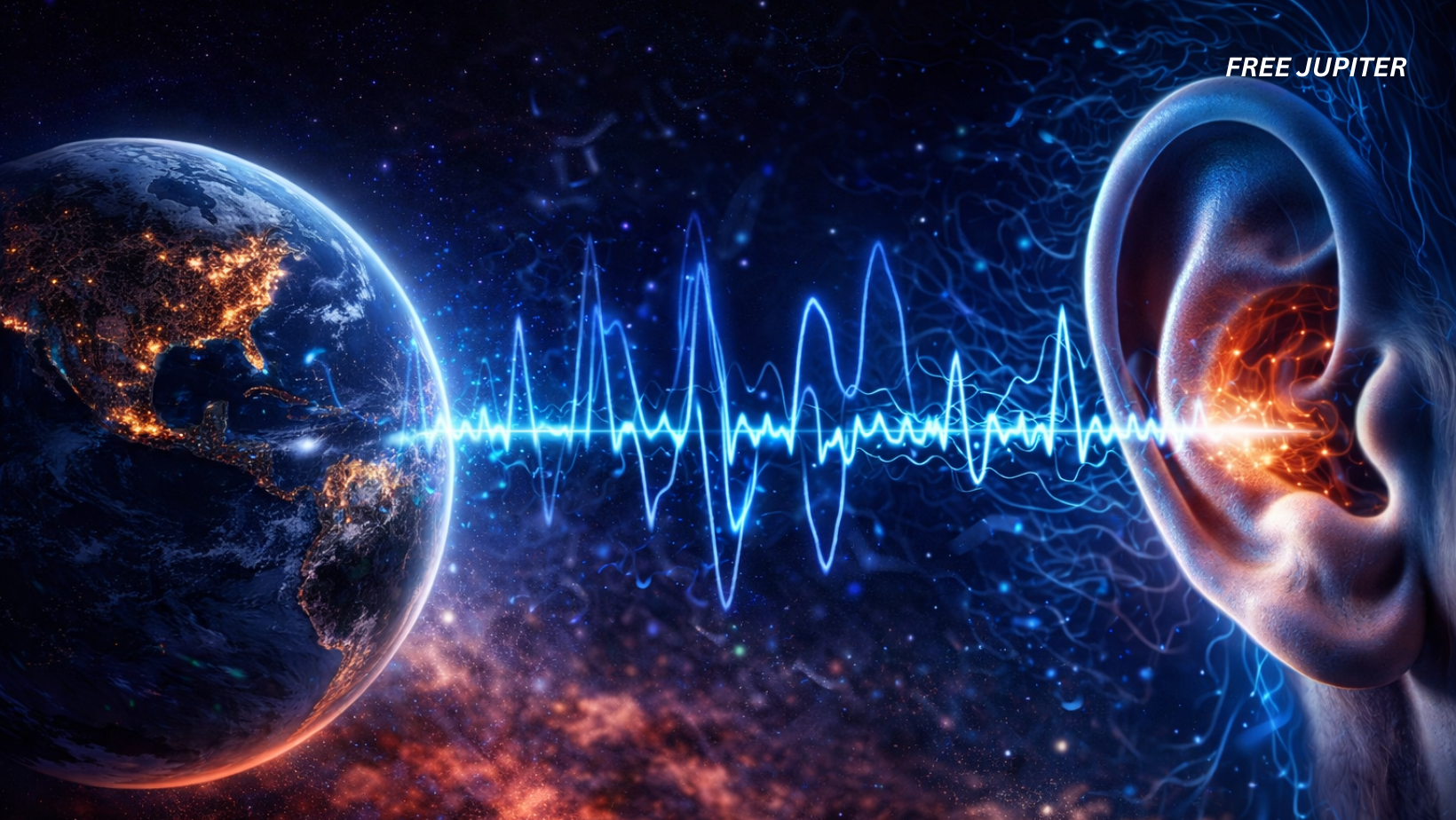
At the center of this conversation is something called the Schumann Resonance. While the name may sound complex, the idea behind it is surprisingly simple. It refers to a natural pattern of electromagnetic waves that surround the Earth. These waves are always present, forming a steady background rhythm created by lightning and the structure of the atmosphere itself.
Understanding Earth’s Natural Rhythm
The Earth is constantly alive with electrical activity. Every second, thousands of lightning strikes occur across the globe, especially in tropical regions. These bursts of energy do not simply vanish. Instead, they travel upward and bounce between the Earth’s surface and a layer of the atmosphere known as the ionosphere.
This back and forth motion creates a kind of global echo. Over time, it forms a repeating pattern of low frequency waves that wrap around the planet. This pattern is what scientists call the Schumann Resonance.
Under normal conditions, this resonance stays relatively stable. Its main frequency sits at about 7.83 Hertz, which means it cycles just under eight times per second. There are also higher frequency bands, but this base rhythm is often the focus of attention.
Because of its steady nature, some people have come to think of it as Earth’s own pulse or heartbeat.
Read more: These 12 Traits Are Said to Belong to the Rarest Soul Types on Earth
A Recent Surge in Activity
In recent days, monitoring platforms that track atmospheric and space conditions have reported a noticeable increase in this resonance. One such platform, MeteoAgent, labeled the activity as “high” for several days in a row.
Although these changes caught attention, scientists point out that fluctuations are not unusual. The Earth’s electromagnetic environment is constantly shifting due to both natural and cosmic influences. Still, the timing of this spike has led to an interesting pattern of personal reports from people around the world.
Some individuals have described difficulty sleeping, frequent waking during the night, or unusually vivid dreams. Others have mentioned sensations like ear ringing, fatigue, or trouble concentrating. These experiences have been widely shared on social media, adding to the sense that something unusual may be happening.
The Link Between Earth and the Human Brain
One reason this topic has gained so much interest is the idea that Earth’s frequencies may overlap with the brain’s own electrical patterns.
The human brain produces different types of waves depending on a person’s state of mind. For example, when someone is relaxed or drifting into sleep, the brain often generates what are known as theta waves. These typically fall between four and eight Hertz, which is very close to the main frequency of the Schumann Resonance.
This similarity has led some researchers and wellness advocates to suggest that changes in Earth’s electromagnetic activity could influence how people feel or sleep. It is an intriguing idea, especially when people report symptoms that seem to appear at the same time as these atmospheric shifts.
However, it is important to approach this connection with caution. While the overlap in frequencies is real, scientific evidence showing a direct effect on human health remains limited. Many experts emphasize that the human body is influenced by a wide range of factors, from stress and diet to environment and daily habits.
The Role of Space Weather
To better understand why these spikes happen, it helps to look beyond Earth itself. The Sun plays a major role in shaping the planet’s electromagnetic environment.
Events such as solar flares release bursts of energy and charged particles into space. When these particles reach Earth, they interact with the planet’s magnetic field and upper atmosphere. This can lead to temporary disturbances, sometimes described as space weather.
Solar flares are grouped into categories based on their strength. The smallest are B class, followed by C class, then M class, and finally X class, which are the most powerful.
Recent reports have noted several solar flares occurring over a short period, including moderate M class events. These bursts of solar activity can slightly alter the behavior of the ionosphere, which in turn can affect how electromagnetic waves move around the planet.
When this happens, the Schumann Resonance may appear stronger or more irregular than usual.
Measuring Earth’s Magnetic Activity
Scientists use various tools to track these changes. One commonly used measurement is the K index, which shows how much Earth’s magnetic field is being disturbed.
The scale ranges from zero to nine. Lower numbers indicate calm conditions, while higher values suggest stronger geomagnetic activity. When the index rises above five, it signals a geomagnetic storm that can affect satellites, communication systems, and even power grids.
Recent readings have shown elevated activity, though not at the most extreme levels. Even so, the combination of solar events and atmospheric changes has been enough to draw attention from both researchers and the public.
Reports From Everyday People
Alongside scientific observations, personal experiences have played a major role in shaping the conversation.
Some people have described feeling unusually tired despite getting enough rest. Others have reported a sense of mental fog or difficulty focusing. One of the most commonly mentioned sensations is a ringing in the ears, sometimes referred to as tinnitus.
There have also been accounts of intense or highly detailed dreams, which can make sleep feel less restful. For those already dealing with insomnia, these experiences can be especially frustrating.
While these reports are real, medical experts caution that they should not be taken as proof of a direct link. Symptoms like poor sleep, headaches, or ear ringing can have many causes, including stress, anxiety, dehydration, or underlying health conditions.
A Balanced Perspective
The idea that Earth’s natural rhythms could influence human biology is fascinating, and it continues to be explored in scientific research. However, at this stage, there is no strong clinical evidence confirming that spikes in the Schumann Resonance directly cause insomnia or other physical symptoms.
What is clear is that the planet’s electromagnetic environment is dynamic. It responds to both internal forces, like lightning, and external influences, such as solar activity. These changes are a normal part of how Earth interacts with space.
For individuals experiencing unusual symptoms, it may be helpful to focus on well established factors that affect sleep and well being. Maintaining a consistent sleep schedule, reducing screen time before bed, and managing stress can often make a noticeable difference.
When Earth and Space Interact
Beyond personal health, space weather can have broader effects. Strong solar events have the potential to disrupt communication systems, interfere with navigation signals, and in rare cases, impact power infrastructure.
There have even been discussions within the aerospace industry about how intense solar radiation might affect aircraft systems. While such events are uncommon, they highlight the powerful connection between the Sun and our planet.
Simulations of extreme solar storms have suggested that a major event could lead to widespread technological disruptions. These scenarios are studied not to cause alarm, but to help scientists and engineers prepare for unlikely but possible situations.
Read more: Scientists Detect a 10-Second Cosmic ‘Death Cry’ That Traveled 13 Billion Years To Reach Earth
A Planet in Motion
The recent surge in Earth’s so called heartbeat serves as a reminder that the planet is never truly still. From the ground beneath our feet to the space above, countless processes are unfolding at every moment.
The Schumann Resonance is just one piece of this complex system. It reflects the constant dance between Earth, its atmosphere, and the energy that flows through space.
While the connection between these vibrations and human experience remains uncertain, the curiosity it sparks is understandable. It invites people to look at the world in a different way, one that blends science, observation, and a sense of wonder.
For now, the best approach is to stay informed without jumping to conclusions. The Earth may hum with its own rhythm, but the story of how that rhythm interacts with human life is still being written.
Featured image: GPT Original Creation.
Friendly Note: FreeJupiter.com shares general information for curious minds. Please fact-check all claims and double-check health info with a qualified professional. 🌱