
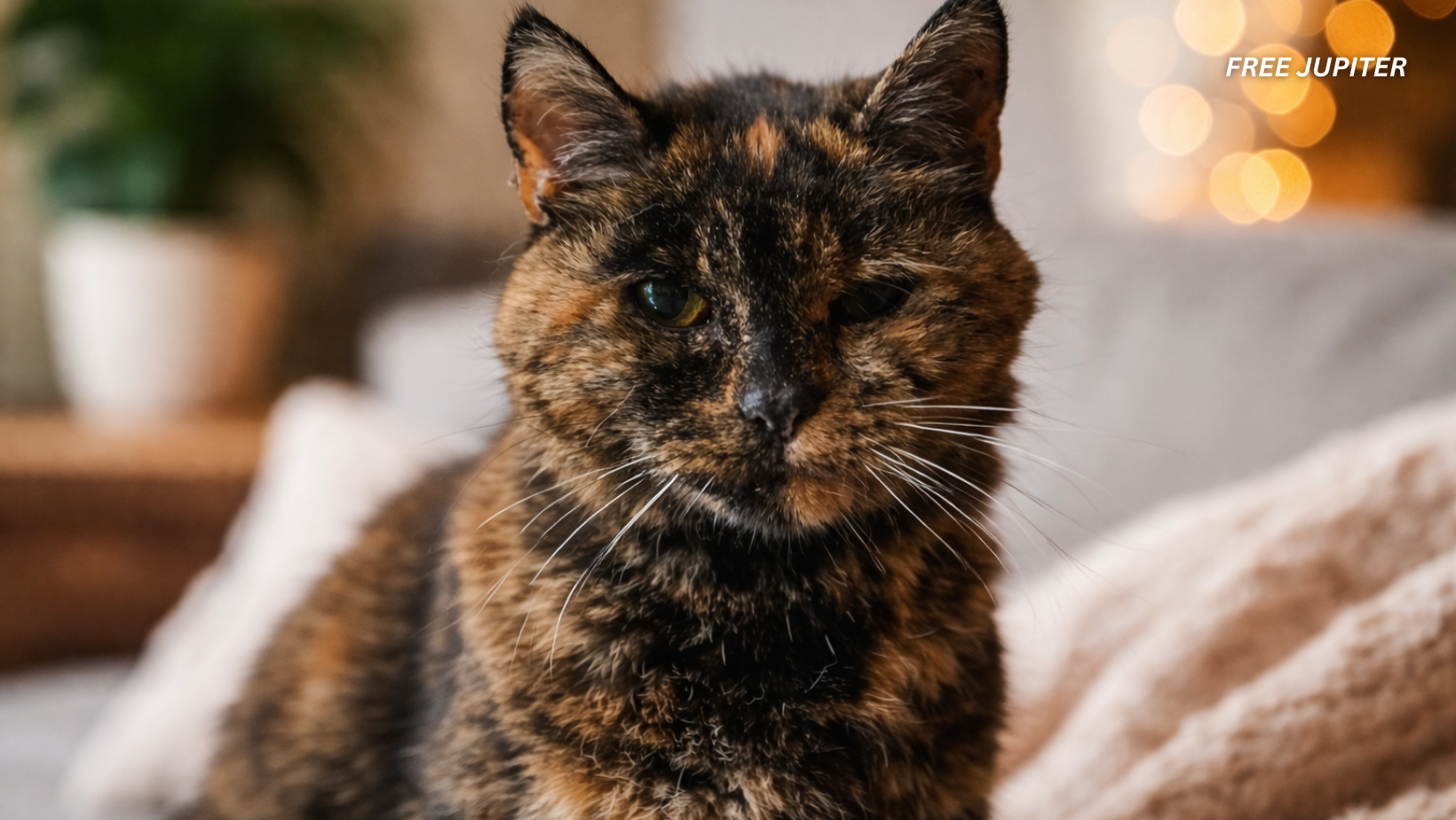
Flossie is not just another internet famous pet. She is a living record holder and a quiet legend in the world of animal longevity. This British domestic short haired tortoiseshell cat officially turned 30 years old in 2025, making her the oldest living cat confirmed by Guinness World Records.
Born on December 29, 1995, Flossie has lived through three decades of changing trends, technologies, and generations of cat lovers. To put her age into perspective, veterinarians estimate that a 30 year old cat is roughly equivalent to a human who has passed 120 years of age. Very few cats ever reach this milestone, which makes Flossie’s story especially remarkable.
How Flossie’s Age Was Verified
Flossie’s age was officially confirmed by Guinness World Records in November 2022. At that time, she was documented to be 26 years and 316 days old. The verification process was not casual or symbolic. It involved reviewing long standing veterinary records, adoption histories, and supporting documents that traced her life back to her kittenhood.
This careful confirmation placed Flossie among the oldest cats ever recorded in history. While she is not the longest living cat of all time, she currently holds the title for the oldest cat alive, a distinction that grows more impressive with each passing birthday.
Related article: Science Reveals How Cats Navigate Home Over Super Long Distances
From Feral Colony to Family Homes
Flossie’s life did not begin in comfort. She was rescued as a kitten from a feral cat colony near St Helens Hospital in Merseyside, England. At that stage, survival itself was not guaranteed. Like many feral kittens, her future was uncertain and dependent on human intervention.
After her rescue, Flossie spent years moving between different owners. Her journey reflects the reality faced by many cats who live long lives and outlast their original caregivers. Eventually, she came under the care of Cats Protection, one of the United Kingdom’s largest animal welfare charities.
In 2022, Cats Protection arranged for Flossie to be adopted by Victoria Green, who lives in Orpington, England. The charity worked closely with veterinarians to confirm Flossie’s date of birth, which allowed Guinness World Records to officially recognize her achievement.
Life at 30 Years Old
Despite her age, Flossie continues to enjoy a peaceful and structured daily routine. According to Guinness World Records, she is deaf and has limited eyesight, which is common for cats of advanced age. However, she is otherwise considered to be in good health.
Flossie spends her days doing what many cats love most. She eats regular meals, naps often, and enjoys gentle playtime when she feels energetic. Her owner has shared that Flossie adapts well to her sensory limitations and is calm, affectionate, and content.
Her story challenges the common belief that very old cats cannot maintain a good quality of life. With patience, routine, and proper care, Flossie continues to thrive in her senior years.
Why Do Some Cats Live So Long
Flossie’s longevity raises an interesting question. Why do some cats live far longer than others.
Veterinary studies suggest that several factors play a role. Indoor living reduces exposure to predators, traffic, and infectious diseases. Regular veterinary checkups help catch health issues early. A consistent diet suited to a cat’s age can support organ health and mobility.
Stress levels also matter. Cats that live in stable environments with predictable routines tend to show better long term health outcomes. Flossie’s later years, marked by attentive care and a calm home, may have contributed significantly to her extended lifespan.
Genetics may also play a role. Some cats, much like some humans, appear naturally predisposed to longer lives. However, experts agree that good care can make a meaningful difference regardless of genetics.
Related article: Amsterdam Is Adding Tiny Staircases So Stray Cats Can Escape Its Canals
How Flossie Compares to Other Famous Cats
Flossie is often compared to other legendary long lived cats. The most famous example is Creme Puff, a cat from Texas who reportedly lived to be 38 years old. Creme Puff still holds the record for the longest living cat ever documented.
However, Flossie remains the oldest confirmed cat currently alive. She is also one of only seven cats whose ages have been fully verified at such extreme milestones. Each additional year she lives further cements her place in feline history.
What Studies Say About Aging Pets
Recent studies in veterinary science have focused on improving the quality of life for aging pets. Research shows that senior cats benefit from softer foods, easy access to litter boxes, warm sleeping areas, and reduced household stress.
Some studies have also found that older cats maintain better cognitive health when they are gently engaged through play and human interaction. Even short periods of attention can help maintain mental alertness.
Flossie’s lifestyle aligns closely with these recommendations. Her calm environment, attentive care, and predictable routine mirror what experts suggest for aging cats.
The Role of Animal Welfare Organizations
Flossie’s story also highlights the importance of animal welfare charities like Cats Protection. Without early rescue and later rehoming efforts, her life could have taken a very different path.
Organizations that focus on rescue, rehabilitation, and long term placement play a critical role in extending the lives of animals. They also help ensure that senior pets are not overlooked when it comes to adoption.
Flossie’s adoption later in life shows that older animals still have much to offer and can form strong bonds with new owners.
A Gentle Reminder for Cat Owners
For cat owners, Flossie’s story serves as both inspiration and reassurance. While not every cat will live to 30, many can enjoy long and healthy lives with proper care.
Routine vet visits, age appropriate nutrition, and attention to changes in behavior can help extend a cat’s lifespan. Just as importantly, patience and understanding become essential as pets age and their needs evolve.
Related article: Cat Behaviorists Explain Why Your Feline Won’t Leave You Alone in the Bathroom
A Living Record That Keeps Growing
Flossie’s 30th birthday on December 29 marked another chapter in her extraordinary journey. Each passing year makes her record even more impressive and her story even more meaningful.
She may not know that she is famous or historic. To Flossie, life is still about naps, meals, and quiet companionship. Yet to the world, she stands as a living example of resilience, care, and the remarkable potential for longevity in animals.
In a world that moves quickly, Flossie reminds us that sometimes the most extraordinary stories unfold slowly, one peaceful year at a time.
Featured image: GPT Recreation.
Friendly Note: FreeJupiter.com shares general information for curious minds. Please fact-check all claims and double-check health info with a qualified professional. 🌱