
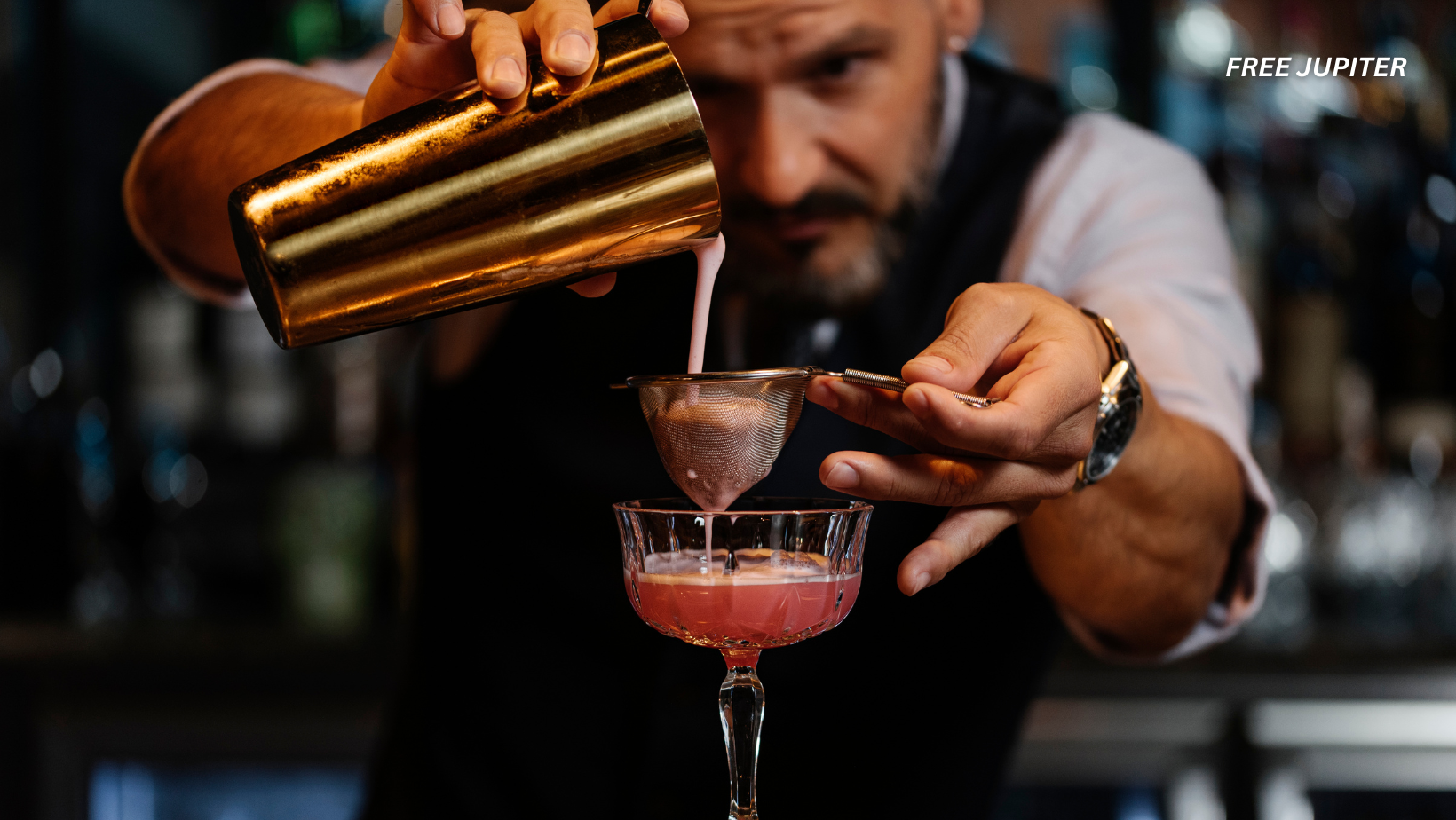
Working behind a bar may look smooth and effortless from the outside—stylish pours, friendly banter, and an endless supply of garnishes—but bartending is a carefully honed craft. A single shift can involve dozens of tasks happening at once: remembering cocktail recipes, keeping track of tabs, reading the room, monitoring alcohol safety, cleaning as they go, and navigating a mix of personalities. And while most customers are harmless, a few comments can sabotage all of that careful rhythm.
To help you be the kind of patron bartenders love seeing again, here are eight common phrases they secretly wish could be banned forever—plus the real reason they hit such a nerve.
1. “So… what’s your real job?”
Many people still carry the outdated idea that bartending is something people only do on the way to something “better.” But for many professionals, bartending is the dream job—it’s creative, financially stable, and full of opportunities.
Behind the bar, there’s real expertise involved:
- understanding spirits, flavors, and balance
- learning dozens of recipes by heart
- practicing speed and precision
- mastering crowd control and conflict resolution
- staying patient and friendly for hours
So when a customer asks what they’re “actually planning to do” with their life, it unintentionally belittles the craft, as if passion doesn’t count unless it happens in an office.
Instead of diving into someone’s career path, it’s far kinder to treat bartending like the serious profession it is. Ask about the drink menu, the ingredients, or their favorite cocktail to make—anything that shows respect for what they’re already great at.
Read more: If They Say These 8 Phrases to a Server, They Have No Empathy
2. “Can you make it extra strong?”
Ordering a cocktail is not the same as negotiating a deal. Asking for extra alcohol without paying for it is basically equivalent to asking a chef for more steak but insisting it stay the same price.
There are reasons bartenders measure their pours:
- Consistency: so every customer gets the same drink
- Safety: to avoid overserving
- Taste: cocktails are meant to be balanced, not overpowering
- Inventory tracking: bars keep strict records
If you want a stronger drink, you absolutely can have one—just say you’d like a double and happily pay for it. Your bartender isn’t trying to shortchange you; they’re trying to keep their job and serve something that tastes the way it’s meant to.
3. “This doesn’t taste like it has any alcohol.”
A well-made cocktail isn’t supposed to taste like rocket fuel. In fact, some of the most impressive drinks hide the alcohol behind layers of fruit, herbs, syrups, and spirits that blend smoothly.
When people complain, they usually compare it to homemade versions, which often involve eyeballing measurements and pouring until “it feels right.” Professionals work differently:
- they use precise ratios
- they prioritize balance
- they avoid overpowering the palate
If something really seems off, most bartenders are happy to check the drink or adjust it politely. But accusing someone of “cheating” or watering it down is a quick way to ruin the mood on both sides of the bar.
4. “Surprise me!” (With no guidance whatsoever)
As fun as it sounds, “surprise me” can put a bartender in a tough spot. Drink preferences vary wildly—some people love smoky mezcal, while others think it tastes like a campfire in crisis. Without direction, the bartender is left to gamble, hoping you won’t hate what they choose.
A little guidance helps tremendously. For example:
- “I like fruity drinks.”
- “Nothing too sweet.”
- “I’m in the mood for something refreshing.”
- “I want something whiskey-based.”
This transforms the request from a shot in the dark into a creative collaboration. You still get the surprise—just one that’s more likely to suit your taste.
5. “Can you give me this one on the house?”
Free drinks might pop up in movies, but in the real world, they’re usually not something bartenders can casually give away. Many bars require staff to pay for any comped drinks out of their own pockets, and rules around freebies can be strict.
Even worse is the line:
- “If you hook me up, I’ll tip big later.”
This often creates more discomfort than generosity. Bartenders value fairness—they aim to treat every customer with the same courtesy and attention, not based on hypothetical promises.
If you want to make a bartender’s night, a genuine conversation and a respectful attitude go much further than bargaining for free alcohol.
Read more:Psychology Says How Someone Treats Service Workers Exposes 7 Huge Truths About Their Character
6. “Can you make it like the bar down the street?”
Think of bars the way you think of restaurants: each one has a signature style, ingredient list, and personality. Expecting one to replicate another’s drink exactly is like going to a bakery and asking them to make a pizza “just like your favorite pizzeria.”
Even if the name of the drink is the same, the components may differ:
- different spirits
- different syrups
- different techniques
- different garnishes
Instead of demanding an identical version, describe what you liked about the other one—maybe the citrus, the spice, or the creaminess—and let the bartender craft something inspired by it. Most will enjoy the challenge.
7. “Hey! Over here!” (Or snapping fingers, waving money, yelling)
On a busy night, the bar might feel chaotic from your side—but from the bartender’s point of view, there’s an entire mental system happening behind the scenes. They know who arrived first, who has been waiting longest, who needs water, whose tab is open, and who is next in line.
Trying to cut through the crowd with shouting or snapping doesn’t speed things up; it just makes you the person they hope doesn’t return.
A calm, friendly signal—brief eye contact, a polite smile, a small wave—is enough to put you on their radar. They’ll get to you. They always do.
8. “Just make it fast.”
This bonus phrase might sound harmless, but it carries a hidden pressure. What’s “fast” to you may not be quick for the bar in that moment. If a bartender is juggling multiple cocktails, complicated orders, and several customers at once, rushing them can disrupt their flow.
Drinks take time for reasons that aren’t obvious:
- shaking properly chills the drink
- muddling releases flavors
- stirring affects texture
- garnishes aren’t just decoration—they add aroma
If you truly need something instantly, order something simple: a beer, a cider, a gin-and-tonic, a rum-and-Coke. The more straightforward the drink, the faster it arrives.
But telling a bartender to “hurry up” guarantees nothing except a strained interaction.
Read more: If You Get Depressed Often in Winter, These 6 Habits Will Instantly Lift Your Mood
Final Takeaway
Bartenders aren’t just pouring drinks—they’re managing energy, crafting flavors, keeping guests safe, and maintaining an atmosphere where everyone can relax. A little courtesy and awareness go a long way in making the experience better for everyone involved.
If you avoid these eight comments, chances are you’ll not only get better service—you’ll have a more enjoyable night, and you might even become the customer bartenders are genuinely happy to see walk through the door again.
Cheers to good manners and even better cocktails. 🍹✨
Featured image: Freepik.
Friendly Note: FreeJupiter.com shares general information for curious minds. Please fact-check all claims and double-check health info with a qualified professional. 🌱