
Human consciousness is one of the most familiar experiences we have and yet it remains one of the least understood. Every thought, feeling, memory, and moment of awareness feels deeply personal, but science still struggles to explain where this inner experience actually comes from. While the brain has been studied in remarkable detail, the mystery of why brain activity feels like something from the inside continues to puzzle researchers.
This challenge was famously described in the 1990s by cognitive scientist David Chalmers, who called it the hard problem of consciousness. He pointed out that while science can explain how the brain processes information, it does not explain why those processes create subjective experience. In other words, why does thinking feel like thinking instead of just silent electrical activity?
Over the years, scientists and philosophers have proposed many answers. Some theories suggest that consciousness emerges when information is widely shared across the brain. Others argue that consciousness appears when information reaches a certain level of complexity or integration. These ideas have helped move the conversation forward, but none have fully solved the mystery.
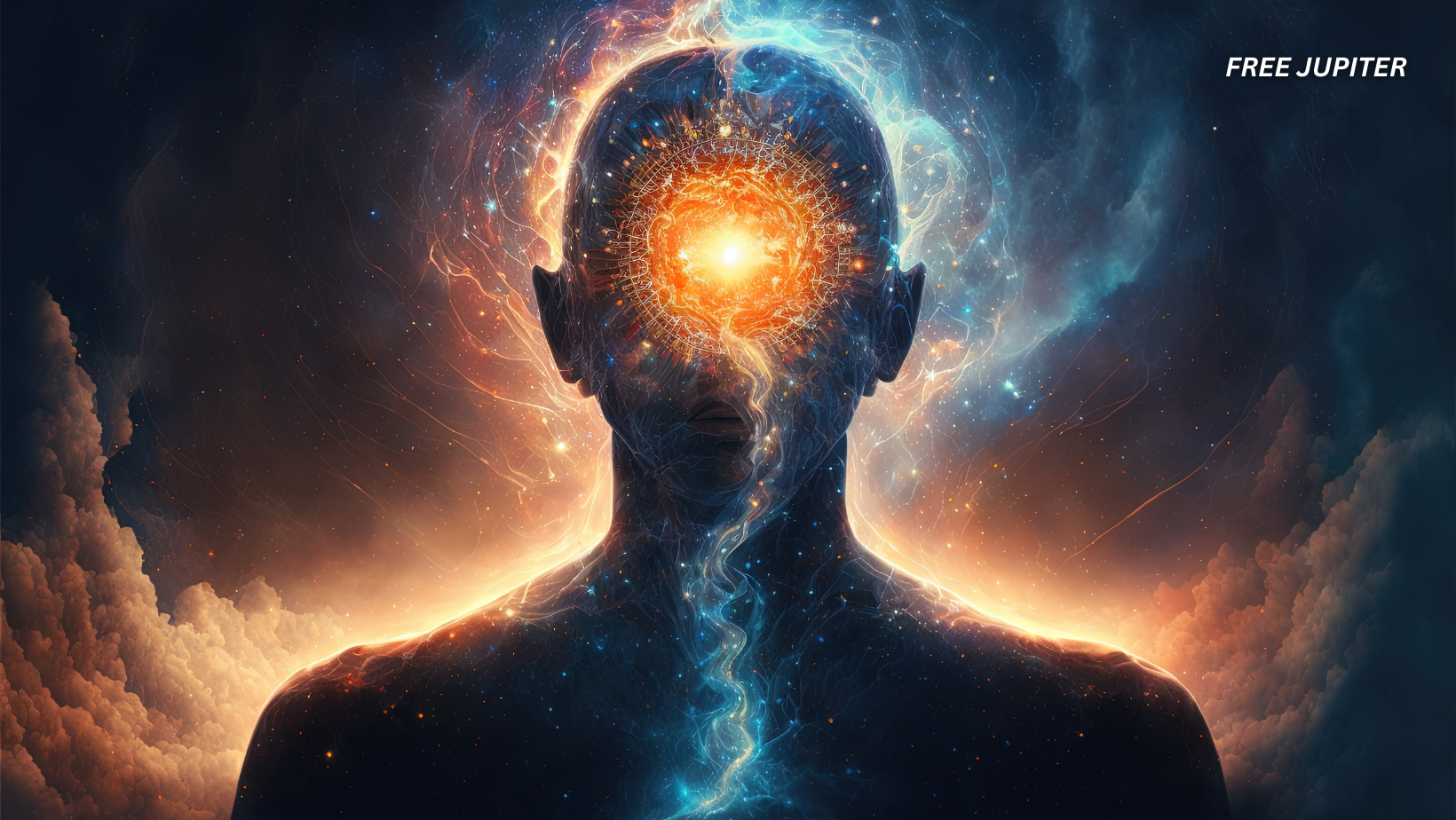
Now, a more unconventional idea is gaining attention. It suggests that consciousness may not come from brain activity alone, but from an interaction between the brain and a subtle quantum field that exists everywhere in the universe.
Looking Beyond Classical Brain Science
Most modern neuroscience relies on classical physics. Neurons send electrical signals, chemicals pass between cells, and networks of activity give rise to behavior and thought. This framework has been incredibly successful in explaining perception, movement, learning, and memory.
However, some researchers believe that classical explanations may not be enough to explain subjective awareness itself. They argue that consciousness may require a deeper level of explanation, possibly one rooted in quantum physics, the branch of science that describes nature at its smallest scales.
Quantum physics already plays a role in many everyday technologies, including lasers, medical imaging, and computer chips. At the quantum level, particles behave in strange ways, existing in multiple states at once and influencing each other across distance. These unusual properties have led some scientists to wonder whether quantum effects might also play a role in the mind.
Related article: Scientists Say Human Cells Show Quantum Computer-Like Abilities
Earlier Quantum Ideas About Consciousness
One of the most well known proponents of a quantum approach to consciousness was physicist Roger Penrose. He believed that human understanding and awareness could not be fully explained by standard computation. Together with anesthesiologist Stuart Hameroff, he proposed that quantum processes inside brain cells might be involved in generating conscious experience.
Their theory, known as Orchestrated Objective Reduction, suggested that tiny structures within neurons could support quantum events that influence thought and awareness. While the theory sparked intense debate, it also encouraged researchers to explore new ways of thinking about the mind.
Many critics argued that the brain is too warm, noisy, and chemically active for fragile quantum states to survive. In most laboratory settings, quantum effects require extreme isolation and very low temperatures. For years, this criticism slowed interest in quantum theories of consciousness.
A New Proposal From Quantum Field Physics
A recent study published in Frontiers of Human Neuroscience has revived the discussion with a fresh perspective. The research was led by Joachim Keppler, director of the DIWISS Research Institute in Germany. Rather than focusing on isolated quantum particles, Keppler’s theory centers on quantum fields that exist throughout space.
According to modern physics, even empty space is not truly empty. At the most fundamental level, it is filled with constant energy fluctuations known as the zero point field. This field represents the lowest possible energy state of quantum systems and plays a role in well established physical effects.
Keppler suggests that certain structures in the brain, known as cortical microcolumns, may interact directly with this field. Microcolumns are small, repeating units of neurons found throughout the cerebral cortex. They are thought to be essential building blocks of perception, thought, and decision making.
The Role of Brain Chemistry
A key element of the theory involves glutamate, the most abundant neurotransmitter in the brain. Neurotransmitters are chemical messengers that allow neurons to communicate. Glutamate is especially important because it plays a major role in learning, memory, and overall brain activity.
Keppler proposes that specific patterns within the zero point field may resonate with glutamate molecules. Resonance occurs when systems vibrate together at compatible frequencies, much like how a tuning fork responds to a matching sound.
If large numbers of glutamate molecules resonate together, they may form coordinated patterns that allow quantum effects to persist across groups of neurons. This collective behavior could help overcome the problem of the brain’s warm and complex environment, which is normally hostile to quantum coherence.
Related article: Birds Can Actually See Earth’s Magnetic Field—Thanks to Quantum Physics
Consciousness and Anesthesia
The theory also offers an interesting explanation for how anesthesia works. Anesthetic drugs reliably erase conscious experience, yet the exact mechanism behind this effect is still not fully understood.
According to Keppler, anesthesia disrupts the brain’s ability to maintain a delicate balance known as self organized criticality. This balance may be essential for sustaining the interaction between brain structures and the zero point field. When that interaction is interrupted, consciousness fades.
This idea aligns with the observation that anesthesia does more than simply slow down the brain. It appears to disconnect the processes that give rise to awareness itself.
Healthy Skepticism and Open Questions
Not everyone is convinced by quantum explanations of consciousness. Even Stephen Hawking once remarked that linking consciousness to quantum physics risks combining two mysteries without truly solving either one. Critics warn that such theories can drift into speculation if they are not grounded in testable predictions.
Still, many researchers argue that consciousness is such a deep and unresolved problem that unconventional ideas deserve careful exploration. History shows that scientific progress often begins with ideas that challenge existing assumptions.
Related article: What Quantum Entanglement Really Reveals About the Universe
A Mystery Still Unfolding
Whether consciousness truly emerges from a hidden quantum field remains uncertain. What is clear is that traditional explanations have not yet provided a complete answer. As neuroscience, physics, and philosophy continue to overlap, new theories will likely keep pushing the boundaries of how we understand the mind.
For now, consciousness remains one of the most fascinating puzzles in science, sitting at the crossroads of biology, physics, and the deepest questions about what it means to be aware.
Featured image: Freepik.
Friendly Note: FreeJupiter.com shares general information for curious minds. Please fact-check all claims and double-check health info with a qualified professional. 🌱