
Kidney stones are among the most painful medical problems a person can experience. Anyone who has had one knows the sensation can arrive suddenly and feel overwhelming. For many patients, treatment involves medication, waiting for the stone to pass, or undergoing medical procedures that can be uncomfortable and stressful. Because of this, scientists around the world have been searching for safer and less invasive ways to deal with the problem.
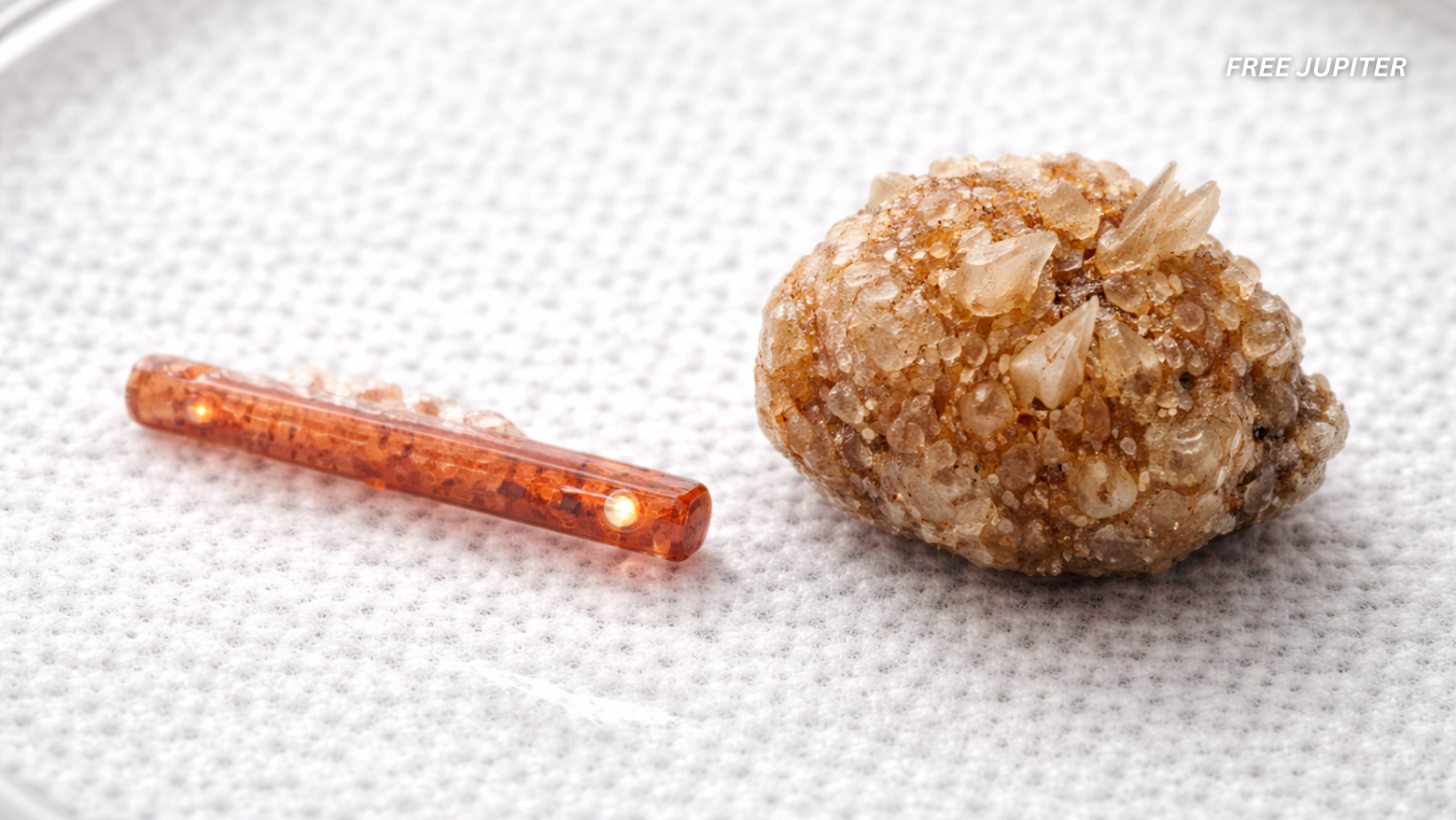
Now, a team of researchers has developed an idea that sounds almost futuristic. They have created a tiny robot, about the size of a grain of rice, that may be able to break apart kidney stones inside the body without the need for surgery. If future studies confirm that it works safely, this technology could transform how doctors treat kidney stones.
Related article: Doctors Explain How Often You Can Take Ibuprofen
The Painful Problem of Kidney Stones
Before exploring the new technology, it helps to understand why kidney stones are such a challenge.
Kidney stones are hard deposits that form when minerals and chemicals in urine begin to crystallize. Over time these crystals stick together and grow into small stones. Some stones remain tiny and pass through the urinary system without causing much trouble. Others grow large enough to block the urinary tract, creating intense pain, nausea, and sometimes infection.
Many kidney stones are made of calcium compounds, but another common type is made of uric acid. These stones form when the urine becomes too acidic. When that happens, uric acid can solidify and form crystals that gradually build into stones.
Treatment depends on the size and location of the stone. Small stones may pass naturally with the help of hydration and medication. Larger stones often require medical procedures. Some treatments use sound waves to break stones into smaller pieces. Others involve inserting instruments through the urinary tract or performing surgery.
While these procedures are effective, they can also involve anesthesia, recovery time, and certain risks. Because of that, researchers have long been interested in finding ways to dissolve or break kidney stones from within the body without traditional surgery.
A Robot That Travels Inside the Urinary Tract
The new technology introduces a very different approach. Instead of relying on large medical devices or surgical tools, scientists created a microscopic robotic device designed to move through the urinary tract.
The robot itself is incredibly small. It measures only about one centimeter in length and is built from a soft, flexible material known as hydrogel. Hydrogels are water rich materials often used in medicine because they can safely interact with the human body.
The hydrogel filament acts as the body of the robot. Inside it, researchers placed a special enzyme called urease. This enzyme plays a crucial role in breaking down uric acid stones.
Rather than being powered by a motor, the robot moves through the body using magnetism. Doctors can guide it using an external robotic system that generates a rotating magnetic field. This field gently directs the tiny device through the urinary tract until it reaches the kidney stone.
The concept may sound complex, but the basic idea is surprisingly simple. Doctors steer the microscopic robot from outside the body, much like controlling a tiny underwater drone. Meanwhile, medical imaging tools allow them to watch where the device is going.
Related article: New Research Links This Vitamin to Longer Lifespan
Real Time Navigation With Ultrasound
Guiding something so small inside the body requires precision. To make this possible, doctors rely on ultrasound imaging.
Ultrasound is a widely used medical tool that creates images using sound waves. It allows doctors to see organs and structures inside the body without radiation or surgery.
While the tiny robotic filament travels through the urinary tract, ultrasound imaging helps doctors track its location. This means the device can be guided carefully toward the kidney stone.
Once it reaches the stone, the next step of the process begins.
How the Robot Breaks Down Kidney Stones
The key to this technology lies in chemistry.
The robot carries the enzyme urease directly to the stone. Urease can trigger chemical reactions that change the acidity of the surrounding environment. In simple terms, it adjusts the pH level of the urine around the stone.
Uric acid stones form in acidic conditions. When the pH level becomes less acidic, the stone becomes unstable. The chemical environment begins to dissolve it or weaken its structure.
By releasing urease exactly where the stone is located, the robotic filament can create conditions that break the stone apart. Instead of remaining a large solid mass, the stone gradually turns into smaller fragments.
These fragments are small enough to pass through the urinary system naturally. This means the body can remove them without surgical intervention.
Why This Technology Could Be a Major Step Forward
If future studies confirm that the robot works safely in living organisms, it could offer several important advantages over current treatments.
One of the biggest benefits would be the elimination of surgical procedures for certain kidney stones. Surgery often requires anesthesia, specialized equipment, and a recovery period. Even minimally invasive procedures can cause discomfort or complications.
A robotic device that can dissolve stones internally could remove many of these concerns.
Another advantage involves precision. Because the device can be guided directly to the stone, the treatment targets only the problem area. Healthy tissue surrounding the stone remains largely unaffected.
The technology may also shorten treatment time. As early experiments suggest, stones might begin breaking down within days rather than weeks or months.
For patients who suffer repeated kidney stones, this could make treatment faster, safer, and less disruptive to daily life.
The Future of Micro Robots in Medicine
The tiny kidney stone robot also represents a broader trend in medical research. Scientists are increasingly exploring the use of microscopic machines that can travel through the body to perform specific tasks.
These devices are often called medical micro robots. Some are designed to deliver drugs directly to tumors. Others may one day repair damaged tissues or remove harmful substances from the bloodstream.
The goal is to make treatments more precise and less invasive.
Instead of opening the body through surgery, doctors may eventually rely on small devices that navigate the body’s natural pathways. These technologies could perform delicate medical work while minimizing damage to surrounding tissues.
Although many of these ideas are still experimental, progress in robotics, materials science, and medical imaging continues to move the field forward.
Related article: New Research Has Linked This Mineral Deficiency to a Shorter Lifespan
A Glimpse of a Less Invasive Future
Kidney stones have troubled humans for centuries. Despite advances in medicine, they remain a common cause of pain and emergency medical visits around the world.
The development of a microscopic robot that can dissolve stones from within the body offers a glimpse of how future medicine might work. Rather than relying on invasive procedures, treatments could become more targeted, efficient, and patient friendly.
There is still a long road ahead before this technology reaches hospitals and clinics. Researchers must confirm that the device works safely and effectively in real biological systems.
Yet the early results suggest something remarkable. A device no larger than a grain of rice might one day travel through the body, find a painful kidney stone, and break it apart from the inside.
For patients who have endured the sharp pain of kidney stones, that possibility alone feels like a glimpse into the future of medicine.
Featured image: GPT Recreation.
Friendly Note: FreeJupiter.com shares general information for curious minds. Please fact-check all claims and double-check health info with a qualified professional. 🌱