
For many years, cancer treatment has often meant surgery, radiation, or strong medications that affect not only the tumor but also the rest of the body. These methods have saved countless lives, yet they can also be physically and emotionally demanding. Now, a new approach is emerging that feels almost unexpected. Instead of cutting or burning, scientists are using sound.
This technique is known as histotripsy, and it is beginning to reshape how certain cancers, especially liver tumors, are treated. At first glance, the idea may sound unusual. How can sound waves destroy something as complex as a tumor? The answer lies in physics, precision engineering, and years of careful research.
A Different Way of Treating Cancer
Histotripsy is a noninvasive procedure. That means there is no need for incisions, stitches, or surgical tools entering the body. Instead, doctors use highly focused ultrasound waves that are directed straight at the tumor.
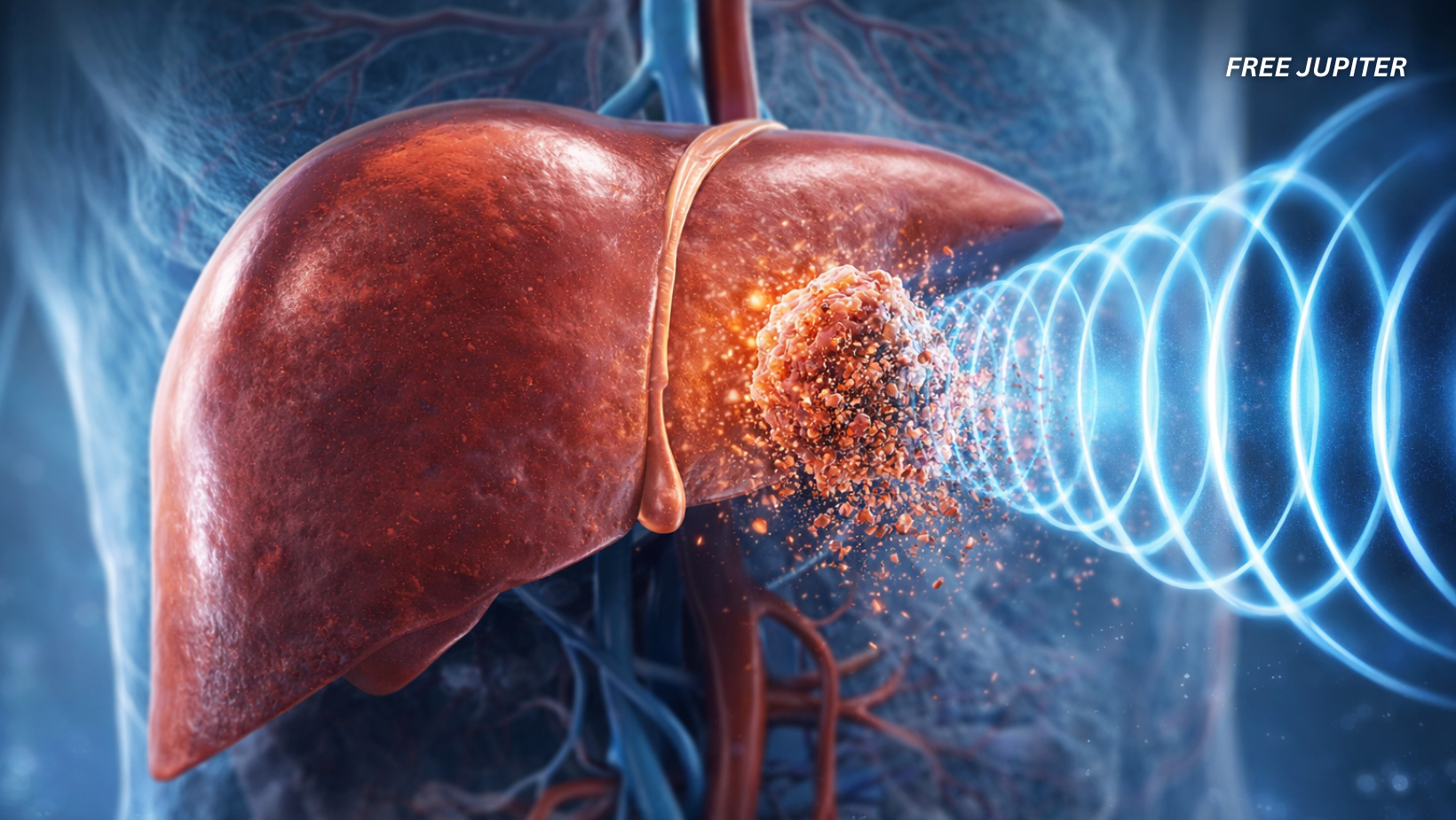
These are not the same gentle sound waves used in pregnancy scans. The energy involved here is much stronger and extremely precise. When these waves reach the tumor, they create what scientists describe as “bubble clouds.” These are tiny pockets of vapor that form and collapse very quickly.
As these bubbles expand and then collapse, they generate enough force to physically break apart tumor tissue. The process turns solid cancer cells into a liquid-like substance, which the body can then gradually clear away through natural processes.
What makes this especially remarkable is that the surrounding healthy tissue remains largely unaffected. The treatment is targeted with such accuracy that nearby blood vessels and organs are preserved.
From Laboratory Discovery to Real Patients
The development of histotripsy did not happen overnight. It has roots in years of research conducted at institutions such as the University of Michigan, where biomedical engineers and clinicians worked together to refine the technology.
One of the key figures in this field is Dr. Zhen Xu, a biomedical engineer whose work has helped bring histotripsy from experimental stages to clinical reality. Her research team focused on understanding how sound waves interact with human tissue and how they can be controlled with precision.
Behind these breakthroughs are not only scientists but also families and patients who have participated in clinical trials. Many of these individuals were facing limited options, especially those with liver tumors that could not be removed through surgery.
For example, some patients enrolled in early trials had cancers that had spread from the colon or pancreas to the liver. In traditional cases, these situations can be difficult to treat. Histotripsy offered a new possibility, one that did not require the risks associated with major surgery.
How the Procedure Feels for Patients
One of the most striking aspects of histotripsy is how gentle the experience can be compared to conventional treatments. Patients typically lie on a treatment table while the device is positioned over the targeted area.
The procedure is guided by imaging technology, allowing doctors to see exactly where the tumor is and how the treatment is progressing in real time. Some patients receive mild sedation, but many remain awake during the process.
Since there are no cuts or burns, recovery tends to be faster. In many reported cases, patients are able to go home the same day. This is a significant shift from traditional liver surgery, which can require days or even weeks of recovery.
Why the Liver Is a Key Focus
The liver has become one of the primary targets for histotripsy, and there are important reasons for that. Liver cancer is among the leading causes of cancer related deaths worldwide. It is also a common site where cancers from other organs spread.
Treating liver tumors can be challenging because of the organ’s complex structure and its role in essential body functions. Traditional surgery is not always possible, especially if tumors are located near major blood vessels.
Histotripsy offers a way to reach these difficult areas without cutting into the liver. Because the ultrasound waves can be focused with high precision, doctors can target tumors that were once considered inoperable.
What Clinical Trials Are Showing
Early clinical trials have produced encouraging results. In studies involving patients with liver tumors, histotripsy achieved its intended treatment goals in a large majority of cases.
In fact, performance targets were met in about 95 percent of patients in some trials. Complication rates were also low, which is an important factor when evaluating any new medical procedure.
These outcomes suggest that histotripsy is not only effective but also safer in certain situations compared to more invasive treatments. However, researchers continue to monitor long term results to better understand how patients respond over time.
A Shift in Medical Thinking
Perhaps one of the most interesting aspects of histotripsy is how it reflects a broader change in medicine. For decades, the dominant approach to cancer treatment has involved removing or destroying tumors through physical or chemical means.
Histotripsy introduces a different idea. Instead of cutting or burning, it breaks tumors apart using mechanical energy. This shift may seem subtle, but it represents a new way of thinking about how diseases can be treated.
It also opens the door to treating other conditions. Researchers are already exploring whether this technology can be used for tumors in the kidney, pancreas, and even the brain. Each new application brings its own challenges, but the potential is significant.
The Human Side of Innovation
Behind every medical advancement are real people whose lives are affected. Patients who undergo histotripsy often share stories of relief, not just from the treatment itself but from the reduced stress that comes with it.
Families play an important role as well. For many, the experience of seeing a loved one avoid major surgery can be deeply meaningful. It changes the emotional landscape of treatment, turning what might have been a long and uncertain process into something more manageable.
Doctors and researchers also carry personal motivations. Many have family members or friends who have faced cancer, which drives their commitment to finding better solutions. These personal connections often shape the direction of their work.
Looking Ahead
While histotripsy is still a relatively new technology, its impact is already being felt. Hospitals in different parts of the world are beginning to adopt the technique, and more clinical trials are underway.
There is still much to learn. Scientists are working to understand how the body responds to the liquefied tumor tissue and how the immune system may play a role in clearing it. Some studies suggest that breaking down tumors in this way could even help the body recognize and fight cancer cells more effectively.
As research continues, the hope is that histotripsy will become more widely available and adaptable to different types of cancer. It may not replace all existing treatments, but it has the potential to become an important option within a broader care plan.
A New Chapter in Cancer Care
The idea of using sound waves to dissolve tumors might once have seemed like science fiction. Today, it is becoming part of real medical practice. Histotripsy represents a shift toward treatments that are not only effective but also less invasive and more patient friendly.
For individuals facing cancer and for the families who support them, this development offers something that is always needed in medicine. It offers another option, another path forward, and a reminder that innovation continues to reshape what is possible.
As science advances, it becomes clear that sometimes the most powerful tools are not always the ones we can see. In this case, it is sound, carefully directed and precisely controlled, that is helping to transform the future of cancer treatment.
Featured image: GPT Original Creation.
Friendly Note: FreeJupiter.com shares general information for curious minds. Please fact-check all claims and double-check health info with a qualified professional. 🌱