
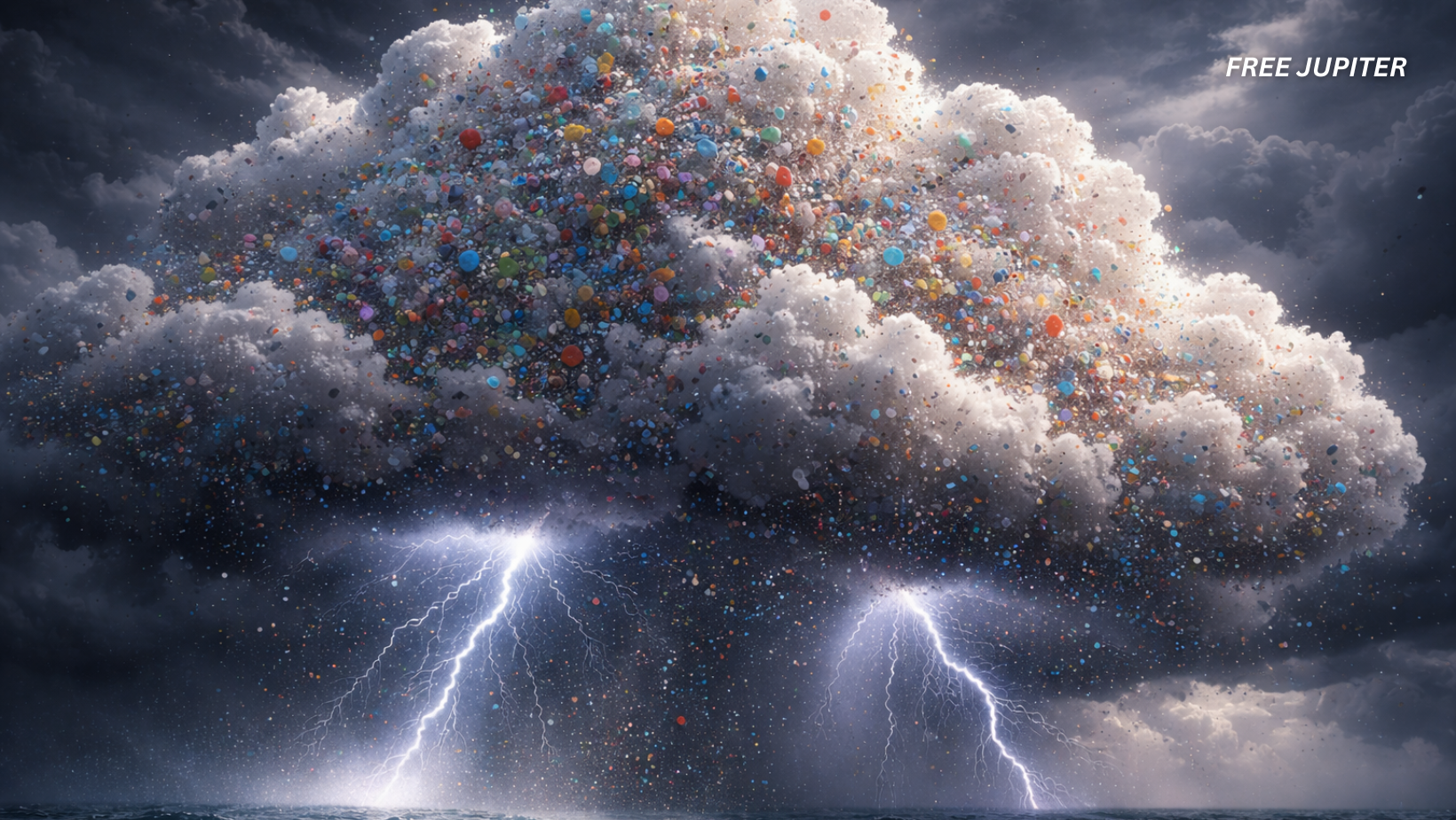
It may sound unbelievable at first, but scientists now say that plastic pollution has reached the clouds above our heads. The same tiny plastic fragments found in oceans, soil, and food have been detected floating inside clouds high above mountain peaks. Even more surprising is what those particles appear to be doing once they get there.
According to recent research, microplastics are not just drifting harmlessly through the sky. They may be actively influencing how clouds form, how storms develop, and how quickly rain and snow fall from the sky. In other words, human made pollution may be shaping the weather in subtle but meaningful ways.
This discovery adds a new chapter to the growing story of how deeply plastic has woven itself into the natural world.
Understanding Microplastics in Simple Terms
Microplastics are extremely small pieces of plastic, often smaller than a grain of sand. They form when larger plastic items slowly break down due to sunlight, friction, heat, and weather. Common sources include plastic packaging, synthetic clothing fibers, vehicle tires, bottles, and household items.
Every time synthetic clothes are washed, tiny fibers are released. Every time tires wear down on the road, microscopic particles are shed. These fragments are light enough to be carried by wind and water across long distances.
Over time, microplastics have been discovered almost everywhere scientists have looked. They are found in deep ocean trenches, Arctic ice, farmland soil, drinking water, and even inside the human body. The sky, it turns out, is no exception.
How Plastic Ends Up Inside Clouds
At first glance, it might seem impossible for plastic to reach the clouds. But the atmosphere is constantly moving. Winds lift dust, pollen, sea salt, smoke, and pollution upward every day.
Microplastics are especially easy to carry because they are light and durable. Once airborne, they can remain suspended for long periods and travel hundreds or even thousands of kilometers.
Researchers collecting cloud water from mountaintops discovered these particles trapped inside droplets. The locations were remote and far from cities, which shows just how far plastic pollution can travel. Even places that appear untouched by human activity are connected through the air we all share.
Related article: Experts Warn Bottled Water Drinkers Take In 90,000 More Microplastic Particles Each Year
Clouds Need Tiny Seeds to Form
Clouds do not form out of nothing. Water vapor in the air needs a surface to cling to before it can become a droplet or ice crystal. These tiny surfaces are known as cloud condensation nuclei or ice nucleating particles.
In nature, this role is usually played by dust, salt from the ocean, volcanic ash, or biological particles like pollen. Without these seeds, clouds would struggle to form properly.
Scientists now believe that microplastics can act as these seeds as well. Certain types of plastic appear particularly effective at encouraging ice formation inside clouds, especially in colder conditions.
Why Ice Formation Matters
The way ice forms inside clouds plays a major role in weather. Ice crystals can grow quickly and pull moisture from surrounding droplets. This process often leads to precipitation, such as rain or snow, falling sooner than it otherwise would.
If microplastics increase the number of ice forming particles in clouds, storms may develop faster or release moisture earlier. In some situations, this could mean heavier rainfall over shorter periods. In others, it might alter where and when rain falls.
While scientists are still studying the exact scale of these effects, the early findings suggest that plastic pollution could be nudging weather systems in new directions.
What This Means for Weather Patterns
Weather is a delicate balance of temperature, moisture, and movement. Small changes can have larger consequences over time. When clouds behave differently, it can affect rainfall patterns, snow accumulation, and storm strength.
This does not mean microplastics are causing extreme weather on their own. Climate change, driven by greenhouse gas emissions, remains the dominant force behind rising temperatures and shifting weather patterns.
However, microplastics add another layer of influence. They interact with clouds in ways scientists are only beginning to understand. In combination with warming temperatures and changing atmospheric conditions, these tiny particles may contribute to unexpected outcomes.
A Global Problem With No Clear Borders
One of the most striking aspects of this research is how global the issue truly is. The microplastics found in clouds over mountains may have originated from cities, factories, roads, or coastlines far away.
Air currents do not respect national borders. Pollution released in one place can end up affecting environments thousands of kilometers away. This makes plastic pollution not just a local problem, but a shared global challenge.
It also raises questions about accountability. If plastic released in one region alters weather elsewhere, managing pollution becomes a collective responsibility rather than an individual one.
Related article:Doctors Say They’ve Found a Way to Remove Microplastics From the Human Body
What Happens When It Rains Plastic
While the phrase raining plastic sounds alarming, it does not mean rain is visibly filled with debris. Instead, microplastics fall back to the surface mixed with rain or snow.
Studies have already found microplastics in rainfall samples from cities and rural areas alike. Over time, this process spreads plastic particles across land and water systems, where they can enter food chains and ecosystems.
The cycle is self sustaining. Plastic rises into the air, becomes part of clouds, falls back to Earth, and then gets lifted again. Breaking that cycle requires reducing the amount of plastic entering the environment in the first place.
Why Scientists Are Paying Attention Now
The discovery of microplastics in clouds is relatively recent, and it has opened new research paths. Scientists want to know how common these particles are in the atmosphere and whether certain regions are more affected than others.
They are also studying which types of plastic are most active in cloud formation. Some materials may have stronger effects than others, depending on their shape, surface chemistry, and ability to attract water.
Understanding these details will help researchers build more accurate weather and climate models. It will also help policymakers assess the broader consequences of plastic pollution.
Related article: This Natural Plant Extract Can Remove Up to 90% of Microplastics From Water
A Subtle Yet Powerful Reminder
Perhaps the most powerful takeaway from this discovery is not fear, but awareness. The sky often feels distant and untouched, yet it is closely connected to human activity on the ground.
Plastic has become part of Earth’s systems in ways few people imagined decades ago. From oceans to clouds, its presence is a reminder that modern convenience leaves long lasting traces.
This does not mean the situation is hopeless. Awareness leads to action, and action leads to change. Reducing plastic waste, improving materials, and rethinking consumption habits can limit how much pollution enters the environment.
For now, the clouds above us carry a quiet message. What we create does not stay confined to where we use it. Even the weather is listening.
Featured image: GPT creation.
Friendly Note: FreeJupiter.com shares general information for curious minds. Please fact-check all claims and double-check health info with a qualified professional. 🌱