
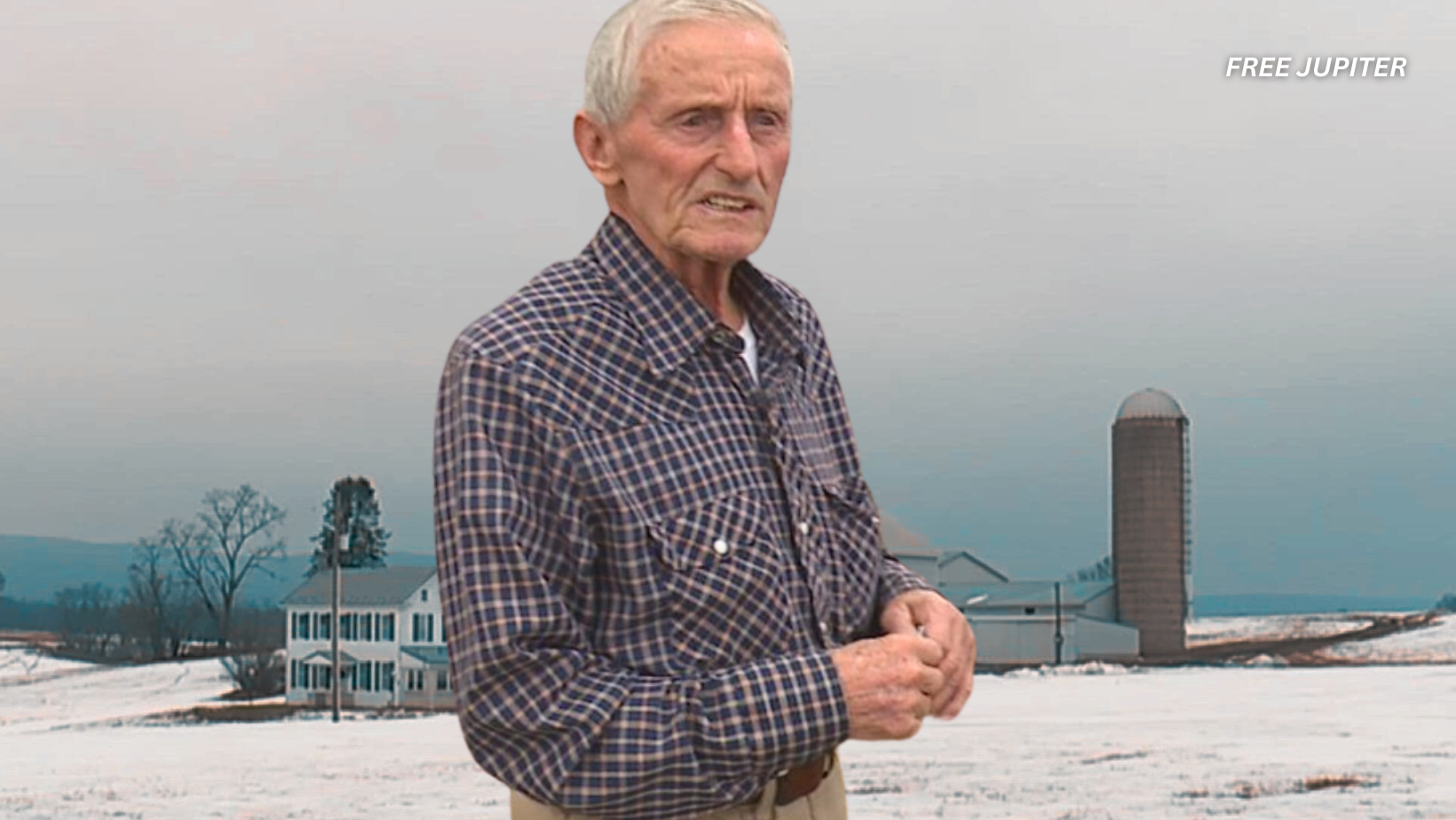
In Silver Spring Township, Pennsylvania, a stretch of farmland that had been in one family for decades became the focus of intense interest from technology developers. The land, owned by Mervin Raudabaugh, had all the qualities companies look for when building a large data center. It was spacious, well located, and suitable for large scale construction.
Developers saw opportunity. Raudabaugh saw something very different.
For 51 years, he had called the property home. The farm was not simply soil and structures. It was memory, family, and identity. When a development group offered him $15 million to sell the land for a data center project, many assumed the decision would be easy. Few people are presented with an offer that large and walk away.
But Raudabaugh did exactly that.
Why Developers Wanted the Land
Across the United States, demand for data centers has increased rapidly. Companies that operate cloud services, artificial intelligence systems, streaming platforms, and online storage need massive facilities filled with servers. These buildings require wide open land, strong infrastructure, and access to reliable power sources.
Rural areas often meet those requirements. Pennsylvania, in particular, has become attractive for data center expansion because of its location near major cities and its energy resources.
To developers, Raudabaugh’s farm represented prime real estate. To him, it represented generations of work and a connection to his past.
Related article: Only 20% of People Can Solve This 3-Question IQ Test Backed By MIT — Can You?
Choosing Conservation Over Cash
Instead of accepting the $15 million proposal, Raudabaugh chose another path. He sold the development rights to the Lancaster Farmland Trust for about $2 million.
At first glance, that decision seems financially drastic. Why accept $2 million when $15 million is on the table?
The answer lies in a tool called a conservation easement. A conservation easement is a legal agreement that permanently limits how land can be used. In this case, it ensures that the property can only be used for agriculture. No industrial buildings. No server warehouses. No large scale commercial development.
The land will remain farmland for generations to come.
By entering into this agreement, Raudabaugh did not simply protect his own property. He helped preserve part of Pennsylvania’s agricultural landscape.
The Emotional Weight of the Decision
For Raudabaugh, the farm is deeply personal. The barn on the property holds memories that cannot be priced. It was there, he has shared, that he spent the final moments with his mother.
That kind of history cannot be replaced with a larger bank account.
Family farms often carry emotional meaning that goes far beyond economic value. They are places where children grow up, where traditions are passed down, and where families gather during important moments in life. Selling land for development can feel like closing a chapter that can never be reopened.
By refusing the offer, Raudabaugh chose continuity over change. He chose peace of mind over profit.
Pressure From Developers
The road to preservation was not without difficulty. Reports indicate that Raudabaugh experienced persistent pressure from developers who were eager to secure the property. Large scale projects often involve aggressive negotiations, particularly when the location is ideal for corporate expansion.
When significant money is involved, negotiations can become intense. For landowners, that pressure can feel overwhelming.
Despite this, Raudabaugh remained firm in his decision. He stood by his belief that the farm should remain farmland.
Related article: These 6 “Polite” American Habits Are Seen as Suspicious By Most People Around the World
A Community That Values Open Space
Silver Spring Township and surrounding areas have a history of supporting land conservation. In many Pennsylvania communities, voters have approved funding measures that dedicate tax dollars to preserving rural landscapes and protecting agricultural heritage.
Programs supported by organizations like the Lancaster Farmland Trust aim to keep family farms intact and prevent the steady loss of agricultural land to suburban and industrial development.
In this context, Raudabaugh’s decision aligns with a broader community effort. His choice reflects a shared understanding that farmland provides more than crops. It supports local food systems, protects wildlife habitats, and maintains the character of rural regions.
The Bigger Picture: Data Centers and Farmland
The tension between technological growth and land preservation is becoming more common. Data centers are essential to modern life. Every email, video stream, online purchase, and cloud stored photo relies on physical infrastructure somewhere.
At the same time, farmland across the United States continues to shrink. According to agricultural data, millions of acres have been converted to non agricultural uses over the past few decades.
When farmland is lost, it is rarely restored.
This raises an important question. How should communities balance economic development with long term sustainability?
In some cases, landowners choose to sell. In others, like Raudabaugh, preservation takes priority.
Financial Sacrifice or Long Term Investment?
From a strictly financial perspective, turning down $15 million may seem unthinkable. However, the story is more nuanced.
By selling the development rights for $2 million through a conservation easement, Raudabaugh still received compensation. He did not walk away empty handed. What he gave up was the additional $13 million that full development would have provided.
To some, that is a sacrifice. To others, it is an investment in legacy.
Money can transform a life in many ways. Yet land that has been protected permanently may carry a different kind of value. It ensures that future generations will see open fields instead of concrete structures.
What This Decision Represents
In a time defined by rapid digital expansion, the story of one farmer declining a multimillion dollar offer stands out. It challenges the idea that financial gain must always come first.
Raudabaugh’s choice highlights a broader conversation about heritage, land stewardship, and personal values. It shows that not every decision is guided by market forces alone.
For him, the farm is not simply property. It is home.
Related article:Gmail Users Are Being Urged to Disable This Automatic Setting Immediately
A Reminder That Some Things Cannot Be Replaced
Technology will continue to grow. Data centers will continue to be built. Economic development will move forward.
Yet stories like this one remind us that certain spaces hold meaning that cannot be duplicated. A family barn, a field passed down through generations, and the memory of loved ones tied to a specific place all carry weight that exceeds any appraisal figure.
By choosing conservation over a $15 million payout, Mervin Raudabaugh ensured that his family’s farmland in Silver Spring Township will remain what it has always been.
In a world where nearly everything seems negotiable, his decision suggests that some values are not for sale.
And sometimes, protecting the past becomes the most powerful investment in the future.
Featured image: Mervin Raudabaugh/Silver Spring Township/Free Jupiter Mashup
Friendly Note: FreeJupiter.com shares general information for curious minds. Please fact-check all claims and double-check health info with a qualified professional. 🌱