
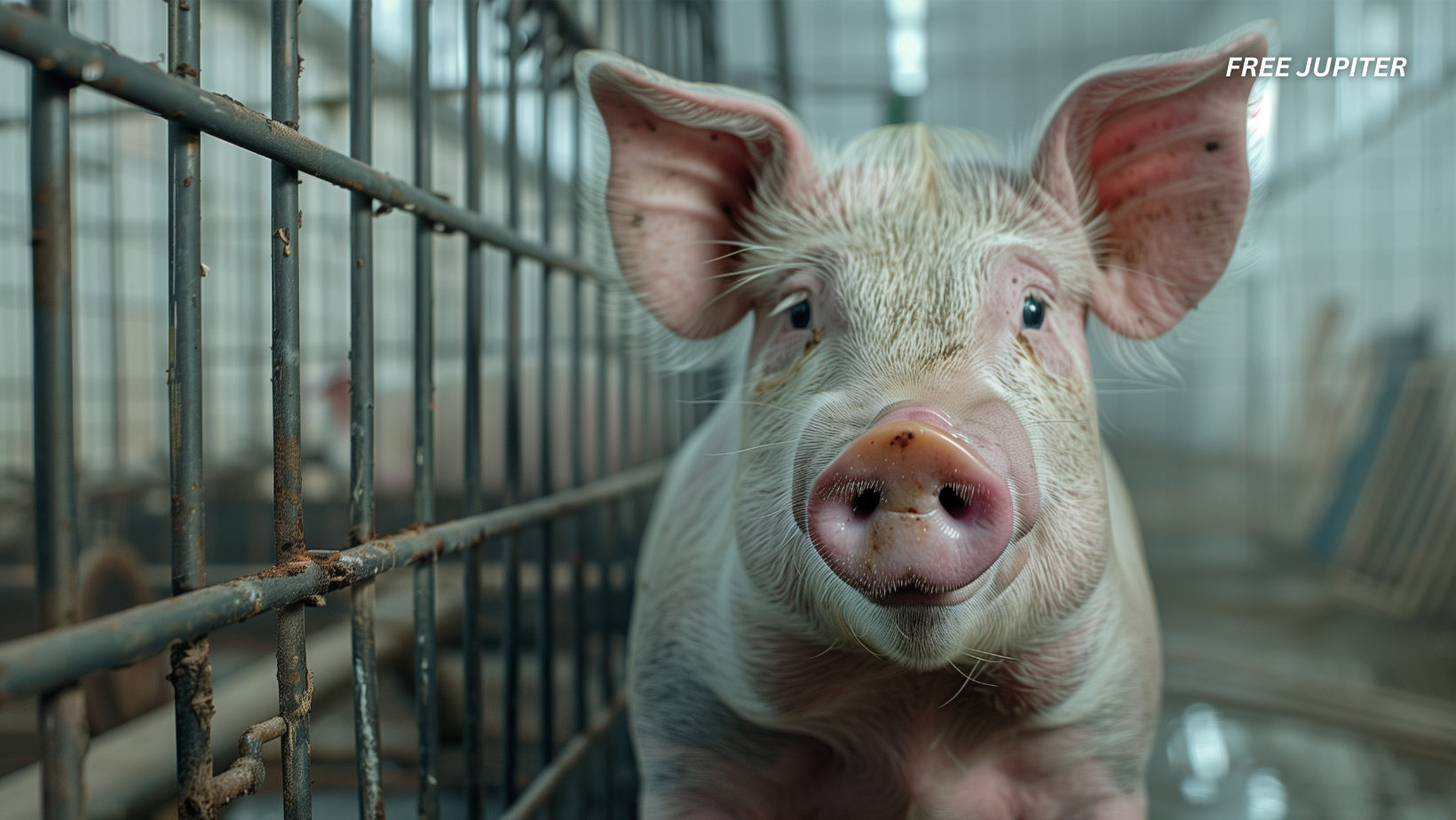
In October 2025, inside a New York operating room, doctors carried out a medical milestone that once belonged in the realm of imaginative fiction. A living patient received a genetically modified pig kidney—an organ carefully designed to behave more like it belonged in a human body. The procedure wasn’t an emergency gamble nor a bold one-off experiment. It was part of a formal clinical trial involving six participants, each becoming a living test of a medical frontier that had been decades in the making.
The work raises a curious question that may not be obvious at first glance: Why is it acceptable to put a pig organ inside a human, but not acceptable to grow a human organ inside a pig? This puzzle sits at the crossroads of science, ethics, and our own ideas about what it means to be human.
Why Pig Organs Are Suddenly an Option
Today’s pig kidneys used in clinical trials are the product of years of genetic editing. Scientists alter specific pig genes and insert certain human ones so the organ is less likely to trigger a severe immune response. The goal is simple: produce a kidney that the human body won’t immediately reject.
Even with this careful editing, patients still need strong immune-suppressing medications. These drugs keep the immune system from attacking the organ, but they also make patients more vulnerable to infections. Human-to-human transplants require lifelong immune suppression too, though the risks become more complicated when the organ comes from another species.
Despite the challenges, the promise is clear. Organ shortages claim thousands of lives every year. More than 100,000 people in the U.S. alone wait for transplants, and there simply aren’t enough donors. Pig organs could save lives that would otherwise be lost to time.
Read more: Surgeons Have Achieved The First-Ever Robotic Heart Transplant Without Any Chest Cuts
The Earlier Big Idea: Human Organs Grown Inside Animals
Before scientists began heavily editing pig organs, they once hoped for something even more ambitious—growing human organs inside pigs using a patient’s own cells.
This approach relied on a clever trick. Researchers would disable the genes that allow a pig embryo to grow a kidney. Human stem cells would then fill the gap and grow a human kidney inside the developing pig. If successful, the organ would be a perfect genetic match for the future patient. A kidney that matched the patient’s DNA could drastically reduce the risk of rejection, possibly removing the need for intense immune-suppressing medication.
Although the idea sounded bold, it wasn’t far-fetched. A few years before funding was halted, scientists had already grown a mouse pancreas inside a rat. The technique worked, proving that cross-species organ growth was more than a theoretical dream.
But in 2015, the National Institutes of Health froze federal funding for such experiments, citing ethical concerns that remain unresolved today.
Why Growing Human Organs in Pigs Was Paused
The hold wasn’t placed because the science was faulty. It was placed because of fear—particularly the fear of what might happen if human cells migrated into parts of the pig where they weren’t intended to go.
The biggest worry centered on the brain. Human stem cells are incredibly flexible and capable of forming many different types of tissue. What if, instead of staying confined to the developing kidney, some of those cells traveled into the pig’s brain and contributed to neural development?
This scenario raised uncomfortable questions. Could the animal gain new cognitive abilities? Could it interpret the world differently? Could it become conscious in a way that made it too humanlike to ethically use for organ harvesting?
The NIH specifically warned about possible “alterations to the animal’s cognitive state.” Meanwhile, animal-rights groups argued that if a chimera ever developed any degree of humanlike awareness, it should be treated with significant moral protections.
At the heart of these concerns was a single idea: moral status.
Read more: Science Reveals How Cats Navigate Home Over Super Long Distances
What Moral Status Really Means
Moral status determines how much moral consideration a being deserves. It’s the difference between how society treats a fly, a dog, and a human. This idea doesn’t depend only on an organism’s ability to feel pain. It also considers self-awareness, emotional complexity, and vulnerability.
If an animal could not only feel pain but understand that the pain was happening to itself—something closer to human self-awareness—then the harm done to it would be considered greater. This is why the NIH paused research: they worried human cells could give an animal new forms of awareness that demanded stronger moral protection.
The concern was not scientific—it was philosophical.
The Ethical Paradox at the Center
Some ethicists argue that the NIH’s reasoning is inconsistent. If the real fear is creating animals with heightened cognitive abilities, then the worry shouldn’t be limited to human cells. Dolphin or primate cells also support advanced cognition, yet inserting those cells into pigs doesn’t trigger the same alarm.
Instead, it seems that society and policy often treat species membership as the dividing line. Humans receive full protection simply because they are human—even those who cannot speak, think abstractly, or recognize themselves in a mirror. Humans remain part of the moral community because of their membership, not because of specific mental traits.
Animals, Organs, and Unanswered Questions
These scientific advances don’t erase legitimate concerns about animal welfare. Even if there is no risk of making pigs too humanlike, using animals as biological factories raises tough questions about suffering, captivity, and the limits of human control over other species.
The ethical conversation is complicated, and no single answer satisfies everyone. What is clear is that the fear at the center of the NIH ban came from a misunderstanding about what truly gives a being moral standing.
Pig-to-human transplantation continues to move forward. Human-organ-in-pig research remains frozen. And the paradox lives on: regulators fear pigs could become too human, while quietly accepting that humans can now rely on organs grown with the help of pigs.
Read more: Science Explains Why Your Mouth Dries Out While You Sleep
A World Moving Toward Difficult Choices
The need for organs keeps growing, and science keeps pushing the edges of what is possible. Because of that, society will continue facing questions that blend biology, morality, and imagination.
Pig organs inside humans are no longer theoretical. They are functioning in real bodies, even if imperfectly. Meanwhile, the approach that might have produced perfect human organs remains paused—not because the science failed, but because the ethical unease was too heavy to set aside.
Medicine often stands in the space between what can be done and what should be done. In the case of pig organs and human bodies, that space is becoming more complicated, more fascinating, and more important with each passing year.
Featured image: Freepik.
Friendly Note: FreeJupiter.com shares general information for curious minds. Please fact-check all claims and double-check health info with a qualified professional. 🌱