
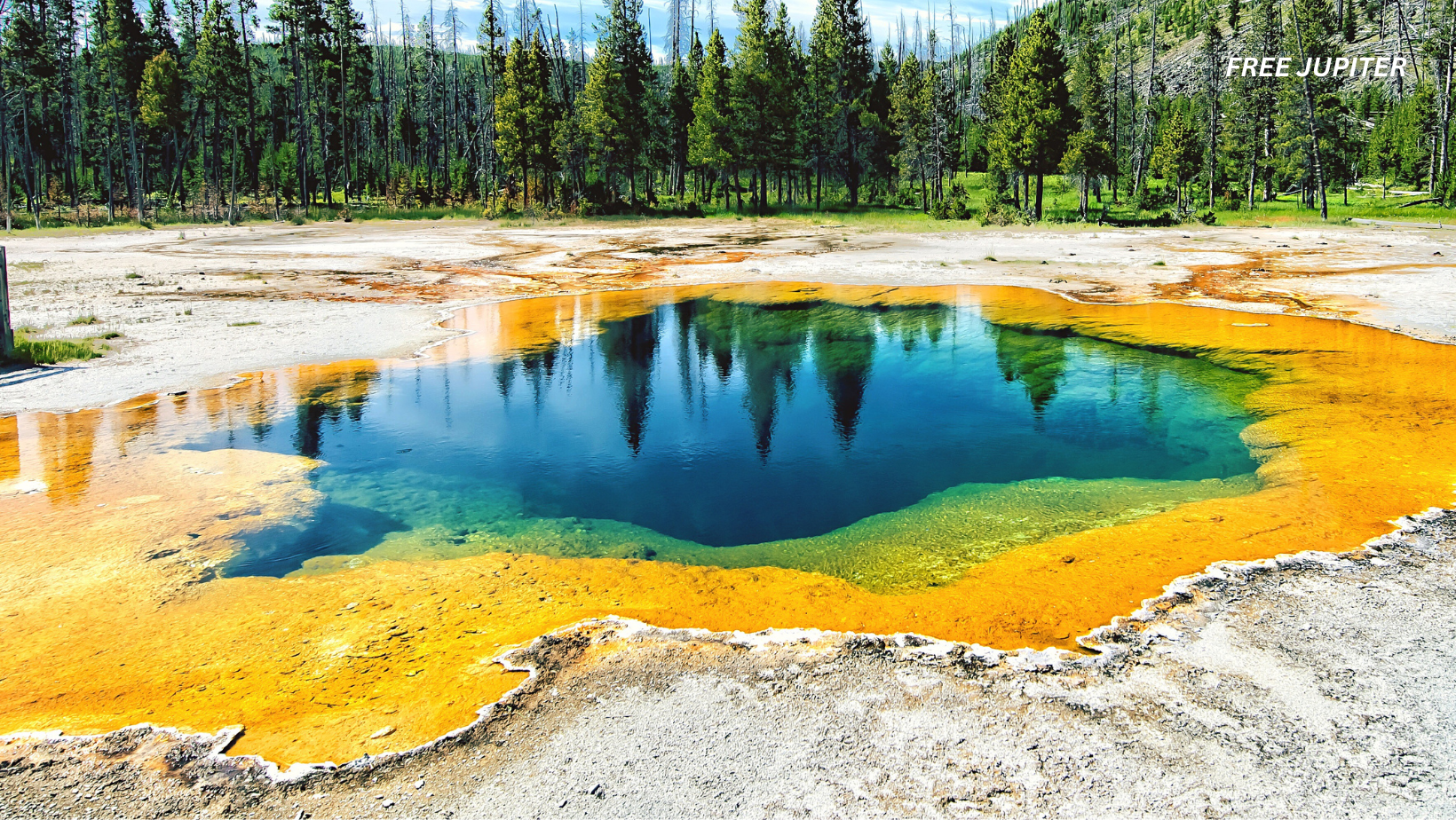
Yellowstone National Park has a reputation that looms larger than life. Its rainbow colored hot springs, towering geysers, and roaming wildlife make it feel almost unreal. Add in the constant whisper of a massive volcano beneath the surface, and it is no surprise that Yellowstone often finds itself at the center of dramatic headlines. The idea of a sleeping giant waiting to awaken has captured the public imagination for decades.
Yet the real story unfolding beneath Yellowstone right now is far less dramatic and far more fascinating. Scientists have confirmed that a portion of land near the Yellowstone caldera has begun to rise again after years of relative stillness. The movement is slow, subtle, and measured in centimeters. Still, it offers valuable insight into how this ancient volcanic system continues to breathe and evolve.
Despite how alarming the word rising may sound, this change is not a sign of impending disaster. Instead, it is a reminder that Yellowstone is a living geological landscape, constantly shifting beneath our feet.
A Landscape That Never Truly Stands Still
Yellowstone sits atop a volcanic hotspot, which is essentially a region where heat from deep within the Earth slowly pushes upward toward the surface. This heat powers the park’s famous geysers, bubbling mud pots, and steaming thermal pools. It also causes the ground itself to move over time.
According to scientists at the US Geological Survey, Yellowstone is best understood as a dynamic system. The land does not remain fixed. It gently rises, sinks, tilts, and reshapes itself depending on what is happening underground. These movements are called ground deformation, and they are completely normal for volcanic regions.
One way to picture this process is to imagine thick liquid warming in a pot on a stove. Heat rises from below, while the surface cools from above. The liquid slowly circulates even if it never boils. Beneath Yellowstone, hot rock, molten material, water, and gas are constantly interacting in a similar way, just on a much larger scale and over much longer periods of time.
Related article: Planting 2.5 Million Plants and 880,000 Trees Led to A Measurable Drop In Temperature in a Colombian City
Understanding Ground Deformation Without the Jargon
To scientists, deformation simply means change. When magma, gas, or hot fluids move underground, they change pressure levels beneath the surface. Increased pressure can push the ground upward. Reduced pressure can cause it to sink.
These changes can happen for many reasons. Magma may slowly accumulate beneath the crust. Hot water and gas can build up in underground reservoirs. Faults can shift slightly. Even cooling rock can contract and pull the surface downward.
Most of the time, these movements are so small that people standing above them would never notice. Without modern instruments, Yellowstone would appear completely still.
The Norris Uplift Anomaly Explained Simply
The specific area now drawing attention is known as the Norris Uplift Anomaly. It lies near the northern edge of the Yellowstone caldera, close to the Norris Geyser Basin, one of the most geologically active areas in the park.
This zone spans roughly 29 kilometers and has a history of gentle motion. Between 1996 and 2004, scientists observed the area rising by about 12 centimeters. That amount may sound insignificant, but across such a wide region it represented a meaningful shift.
Researchers believe this uplift was caused by magma slowly accumulating about 14 kilometers below the surface. As pressure increased, the land above responded by lifting slightly.
At the time, satellite radar and GPS technology revealed ripple like patterns in the landscape. These patterns showed which areas were rising and which were sinking. Similar activity had likely occurred many times before in Yellowstone’s history. The difference was that scientists finally had the tools to detect it.
Why the Uplift Did Not Last Forever
After reaching its highest point around 2004, the Norris Uplift Anomaly began to sink. Over the next decade, more than half of the uplift gradually disappeared.
This reversal fits perfectly with what scientists understand about magma behavior. When magma enters the Earth’s crust, it does not stay hot forever. As it cools, it begins to crystallize. Gases that were once dissolved in the molten material escape over time. As pressure decreases, the ground above settles back down.
This cycle of uplift followed by subsidence is not unusual. It does not mean the volcano is waking up. It simply reflects the natural balance between pressure buildup and pressure release beneath the surface.
A Surprising Acceleration in 2013
Just when the area seemed to be settling into a long period of calm, the ground near Norris began rising again in 2013. This time, it rose faster than ever before recorded at Yellowstone, climbing more than 15 centimeters in a single year.
Scientists believe gas became trapped beneath a layer of dense rock that prevented it from escaping. As pressure increased, the ground above was forced upward at an unusually rapid rate.
This phase did not last long. In 2014, a magnitude 4.9 earthquake struck the area. It was the strongest earthquake there since the 1970s. Following the quake, the uplift abruptly stopped and the land began sinking once more.
Researchers think the earthquake created tiny fractures underground that allowed trapped gases to escape. Once pressure was relieved, the surface responded by subsiding.
The Quiet Return of Movement
That calm ended quietly rather than dramatically. In mid 2025, GPS stations near the Yellowstone caldera detected subtle movement once again. Over several months, the land rose by about 2 centimeters and shifted slightly sideways.
Satellite radar imagery confirmed what scientists suspected. The pattern of uplift closely resembled the deformation observed during the late 1990s and early 2000s. The Norris Uplift Anomaly had returned.
At the same time, seismic sensors recorded an increase in small earthquakes. More than 100 minor quakes occurred in clusters near the uplift zone. These events were too weak to be felt by most people and caused no damage.
To scientists, this combination of uplift and small earthquakes is a familiar pattern. As pressure builds underground, rock adjusts. Small quakes help release stress and accommodate movement.
Related article: Scientists Uncover Massive Hidden Mountain Range Beneath Antarctica—And It’s Over 500 Million Years Old
Should Anyone Be Concerned
Whenever Yellowstone moves, the same question arises. Is this the beginning of a major eruption.
The answer remains reassuring. The current activity is minor. The uplift is slow. The earthquakes are small. None of the warning signs associated with an imminent eruption are present.
If Yellowstone were approaching a dangerous phase, scientists would expect to see widespread and rapid deformation across much larger areas, significant changes in gas emissions, and intense seismic activity at greater depths. None of that is happening.
Instead, what scientists are observing fits well within Yellowstone’s long history of natural variability.
Why Better Tools Change the Story
What makes modern Yellowstone monitoring feel more dramatic is not the behavior of the volcano but the precision of today’s instruments. GPS stations can detect movements smaller than the width of a coin. Satellite radar can map changes across vast areas with incredible accuracy.
Decades ago, these subtle shifts would have gone unnoticed. Today, they provide scientists with valuable clues about how magma, water, and gas move beneath the surface.
For researchers, this level of detail is exciting. It allows them to refine models, improve forecasts, and better understand how volcanic systems behave over long periods of time.
Yellowstone as a Breathing System
Yellowstone is often portrayed as a ticking time bomb. In reality, it behaves more like a slow breathing organism. Pressure builds. The land rises. Pressure releases. The land sinks. This rhythm has played out countless times over thousands of years.
The return of uplift near Norris does not signal danger. It signals continuity. It shows that the same geological processes shaping Yellowstone for millennia are still at work today.
Visitors walking the park’s boardwalks may never feel these changes. The ground beneath them may rise or fall by a few centimeters, but the experience above remains the same. Steam rises. Water bubbles. Geysers erupt on schedule.
Related article: China Discovers Gold-Filled Cave Worth $100 Billion Hidden in a Mountain
A Reminder of Constant Change
The renewed uplift at Yellowstone is not a cause for alarm. It is a reminder that the Earth is always changing, even when those changes happen quietly and slowly.
For scientists, this moment offers an opportunity to learn more about one of the world’s most closely watched volcanic systems. For everyone else, it offers reassurance that movement does not equal catastrophe.
In Yellowstone, motion is normal. The land has always shifted. It will continue to do so long into the future. The real story is not about sudden destruction but about patience, balance, and the remarkable forces shaping the planet beneath our feet.
Featured image: Freepik.
Friendly Note: FreeJupiter.com shares general information for curious minds. Please fact-check all claims and double-check health info with a qualified professional. 🌱