
Bananas have a habit of changing faster than expected. One day they look perfectly ripe, bright and inviting. A short while later, brown spots begin to appear, the texture softens, and suddenly they feel better suited for baking than for snacking. It is a common kitchen frustration, and it explains why so many storage tricks continue to circulate online.
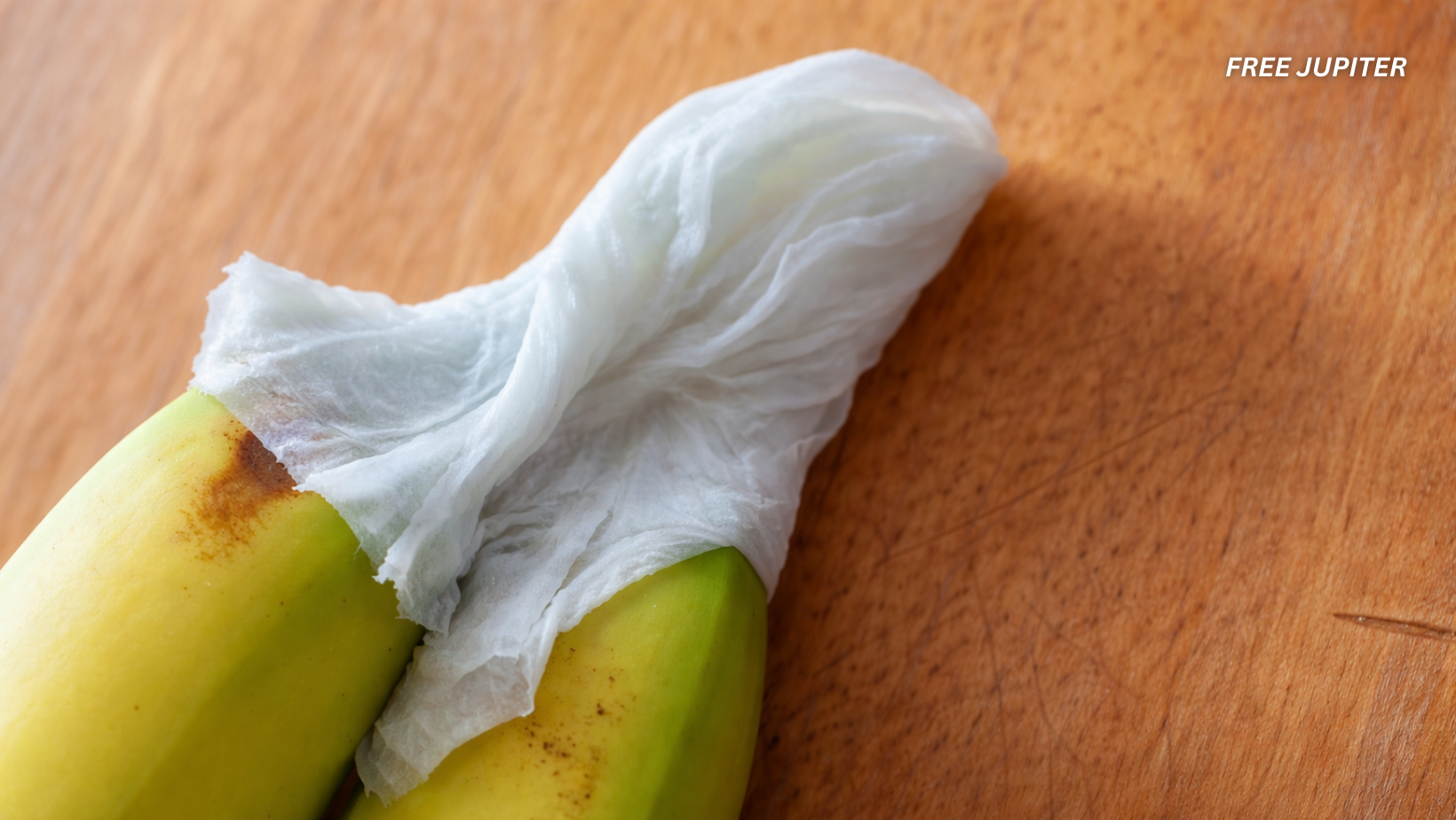
Among these ideas, one simple method has caught attention. It involves nothing more than a paper towel and a bit of water. The promise is appealing. Wrap the stems of a banana bunch with a damp paper towel, and the fruit is said to stay fresh for longer. The idea feels clever, almost too easy, which makes it worth a closer look.
Why Bananas Ripen So Quickly
To understand the trick, it helps to know what is happening inside a banana as it ripens. Bananas naturally release a gas called ethylene. This gas acts as a signal that speeds up the ripening process. As more ethylene is produced, the fruit continues to soften and sweeten.
This process does not happen in isolation. Bananas can influence each other and even nearby fruits. When stored together, the ethylene builds up in the surrounding air, encouraging everything nearby to ripen faster. Temperature, airflow, and light can also affect how quickly this change takes place, but once ripening begins, it tends to move forward steadily.
Most of the ethylene is released from the stem area of the banana. Because of this, many storage methods focus on that specific part. The thinking is simple. If the release of the gas can be reduced or slowed, the fruit might stay fresh a little longer.
Related article: These Fruits Are Secretly Protein Powerhouses
The Idea Behind the Paper Towel Method
The paper towel trick is built on this exact logic. By wrapping the stems with a damp paper towel, it is believed that the gas escaping from that area can be partially contained. Some versions of the idea have used plastic wrap in the past, but the paper towel version feels more practical and environmentally friendly.
In theory, the moisture in the towel creates a light barrier. It does not fully seal the stem, but it may slow the release of ethylene just enough to make a difference. At least, that is the expectation that has made the trick popular online.
The concept sounds convincing. It is based on real science, and it requires almost no effort. That combination makes it especially appealing to anyone who has watched bananas overripen faster than expected.
Putting the Trick to the Test
To see whether the method actually works, a simple comparison can be done at home. Two bunches of bananas are placed side by side, both at the same stage of ripeness. One bunch has its stems wrapped in a damp paper towel, while the other is left untouched.
Over several days, both sets are observed. Their color is noted, along with their firmness and the appearance of brown spots. The goal is to see whether the wrapped bananas stay fresher for longer, or if both bunches follow the same timeline.
During this kind of test, the paper towel is kept slightly moist each day to maintain the intended effect. Everything else remains the same. The bananas are stored in the same place, exposed to the same temperature and light.
At first glance, it feels like a fair and reliable way to measure the results.
Related article: Scientists Find a Fungus That Literally Uses Radiation as Food
What Actually Happens
After several days of observation, the outcome turns out to be less dramatic than expected. Both bunches of bananas tend to ripen at a very similar pace. The color change from green to yellow happens almost in sync, and the development of spots follows closely behind.
There may be a slight difference once the bananas reach peak ripeness. The wrapped bunch can appear to slow down just a little, but the change is subtle. It is not the kind of difference that transforms how bananas are stored or used in everyday life.
If there is any benefit, it seems small. At most, the method might extend freshness by a day or two. For a trick that requires daily attention, that result may not feel especially rewarding.
Why the Results Are Limited
The idea behind the paper towel method is not entirely wrong. Ethylene does play a major role in ripening, and the stem is indeed where much of it is released. However, bananas continue to produce gas throughout the fruit, not just at one point.
Because of this, covering the stem does not stop the process. It may slightly reduce the release in one area, but it cannot fully control what is happening inside the fruit itself. Ripening continues, driven by natural chemical changes that cannot be easily slowed by a simple wrap.
Air circulation and surrounding conditions also play a role. Even if some gas is held back at the stem, the rest still escapes and continues to influence the fruit.
Better Ways to Keep Bananas Fresh
While the paper towel trick may not deliver a dramatic improvement, there are other methods that tend to work more reliably.
Keeping bananas away from other fruits can help reduce exposure to extra ethylene. Storing them in a cooler environment once they are ripe can also slow further changes. Refrigeration may darken the peel, but the fruit inside often stays firm for longer.
Another approach is to buy bananas at different stages of ripeness. This spreads out their usable life, making it less likely that they will all become overripe at the same time.
Freezing is also a practical option. Peeled bananas can be stored in the freezer and later used for smoothies, desserts, or baking. This method removes the pressure to use them quickly and helps avoid waste.
Related article: People Who Stress-Eat Junk Food Usually Share These 9 Traits
A Small Trick with a Simple Lesson
The appeal of viral kitchen tricks often lies in their simplicity. A quick solution that promises to solve a common problem can feel irresistible. The paper towel method fits that description perfectly. It is easy, inexpensive, and based on a believable idea.
However, not every clever trick delivers the results it promises. In this case, the difference is modest at best. It does not harm the bananas, and it may offer a slight delay in ripening, but it does not change the overall outcome in a meaningful way.
There is still value in trying it. Experiments like this can be interesting, and they help separate useful tips from those that are more about curiosity than effectiveness.
In the end, the lesson is simple. Understanding how food behaves often leads to better solutions than relying on quick fixes. Bananas will continue to ripen as part of their nature, and while a damp paper towel might slow things slightly, it cannot rewrite that process.
Sometimes the most helpful discovery is knowing which tricks are worth skipping.
Featured image: GPT Recreation.
Friendly Note: FreeJupiter.com shares general information for curious minds. Please fact-check all claims and double-check health info with a qualified professional. 🌱