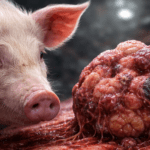


Scientists are exploring an unusual new strategy in the fight against cancer, and it involves making tumors appear as something the body would normally reject. Early research suggests that this approach could trigger a powerful immune reaction against cancer cells, offering new hope for patients with difficult to treat diseases.
The therapy was developed by researchers at Guangxi Medical University in China, under the leadership of Professor Zhao Yongxiang. Their work introduces a creative concept that researchers have started calling the “tumor to pork” method. The name may sound surprising at first, yet the science behind it is based on a clear biological principle. By making cancer cells resemble foreign animal tissue, the body’s immune system may be prompted to attack them more aggressively.
Related article: We Don’t Give ‘Uglier’ Animals The Love That They Need — Leading to Conservation Concerns
Why Cancer Often Escapes the Immune System
Cancer has long been difficult to treat because tumors often manage to hide from the immune system. In many cases, cancer cells resemble normal cells so closely that the body fails to recognize them as dangerous. This allows the disease to grow and spread while remaining largely undetected by the body’s natural defenses.
The immune system is designed to protect the body from threats such as viruses, bacteria, and foreign tissue. However, cancer begins from a person’s own cells. Because of this, the immune system sometimes struggles to distinguish tumors from healthy tissue.
The new therapy attempts to solve this problem by giving cancer cells a kind of biological disguise. Instead of appearing like ordinary human cells, the treated tumor begins to resemble tissue from another species. Once this transformation happens, the immune system interprets the tumor as a foreign object that must be eliminated.
The Science Behind the “Tumor to Pork” Strategy
To achieve this effect, the researchers used a virus known as the Newcastle disease virus. This virus has been studied for many years and is known for its ability to stimulate immune activity. Scientists modified the virus so that it carries genetic material taken from pigs.
When the virus infects tumor cells, it inserts these pig related genes into them. As a result, the cancer cells begin producing proteins that resemble those found in pig tissue.
The immune system is extremely sensitive to foreign biological signals. When it encounters tissue that appears to come from another species, it responds strongly because such material is considered invasive. In simple terms, the tumor begins to look like something that does not belong in the human body.
Triggering a Powerful Immune Reaction
The immune reaction triggered by this therapy resembles the process known as transplant rejection. When someone receives an organ transplant, the immune system may identify the new organ as foreign and attempt to destroy it.
In the case of this cancer therapy, researchers intentionally create a similar situation. By making tumor cells appear like pig tissue, the immune system becomes highly alert. Specialized immune cells gather around the tumor and begin attacking it.
These defenders include T cells and other immune components that are responsible for detecting and eliminating abnormal cells. Because the tumor now carries foreign markers, the immune system responds with far greater intensity than it usually does against cancer.
Researchers describe the result as a focused immune attack directed at the tumor. The reaction remains concentrated in the area where the altered cancer cells exist. Healthy tissue does not carry the pig related markers, so it largely remains unaffected.
Related article: Ultra-Rare 1-in-40,000 Albino Humpback Whale Calf Captured on Camera In Tonga Wins Prestigious Nature Photo Competition
Early Clinical Trial Results Show Strong Promise
Early testing of the therapy has produced encouraging results. In an initial clinical study, the treatment was given to 23 patients who were living with advanced stages of cancer.
These patients were suffering from conditions including cervical cancer, liver cancer, ovarian cancer, and lung cancer. Many had already tried other treatments that had limited success.
Participants received weekly infusions of the modified virus designed to target their tumors. Doctors monitored how the tumors changed over time and carefully recorded any side effects.
According to the research team, more than ninety percent of the patients experienced meaningful improvement. In many cases the tumors shrank significantly during the treatment period. Several patients saw their tumors disappear completely, entering remission.
A Therapy With Fewer Harsh Side Effects
Another encouraging aspect of the treatment was the relatively mild side effects reported during the trial. Traditional cancer therapies often damage both cancer cells and healthy cells, which can lead to difficult symptoms such as fatigue, nausea, and weakened immunity.
The experimental virus based therapy appeared to produce fewer severe reactions. Because the immune response focuses mainly on the tumor cells displaying pig related markers, surrounding healthy tissue remains largely untouched.
This targeted approach could make the treatment easier for patients to tolerate compared with more aggressive therapies.
What Happens Next in the Research Process
Although the early results are impressive, the therapy is still in the early stages of clinical development. Small trials are mainly designed to test safety and determine whether a treatment shows promise.
Larger trials are necessary before doctors can confirm that the therapy works reliably across a broader group of patients. The research team plans to move forward with additional testing.
Phase two trials will involve more participants and will focus on measuring how effective the therapy is under controlled conditions. If those trials produce strong results, phase three studies will compare the treatment with existing cancer therapies.
Only after these steps can the therapy be considered for wider medical use.
A New Direction in Cancer Immunotherapy
Scientists around the world are watching this development with cautious optimism. Immunotherapy has already transformed parts of cancer medicine by helping the immune system recognize and destroy tumors.
Treatments such as checkpoint inhibitors and CAR T cell therapy have demonstrated how powerful the immune system can be when it is properly activated.
The tumor to pork method represents another creative version of this concept. Instead of directly boosting immune cells, the therapy changes how the tumor appears to the immune system.
By making cancer cells look foreign, it becomes easier for the body’s natural defenses to recognize them as a threat.
The Role of Genetic Engineering in Modern Medicine
The treatment also highlights how genetic engineering is becoming a powerful tool in medical research. Scientists can now modify viruses and insert specific genes that guide how those viruses interact with human cells.
This technology allows researchers to design therapies that target diseases in highly precise ways. What once seemed like science fiction is now becoming a practical approach to treating complex illnesses.
In this case, a virus acts as a delivery system that changes how cancer cells present themselves to the immune system.
Related article: Meet the Sand Cat, a Rare Feline That Barks Just Like a Dog Does
A Promising Idea in the Ongoing Fight Against Cancer
Cancer remains one of the most complex diseases in modern medicine. Tumors constantly adapt and often find ways to survive despite treatment. Because of this, researchers continue searching for new ideas that can outsmart the disease.
The tumor to pork therapy reflects the kind of creative thinking that drives scientific progress. Instead of attacking cancer solely with drugs or radiation, the treatment encourages the body to do the work itself.
For patients facing aggressive or treatment resistant cancers, approaches like this offer renewed hope. Although further testing is needed, the early results suggest that unconventional strategies may play an important role in the future of cancer treatment.
As research continues, scientists will learn whether this unusual therapy can become part of standard medical care. For now, the findings serve as a reminder that the immune system remains one of the most powerful tools available in the battle against disease. When guided correctly, it may be capable of identifying and destroying threats that once seemed impossible to defeat.
Featured image: Freepik.
Friendly Note: FreeJupiter.com shares general information for curious minds. Please fact-check all claims and double-check health info with a qualified professional. 🌱