
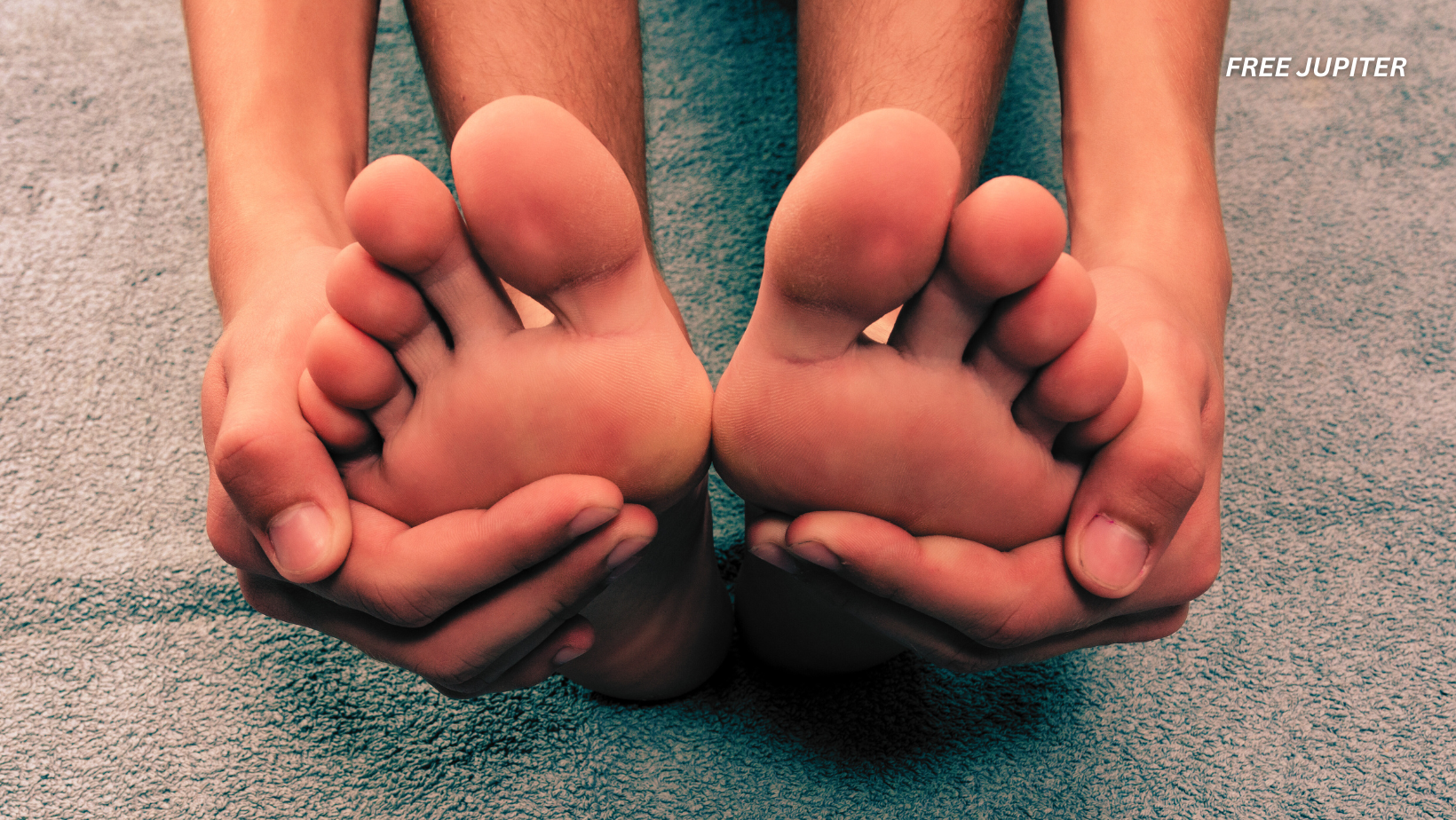
For many years, physical fitness has been framed around core strength, joint stability, and cardiovascular endurance. Feet, and especially toes, are often treated as passive tools rather than active contributors to overall health. Yet emerging research and clinical experience suggest that this overlooked part of the body may subtly influence how well people age and how long they remain mobile.
The idea gained attention through the work of gait specialist and chiropractor Dr. Courtney Conley, who focuses on how foot function affects balance, movement, and long term health. According to her, weakness in the toes does not stay isolated at ground level. It can travel upward, affecting the knees, hips, and spine, while also increasing the risk of falls later in life.
When foot problems masquerade as joint pain
Many people spend years treating chronic knee or hip discomfort without realizing that the root cause may begin in the feet. Pain management approaches often target the area where discomfort is felt, but Dr. Conley explains that the body moves as a connected system. When the toes cannot stabilize the body during walking or standing, larger joints are forced to compensate.
This compensation can create strain patterns that persist despite therapy or supportive footwear. Over time, what appears to be a joint issue may actually be a loss of strength, coordination, or sensation in the feet.
That realization has led researchers and clinicians alike to examine whether foot health could also influence something much larger than pain relief, namely longevity.
Related article: This New Longevity Pill Could Help Humans Live to 150, Scientists Claim
What research reveals about toes and aging
Scientific studies support the connection between toe strength and long term health outcomes. Research published in the peer reviewed journal Clinical Biomechanics found that toe strength is a stronger predictor of future falls than many commonly cited risk factors. According to the researchers, individuals with weaker toes or toe deformities were significantly more likely to fall.
This finding carries serious implications. Falls are a leading cause of injury related death among older adults, particularly those over the age of 65. Even non fatal falls can trigger a decline in mobility that affects independence and quality of life.
Additional studies show that toe strength naturally decreases with age, often by as much as 25 percent. However, targeted exercise programs have demonstrated that this decline is not permanent. Participants who trained their toe muscles were able to regain substantial strength in a relatively short period of time.
Why falls are closely tied to lifespan
The connection between foot health and longevity becomes clearer when examining injury statistics. A significant percentage of adults over 50 die within a year of experiencing a hip fracture. The risk is even higher for individuals with dementia or those living in assisted care settings.
Dr. Conley explains that many falls occur at the very beginning of movement. When a person stands and leans forward to take a step, the toes are responsible for gripping the ground and preventing the body from tipping forward. If that response is delayed or weakened, balance can be lost before the body has time to recover.
In this way, functional toes act as a protective system. When they fail, the consequences can extend far beyond the feet themselves.
From ballet injury to clinical insight
Dr. Conley’s interest in foot health is rooted in her own experience. As a former ballerina, she spent years placing extreme demands on her feet. Bunions eventually ended her dance career, making exercise and even wearing shoes painful. Determined to avoid surgery, she began searching for alternative ways to restore foot function.
A simple observation led to a breakthrough. After noticing hand strengthening tools used by rock climbers, she questioned why similar concepts were not applied to the feet. The foot contains many small intrinsic muscles, much like the hand, yet they are rarely trained directly.
This insight shaped her clinical approach. Over time, she developed methods and tools designed to strengthen the toes, restore mobility, and improve sensory feedback from the ground. She also observed that changes in foot health often reflected broader issues related to balance, circulation, and movement efficiency.
How modern footwear may be contributing to weakness
One factor Dr. Conley frequently highlights is footwear design. Many modern shoes emphasize cushioning and structure to such an extent that the foot no longer needs to work. While this may feel comfortable, it can reduce muscle engagement and dull the nervous system’s connection to the ground.
Shoes that narrow the toe area restrict natural toe spreading, while thick soles limit sensory input. Over time, this combination can weaken the muscles responsible for balance and stability.
Dr. Conley encourages the use of footwear that allows the toes to spread naturally and move freely. In functional shoes, the widest part of the shoe aligns with the toes rather than compressing them.
Related article: Health Experts Say These 9 Fruits And Veggies Supercharge Your Immune System
Reconnecting the brain and the feet
Simple foot exercises are often used to rebuild strength and coordination. These movements focus on mobility, muscle activation, and sensory awareness rather than intensity. Rolling the foot over a small ball can stimulate connective tissue and nerves, while gentle toe movements help restore range of motion lost from years of restrictive footwear.
One commonly recommended exercise involves lifting the big toe independently from the others, then reversing the action. This task often reveals how disconnected the brain has become from the feet. Difficulty performing the movement is not unusual and reflects a neurological gap rather than a lack of effort.
With consistent practice, this brain foot connection can improve. Small gains in control often translate into better balance and more efficient movement.
Small improvements with meaningful impact
Although foot training does not produce instant results, gradual changes can be meaningful. Increased awareness of how weight is distributed through the feet can influence posture and joint loading during everyday activities like walking or standing.
Transitions to minimalist shoes or toe spacing tools are often recommended to be slow and deliberate. According to Dr. Conley, the feet need time to adapt and rebuild strength after years of dependency on supportive footwear.
Why walking depends on healthy feet
Walking is widely recognized as one of the most effective activities for supporting long term health. It lowers the risk of chronic disease, supports mental well being, and reduces overall mortality. However, these benefits rely on the ability to walk comfortably and safely.
Foot pain, instability, or weakness can quickly limit movement. Strong, responsive toes help the body adapt to uneven surfaces, maintain balance, and move efficiently, supporting independence as people age.
Related article: Doctors Say Ignoring These 13 Health Symptoms Can Be Dangerous
A broader view of longevity
The focus on foot health extends beyond treating localized pain. It reflects a larger goal of preserving mobility, confidence, and quality of life over time. Simple, consistent attention to toe strength and foot function may offer one of the most accessible strategies for supporting healthy aging.
Anyone considering new exercises should consult a healthcare professional, particularly if existing foot conditions are present. Still, the growing body of research suggests that longevity may be influenced by something as simple as how well the toes can grip the ground and steady the body with each step.
Sometimes, the path to a longer, healthier life begins not with dramatic changes, but with reconnecting to the foundation that carries us forward every day.
Featured image: Freepik.
Friendly Note: FreeJupiter.com shares general information for curious minds. Please fact-check all claims and double-check health info with a qualified professional. 🌱