
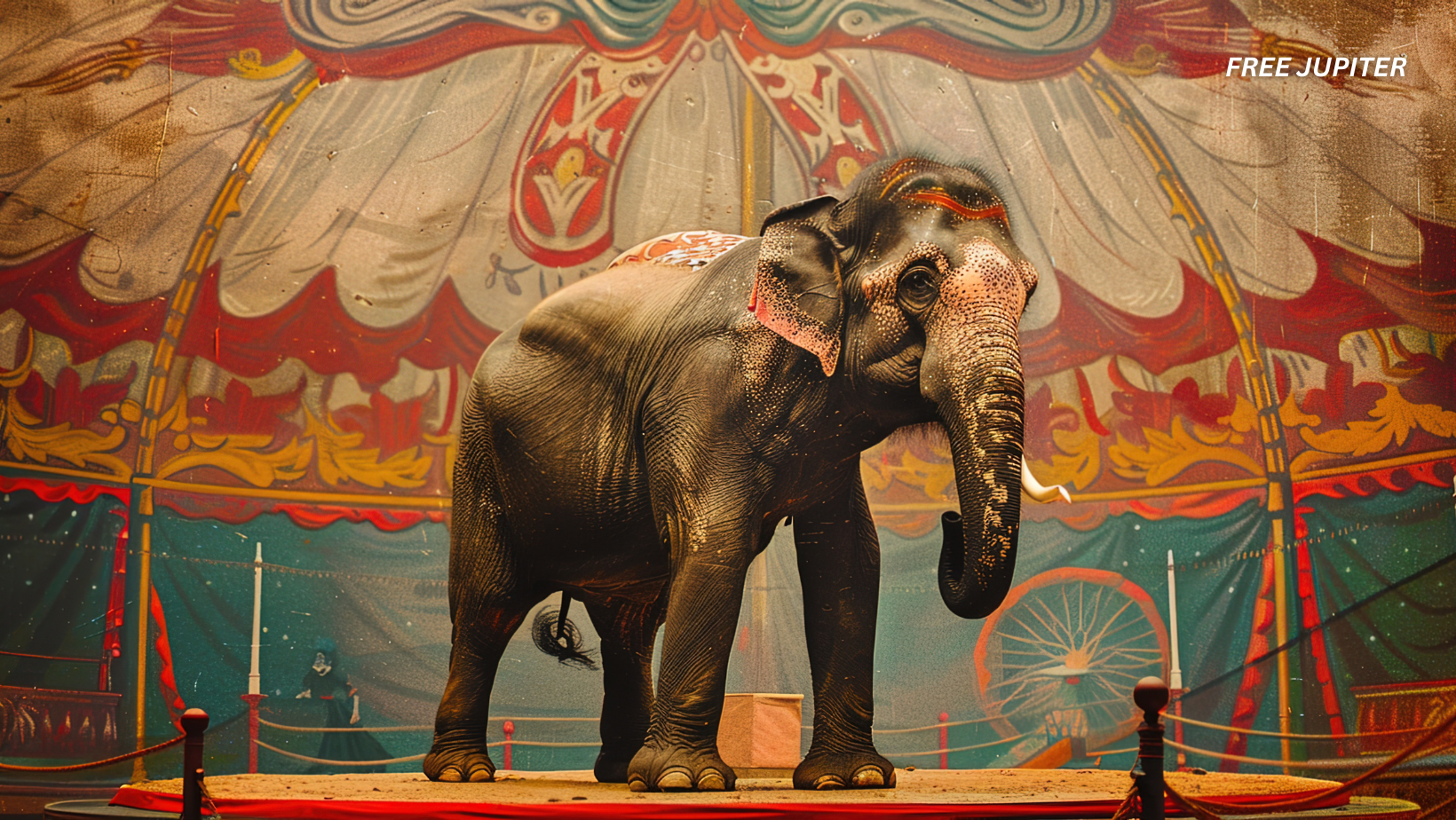
France has taken a decisive step that is reshaping its entertainment industry. The country has officially banned the use of wild animals in traveling circuses, marking the end of an era that once featured lions leaping through hoops and elephants performing under bright lights.
This decision did not happen overnight. It is part of a broader shift in attitudes toward animal welfare, public ethics, and modern entertainment standards. By setting clear deadlines and offering financial support to affected businesses, France has signaled that the future of performance art no longer includes wild animals on tour.
France Ends Wild Animal Performances in Traveling Circuses
The law was first introduced in 2021, beginning a gradual phase out of wild animals in traveling circuses across France. Rather than imposing an immediate ban, lawmakers created a transition period to allow circus operators time to adjust their business models.
Under the legislation, the breeding, purchase, and transport of wild animals for circus performances are no longer permitted. Species such as lions, tigers, bears, and elephants are among those affected. By 2026, wild animal performances in traveling circuses will officially come to an end. By 2028, even ownership of these animals for circus purposes will be fully prohibited.
This structured timeline gives operators several years to adapt, retrain staff, and reimagine their shows without relying on exotic wildlife.
Related article: Ultra-Rare 1-in-40,000 Albino Humpback Whale Calf Captured on Camera In Tonga Wins Prestigious Nature Photo Competition
Why France Decided to Ban Wild Animals in Circuses
The decision reflects growing public concern about animal welfare. Critics of wild animal circuses have long argued that constant travel, confined living conditions, and forced performances do not align with the natural behaviors of these species.
Wild animals are not domesticated. Lions and tigers evolved to roam vast territories. Elephants form complex social bonds and travel long distances in the wild. Bears require space and environmental stimulation that traveling environments struggle to provide. Animal welfare advocates have argued that even well intentioned circus care cannot replicate natural habitats.
In recent years, public opinion in France has increasingly favored stronger protections for animals. Surveys and activism helped bring the issue into mainstream political discussion. Lawmakers ultimately responded by creating legislation that aligns with modern ethical standards.
The ban also reflects a broader cultural shift. Entertainment audiences today often expect experiences that are innovative and humane. Human acrobatics, digital effects, storytelling, and artistic performance have become central to many contemporary circus productions.
More Than Just Circuses: Broader Animal Welfare Reforms
The legislation does not stop at traveling circuses. It also includes measures aimed at improving animal welfare in other sectors.
Mink farming has been prohibited under the same reform package. Concerns about animal confinement and health risks contributed to this decision. In addition, the law restricts the captivity of dolphins and orcas in marine parks. Over time, facilities that currently house these marine mammals will be required to phase out shows and breeding programs.
By including multiple industries in the reform, France has demonstrated that its approach is comprehensive rather than symbolic. The goal is not simply to remove wild animals from one form of entertainment but to address broader welfare concerns.
Financial Support for Transitioning Businesses
Recognizing that this law affects livelihoods, the French government allocated more than 8 million euros to assist circus operators and related businesses during the transition period.
This funding is intended to help with retraining staff, redesigning shows, and ensuring that animals are relocated responsibly. Retirement solutions for the animals are an essential part of the plan. Sanctuaries and specialized facilities will play a role in providing long term care for former circus animals.
By combining regulation with financial assistance, the government aims to reduce economic disruption while still achieving ethical reform.
Related article: Meet the Sand Cat, a Rare Feline That Barks Just Like a Dog Does
How France Compares to Other European Countries
France is not alone in rethinking the role of wild animals in entertainment. Several European nations have already implemented partial or full bans on wild animal circuses. The trend reflects a continent wide reassessment of traditional practices that were once considered normal.
In some countries, only certain species are restricted. In others, complete bans have been enacted. France now joins this growing group, positioning itself among nations that prioritize updated animal welfare standards.
This shift highlights how cultural values evolve. What once symbolized spectacle and wonder now raises questions about responsibility and compassion.
What This Means for the Future of Circuses
For many people, the circus evokes childhood memories of colorful tents and thrilling performances. Yet modern circuses have already been evolving for years.
Human performers increasingly take center stage, showcasing acrobatics, aerial artistry, choreography, and theatrical storytelling. Productions without wild animals have proven commercially successful, demonstrating that audiences are willing to embrace new formats.
In fact, some of the world’s most popular circus companies operate entirely without animal acts. Their success suggests that creativity, not captivity, drives long term sustainability in the industry.
France’s ban may accelerate this transformation. Traveling circuses will need to innovate, invest in human talent, and craft experiences that rely on skill and imagination rather than animal spectacle.
Ethical Entertainment in a Changing World
The ban reflects a broader philosophical question: how should societies balance tradition with ethical progress?
Circuses featuring wild animals were once viewed as educational and entertaining. Today, the conversation has shifted toward animal rights, welfare science, and ecological awareness. As understanding of animal cognition and emotional complexity grows, expectations around treatment have changed.
France’s law indicates that public amusement is no longer seen as sufficient justification for using wild animals in performance settings. Instead, the emphasis is on reducing harm and aligning policies with contemporary ethical standards.
Related article: Scientists Discover Animals Have a Mysterious ‘Sixth Sense’, Changing Evolutionary Theories
The Final Curtain for Wild Animal Circuses in France
By 2026, audiences in France will no longer see lions, tigers, bears, or elephants performing in traveling circuses. By 2028, the legal chapter will fully close on ownership of wild animals for circus purposes.
This decision represents more than a regulatory change. It marks a cultural turning point. France has chosen to redefine entertainment in a way that reflects evolving values around animal welfare and responsibility.
The future of the circus in France will still include spectacle, skill, and storytelling. What it will not include are wild animals transported from place to place for public display.
In many ways, this shift captures a broader global movement. As societies reconsider long standing traditions through the lens of ethics and science, new forms of entertainment emerge. The spotlight remains bright, but the cast is changing.
France has made its choice. The era of wild animals in traveling circuses is coming to an end, and a new chapter in humane entertainment is beginning.